“When the West becomes realized utopia, it spills into the zone of indistinction between Hell and Paradise.”
— Rem Koolhaas
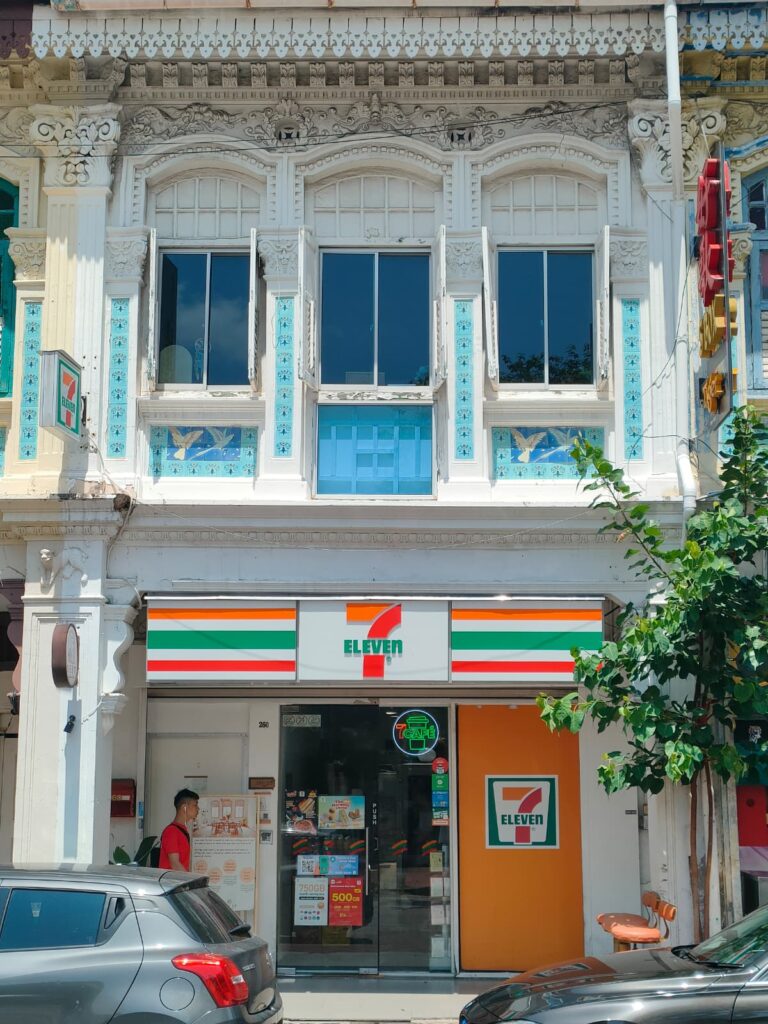
I have just picked myself up from what felt like a deadly fall in the middle of the street. It is my first evening in Singapore. I thought I would take a walk around the neighborhood of Bugis and stop for some pad thai at a corner restaurant. The moment I step out of the 7-Eleven, I am drenched by a monsoon downpour; on my second step, I slip and hit the ground. I hurt myself.
A macabre beginning to a week of work in Asia, in the Lion’s (Singha) City, a name deriving from the ancient dialect of the Bugis, sailors and merchants from Indonesia who settled along the Strait of Malacca at the beginning of the nineteenth century.
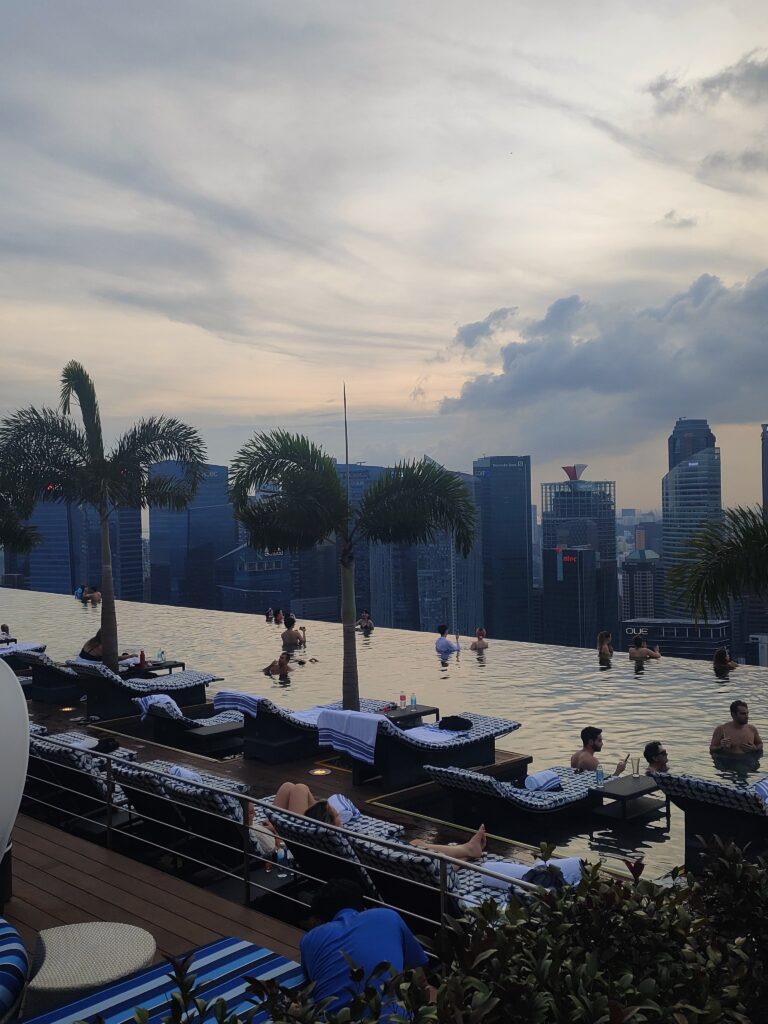
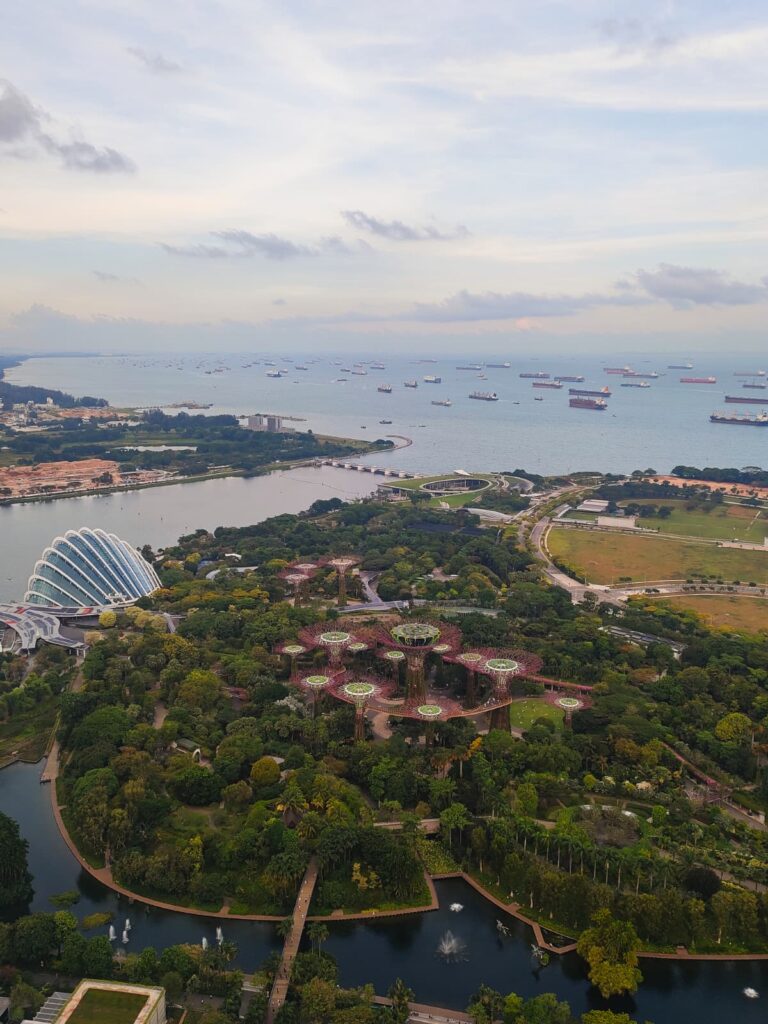
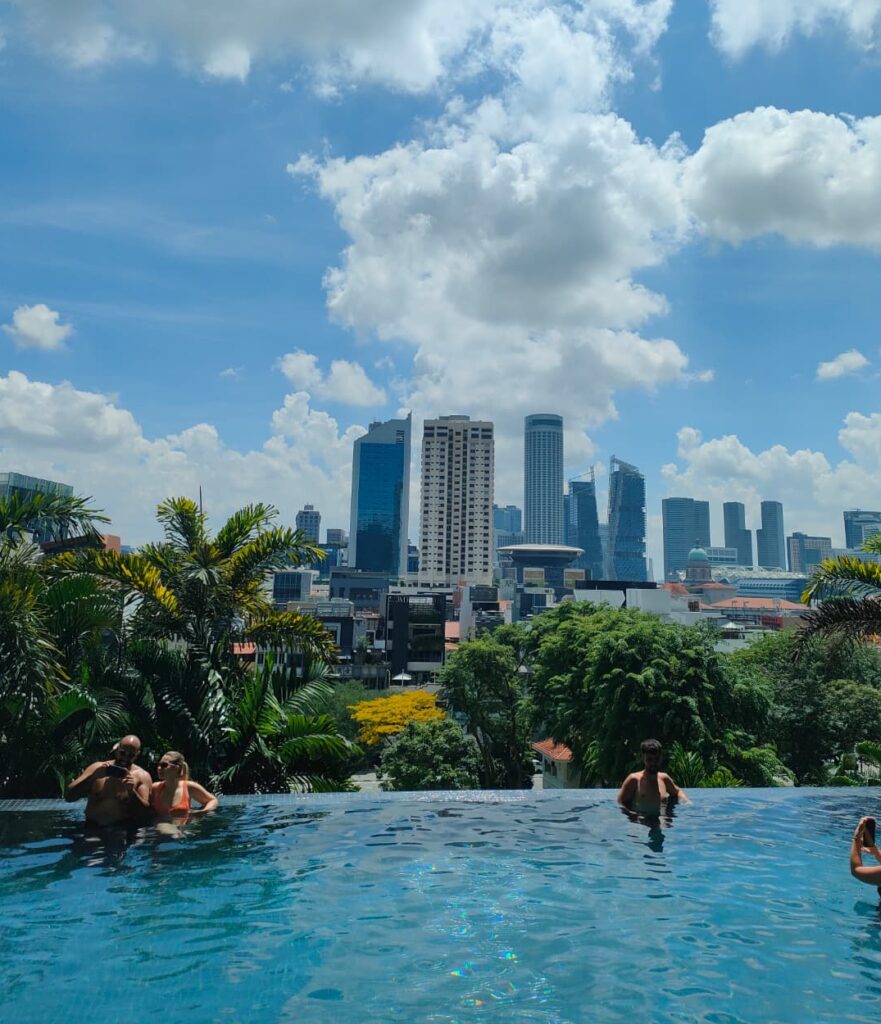
Bugis, Dutch, British, Arab, Armenian, Indian, and predominantly Chinese communities lived in the swampy territories of this humid bottleneck. Even though its twin chokepoint, the Strait of Hormuz, is currently on everyone’s lips, the one I am watching in the Lion’s City has now become the world’s busiest hub for the transit of goods and energy. The countless containers and cargo ships of the Strait of Malacca can be seen with the naked eye on landing at the futuristic Changi Airport and from the infinity pools atop the Marina Bay towers. In the city, it feels as though you are living under naval siege, if you happen to suffer from a siege mentality. Or you can convince yourself that you are standing exactly at the center of the world, where everything passes through: goods, people, energy, submarine cables, who knows what else.
The centrality of this place emerged when the Western Industrial Revolution transformed Malacca into a prominent commodity hub, where goods from the surrounding “Indies” arrived to be processed, packaged and shipped on a global scale. With the Anglo-Dutch Treaty and the Crawfurd Treaty, Singapore and its surrounding islands came under the sovereignty of the East India Company, becoming a full-fledged British Crown colony in 1867. This laid the foundations for a flourishing demand for logistics, banking and financial companies capable of connecting transactions from the periphery to the center of the empire, helping make Singapore one of the most cosmopolitan cities in the world.
Singapore’s glory days came to an end during the Second World War, under the brutal Japanese occupation: a period of torment, food rationing, prostitution, endurance and resistance.
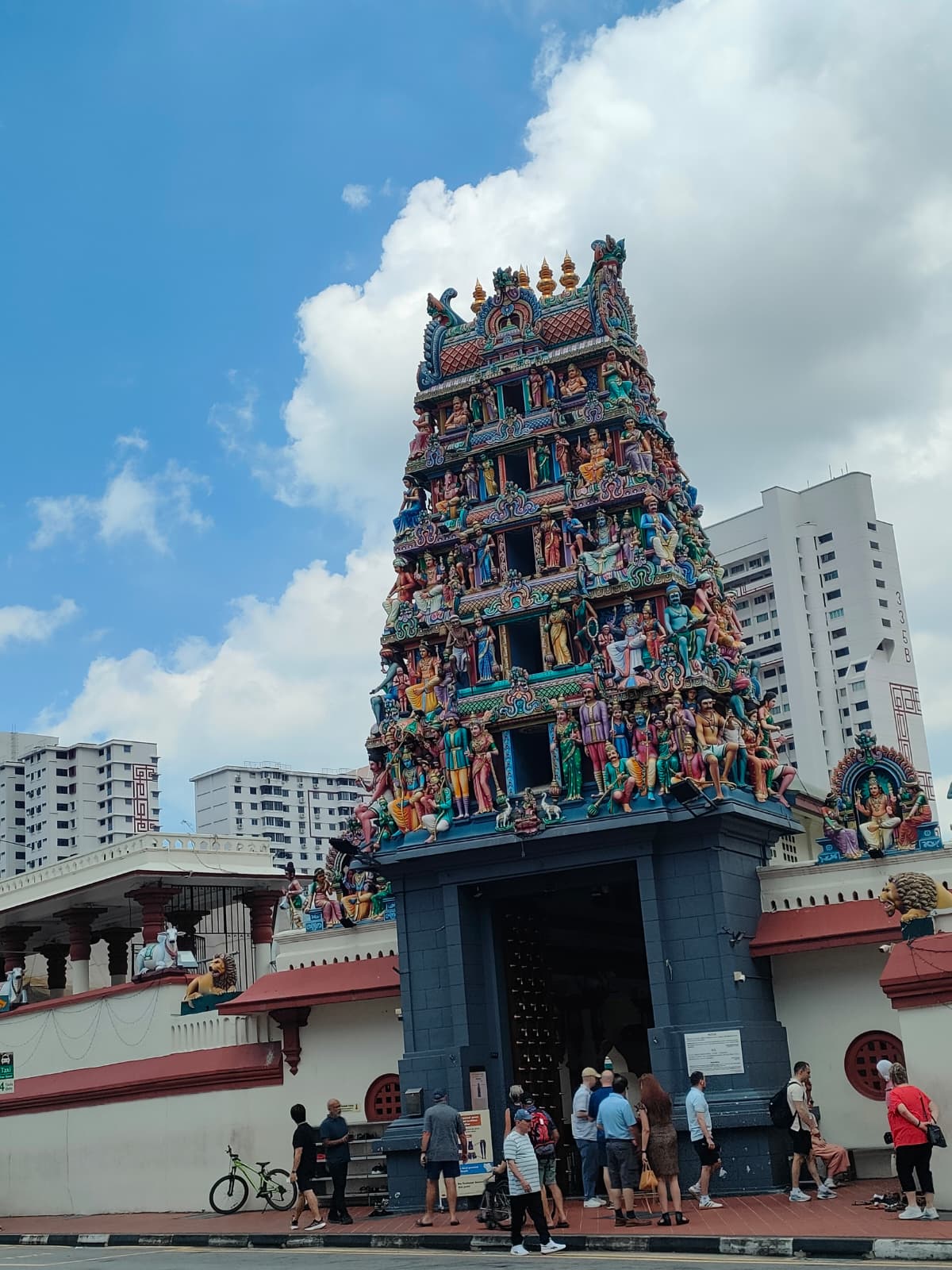
The city’s post-war rebirth is nothing short of miraculous. How does a malaria-ridden place, without an army, devastated by Japanese occupation, with no energy resources, no clearly defined ethnic-demographic identity, almost no territory and an independence movement still in gestation, rise again?
Ask Lee Kuan Yew, the founder of Singapore, the man who said that “Singaporeans would have to create something different from their Indochinese neighbors, or face extinction”; who believed that even dogs that deliberately urinated in elevators had to be trained; who, as a leader, would always be “correct, but not politically correct,” ultimately creating a prodigy of a city, perhaps the most hyper-regulated and disciplined city in the world, where you cannot even import chewing gum or throw a cigarette butt on the ground (or at least you can do so away from prying eyes, as I joke with an Indonesian colleague while smoking a smuggled cigarette outside the trade fair).
Lee Kuan Yew, himself ethnically Chinese, a Cambridge graduate and the first secretary-general and leader of the People’s Action Party, who described himself as the last citizen of the British Crown while also playing an active role in the Non-Aligned Movement during decolonization.
Perhaps that is why Singapore seems free of postcolonial resentment, as though there had never been time to waste on emotions, only on efficiency and raison d’état. The statue of Sir Stamford Raffles stands at the Landing Site on what is now the Quay:
“On this historic site Sir Thomas Stamford Raffles first landed in Singapore
On 28th January 1819 and with genius and perception changed the destiny of Singapore from an obscure fishing village to a great seaport and modern metropolis.”

Grateful to its colonial foundations, Lee excluded accident and randomness, creating a city-state that is pure intention: if chaotic, then deliberately chaotic; if ugly, an ugliness that was designed; if absurd, an absurdity that was intended.
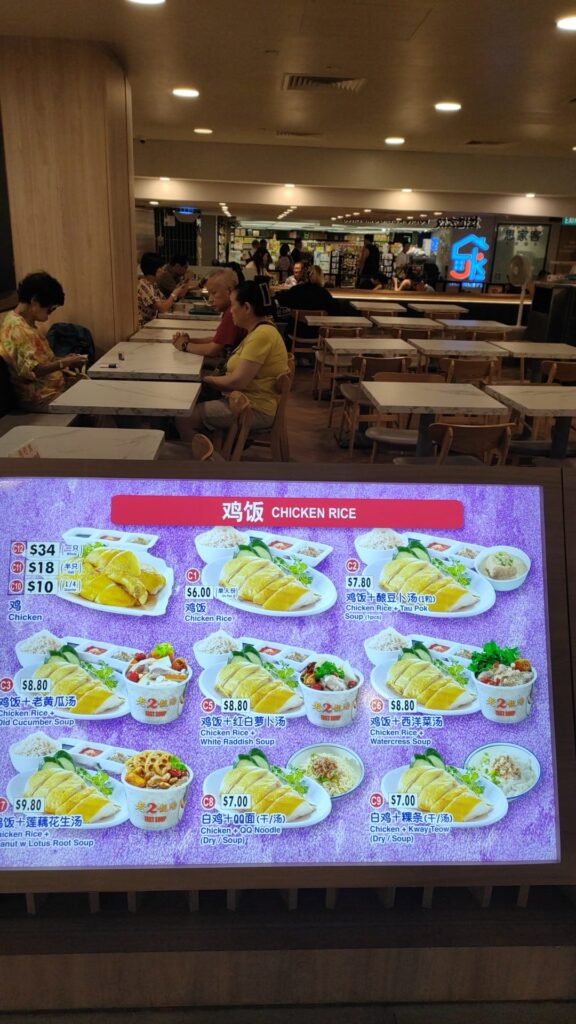
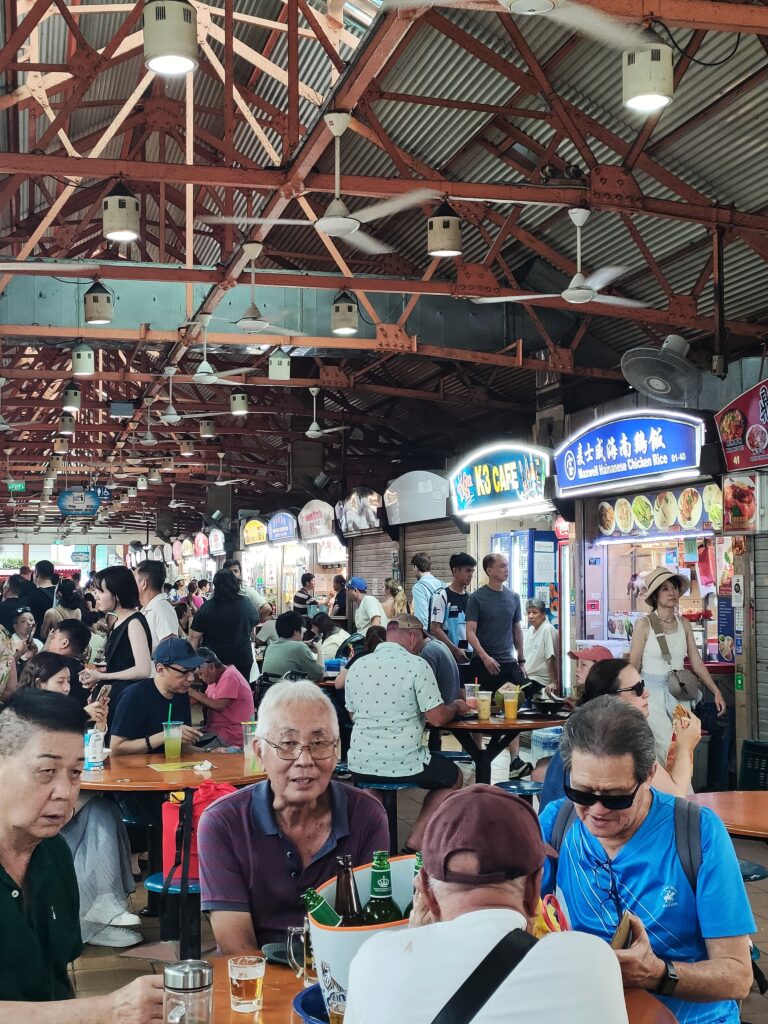
He did what he believed necessary. After attempting to make Malaysia and Singapore independent within a united Malay state, he realized that Singapore would have to play in a different league on the road to decolonization. He gave the city an army, secretly training Singapore’s armed forces with the Israeli Defence Forces; founded one of the world’s most luxurious airlines, Singapore Airlines; cleaned up and reclaimed the city’s waterways; reorganized the unhealthy covered markets into today’s orderly Hawker Centres, where a glimpse of Asia still seems to surface in the preparation of the quintessential chicken rice.
He transformed the island’s landscape in response to the post-war emergency of survival, subjecting it to a state of perpetual provi sionality, where the primordial, engulfing jungle seemed to embody the destiny of the Singaporean homo novus, who was expected to become ever more perfect, ever more disciplined, ever better, just like its buildings: comfortable, non-specific, air-conditioned.
Air conditioning perhaps became the one thing that still makes this city truly tropical, distinguishing it from the London City. Lee himself believed that air conditioning had altered the nature of civilization by making productivity possible. As soon as he came to power in 1959, he had it installed in government buildings.
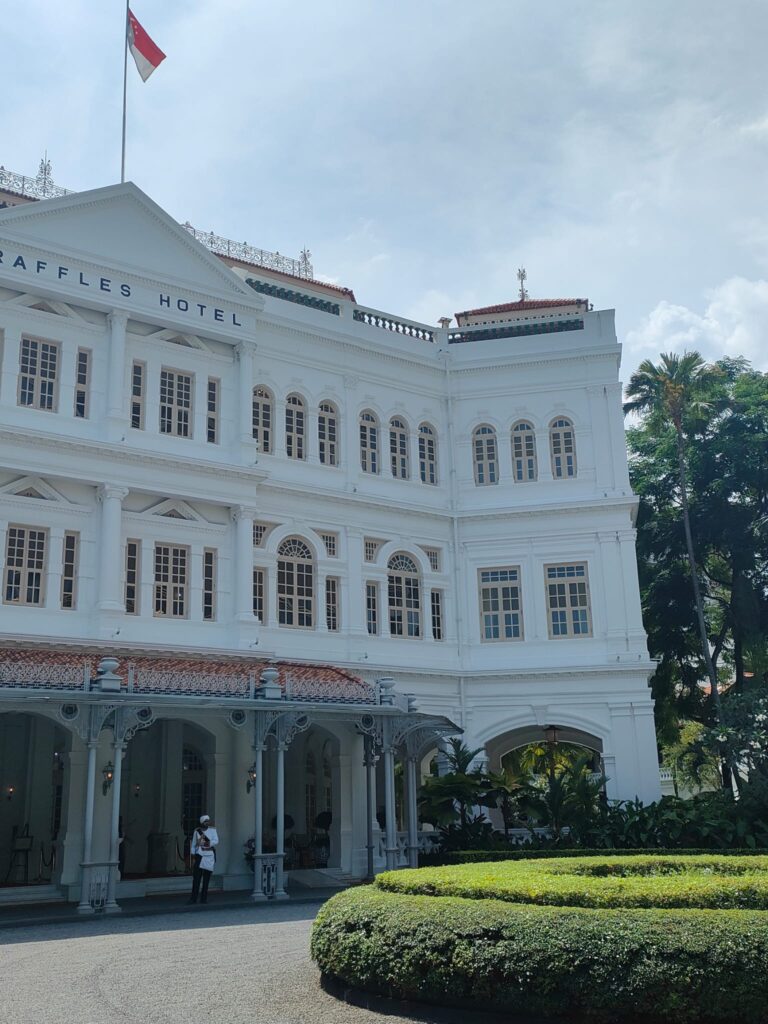
In some way, Singapore exerts a strange fascination through the successful uprooting of itself. The cleansing of its past and the manipulation of vernacular cultures represent a laboratory for studying the postmodern cities of the world. Even the legendary Raffles Hotel on Beach Road has been “perfected” in the present, rinsed of its cumbersome past in order to gleam within the functional and sexy aesthetic of other opulent districts such as Orchard, Marina Bay and, indeed, Bugis, the business district of offices and rooftop gardens where I stumbled in the rain, as breathless but unfailingly courteous colleagues emerged from their buildings. Courteous enough to offer me a hand and give me an umbrella.
“Take care of your umbrella when in Singapore.”
And yet, through a cruel paradox, the more built matter I see, the more unreal the city feels.
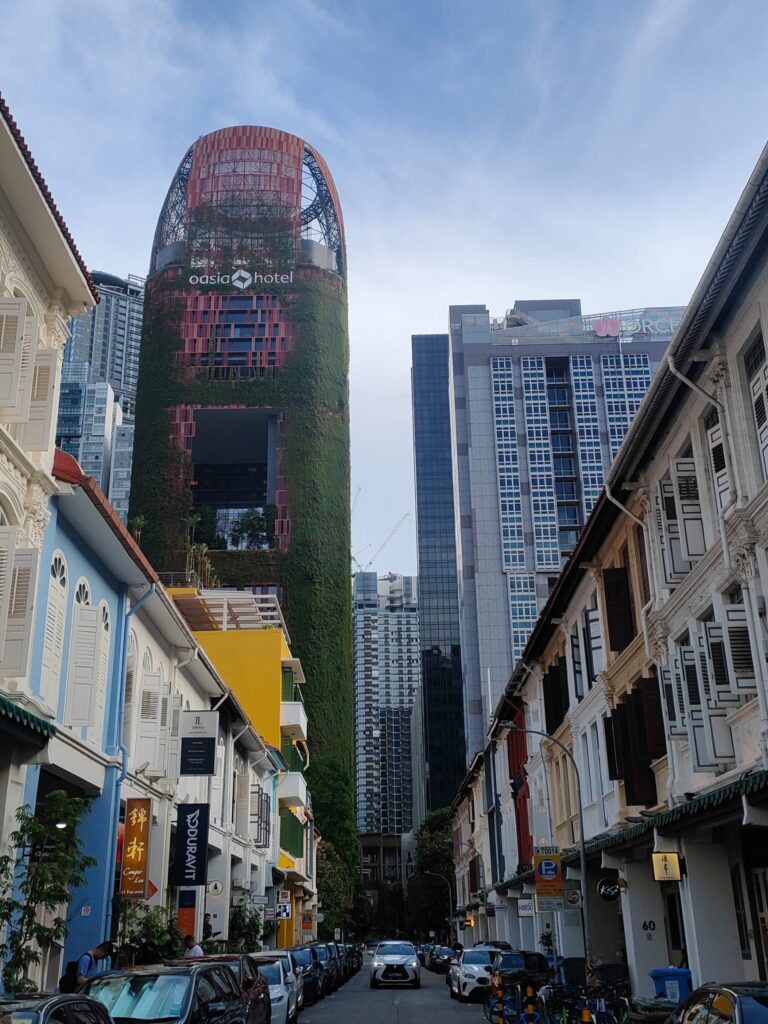
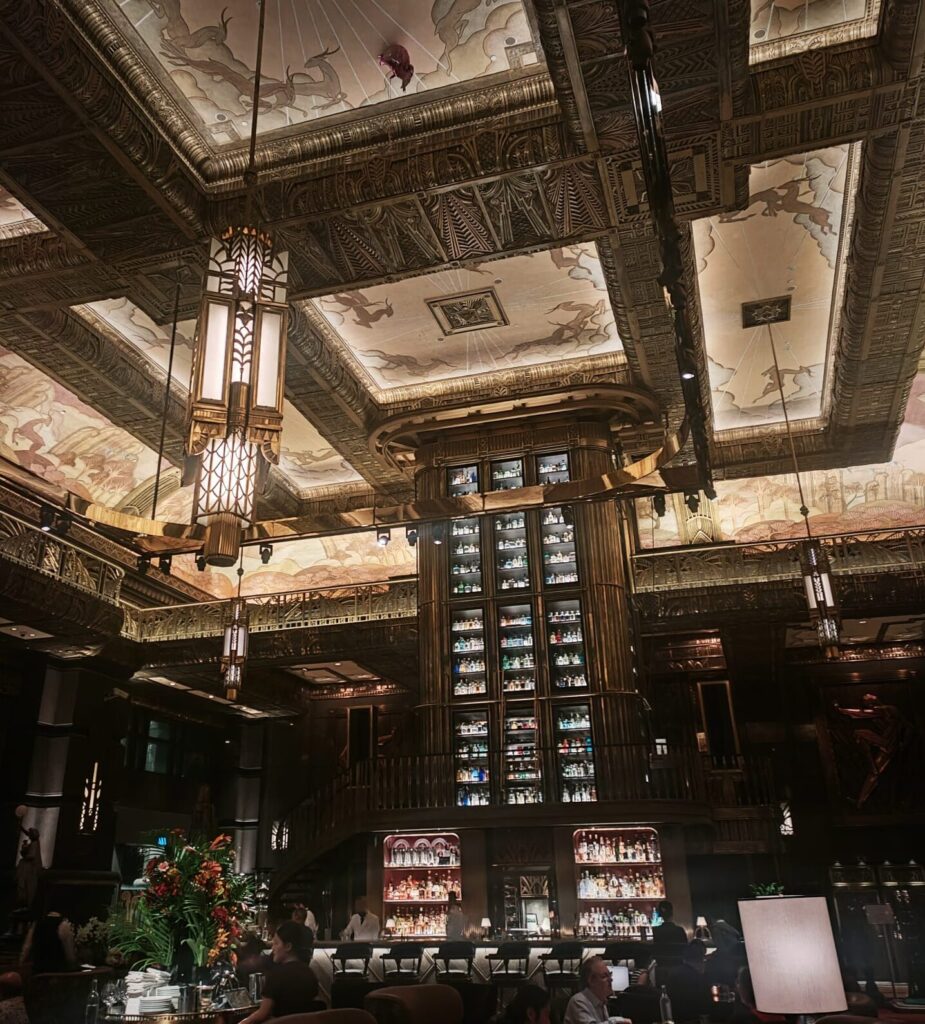
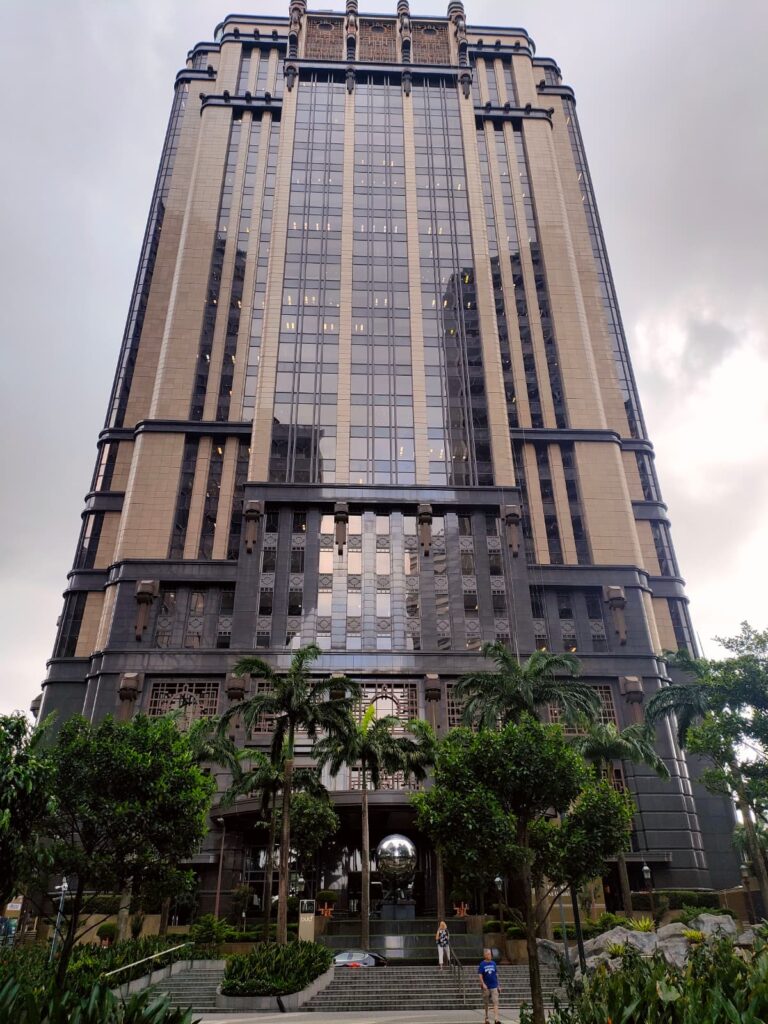
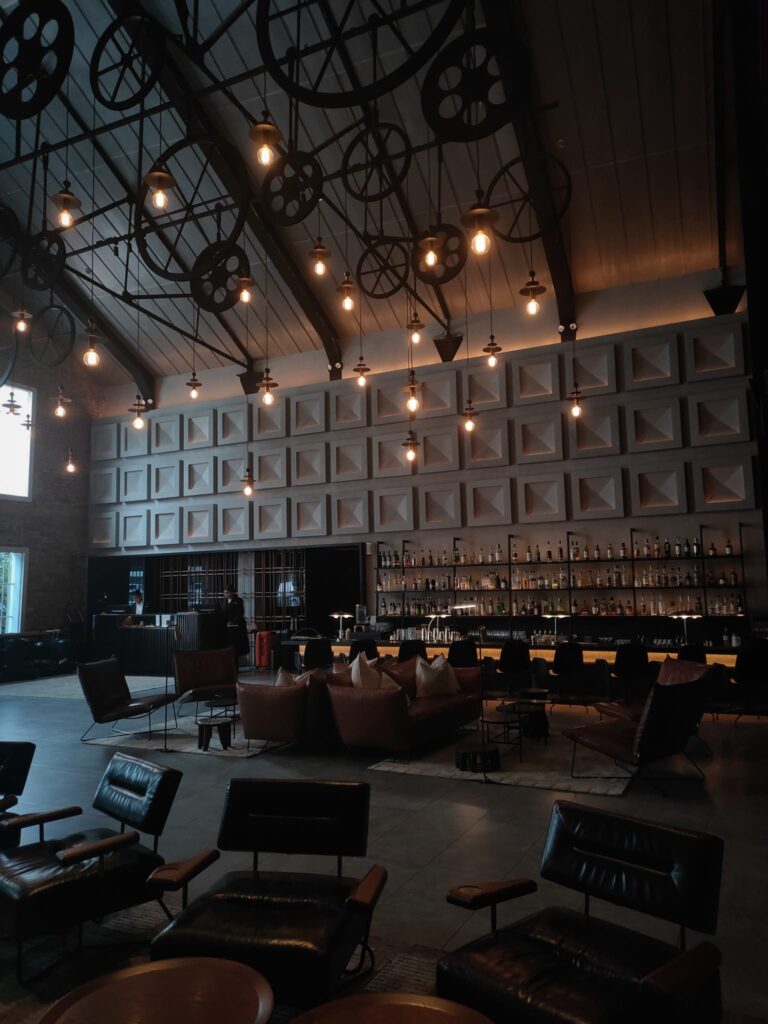
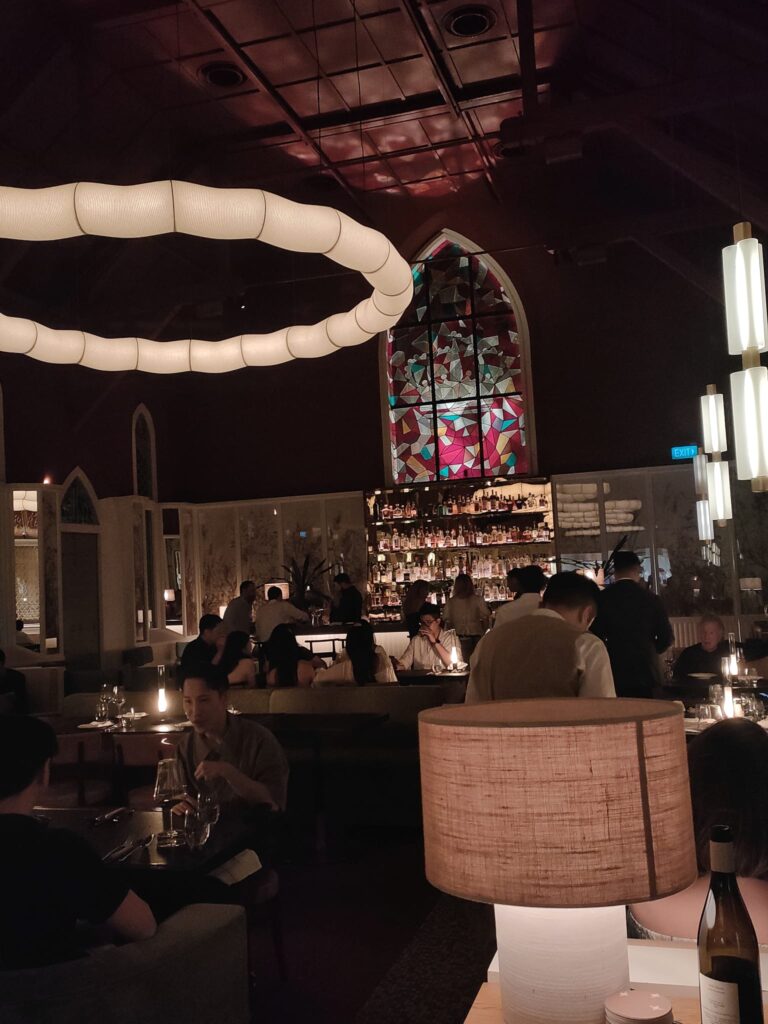
One of the following evenings I find myself at Atlas Bar, an architectural masterpiece known by locals as the Gotham Building, completed in 2004 by the Taiwanese conglomerate Chyau Fwu Group. I order a cocktail and feel I must convince myself that I am inside a Prohibition-era building in 1930s Chicago, or at least that is what the setting demands. Well, needless to say, This is one of the most famous cocktail bars in the world.
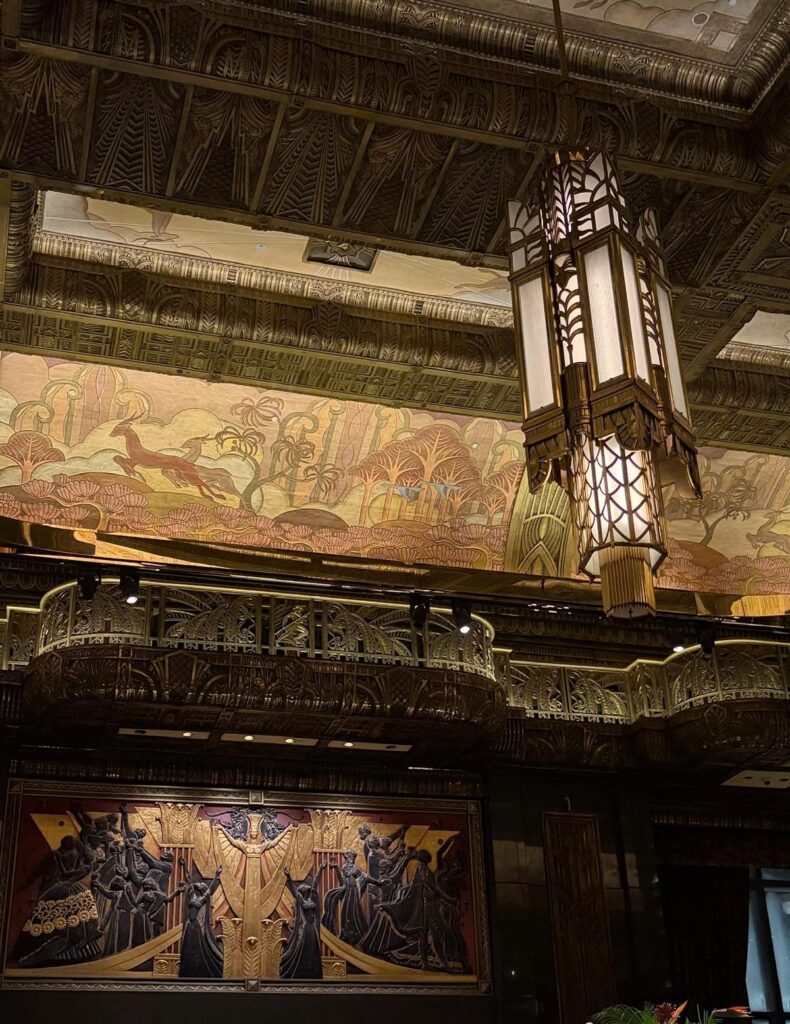
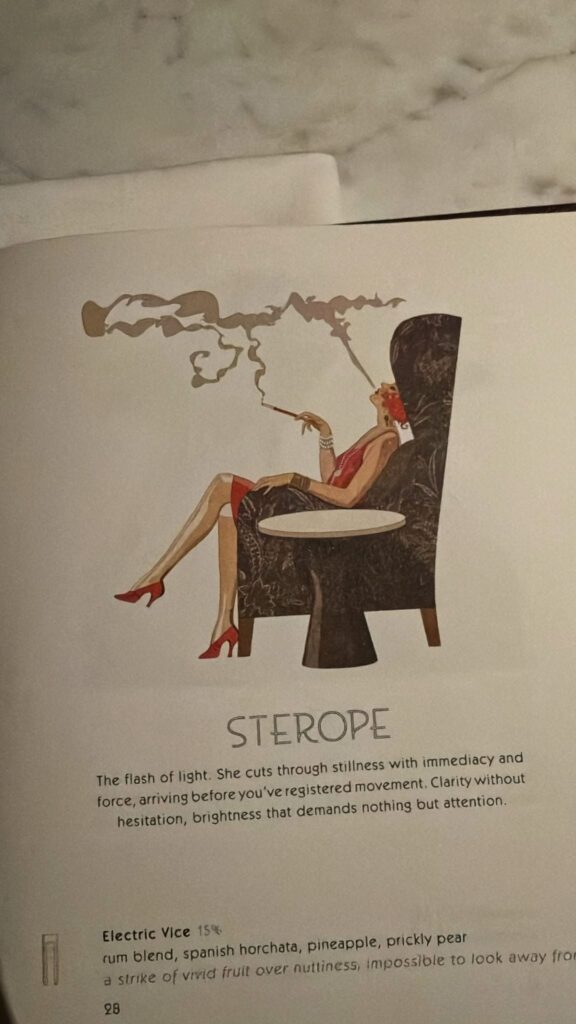
Then I read the description of the drink, Sterope, which I have just ordered. It is supposed to embody the spirit of Singapore:
“The flash of light. Clarity without hesitation, brightness that demands attention.”
The perfect city?
“Living in Singapore is exciting, so exciting that you are willing to pay the high price it demands. You have world-class fine dining, impeccable roads, the ease of communicating in English in any context and, yes, rent that eats up more than half your income.”

I am told this by a colleague over dinner at Chijmes, a former convent of French Catholic nuns on Victoria Street, now converted into a food hall.
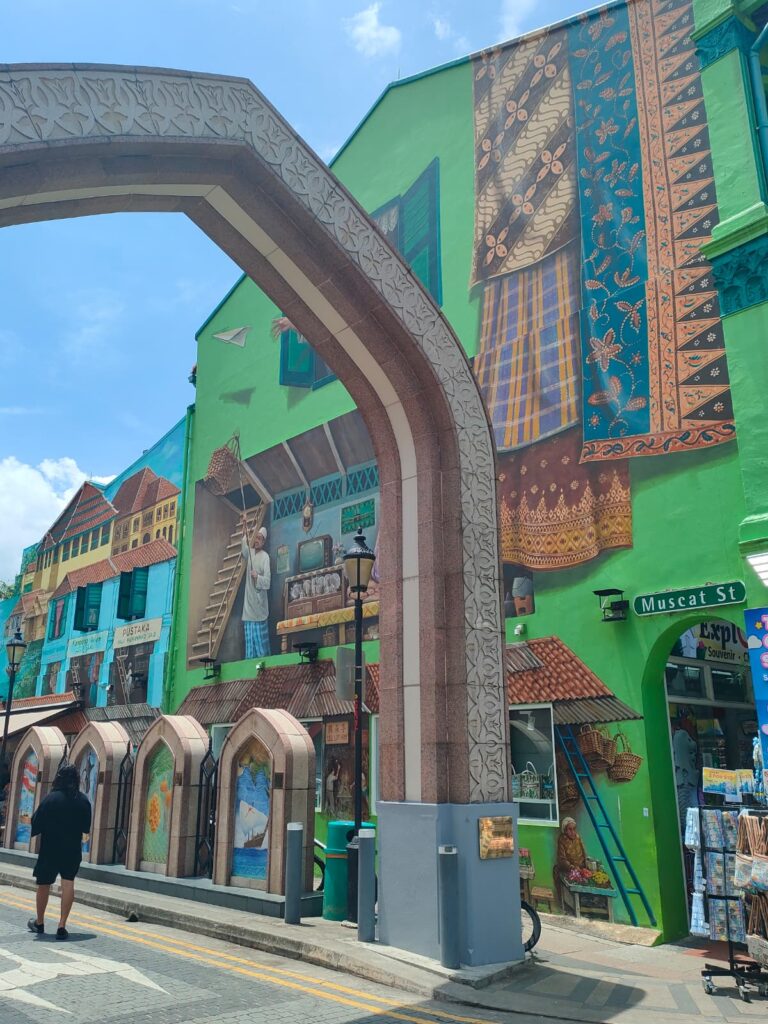
Having moved to Singapore, he tells me about the Singaporean phenomenon: the city’s multiculturalism, which I noticed in Little India, Arab Street and Chinatown, is only apparently segregated and divided into “themed” neighborhoods.
Singapore’s demographic model operates according to the CMIO framework—Chinese, Malay, Indian, Others:
- Chinese: approximately 75.5–76% of the resident population.
- Malays (the recognized indigenous community): approximately 15–15.1%.
- Indians: approximately 7.4–7.6%.
- Others.
Lee Kuan Yew managed this multiculturalism through a model of coercive social engineering, rejecting the supposedly failed and thoroughly Western concept of a spontaneous melting pot. He believed that harmony among different ethnic groups had to be actively planned, imposed and monitored by the state.
Around 80% of the population lives in homes built by the Housing Development Board, with residential units leased for 99 years. In this way, citizens do not, strictly speaking, become permanent owners of their homes; in practice, they pay something resembling a lifetime advance rent on housing. The idea is to ensure that future generations will still have access to affordable housing, including those who would not otherwise inherit property from their families.
But the most curious aspect is that the government imposes mandatory ethnic quotas on every condominium and neighborhood, preventing the formation of ghettos.

To counterbalance the demographic predominance of the Chinese, Lee made the study of English compulsory, alongside the language associated with one’s ethnic background—Chinese, Tamil, Malay and so on. Meritocracy became a kind of state religion, supposedly the only force capable of allowing Singapore to flourish while overcoming the ethnic clientelism typical of postcolonial Indochina.
Under the Maintenance of Religious Harmony Act, insults or acts inciting racial or religious hatred are harshly punished, leaving little room for religious leaders to contaminate politics with faith.
It is difficult not to pause and reflect on the surgical scheme governing citizenship.
So, if the Western melting pot has revealed its limitations, has strict social planning really succeeded in smoothing out cultural fractures?
Was it possible to achieve this by making citizens shareholders in their own pensions, involving women in the workforce regardless of the patriarchal culture traditionally associated with Asia—not, in fact, in the name of their emancipation, but in pursuit of a higher objective: GDP growth, as an index of perceived wealth and social happiness?
So, at these latitudes, does the old assumption still hold that a country’s happiness can be measured through GDP?
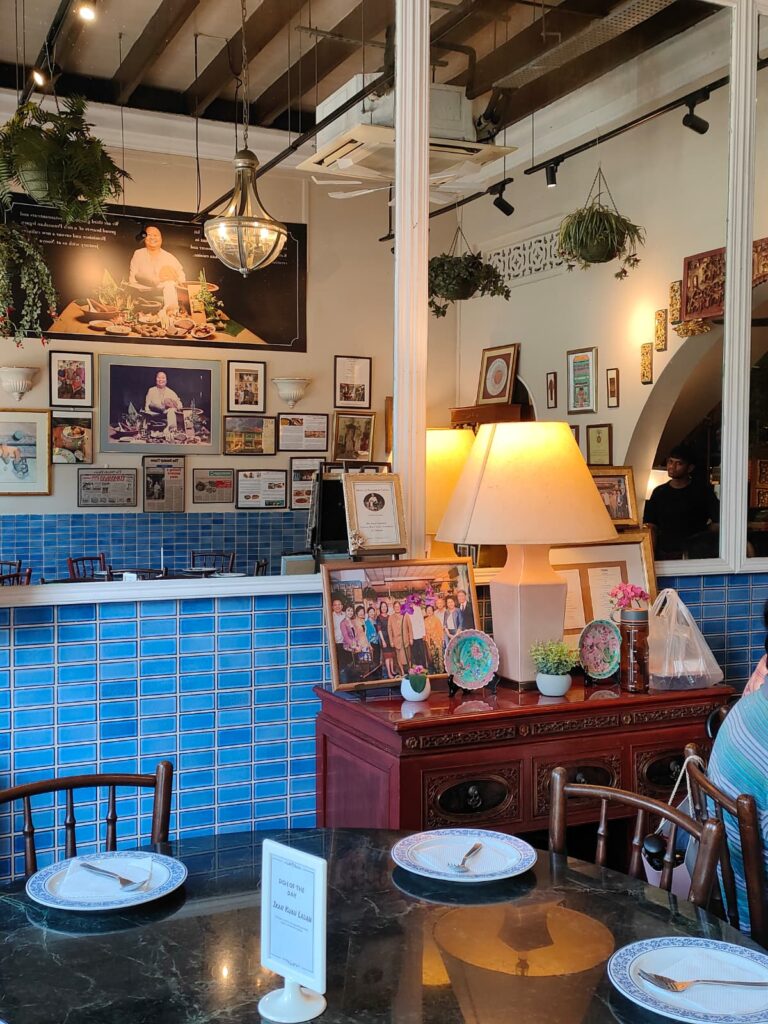
I ask my colleague this as he tells me how the organic smoked egg with rosemary is iconic at the Michelin-starred Odette, or how cool it is to cycle to Claudine Restaurant, one of the trendiest French restaurants around, housed inside a deconsecrated chapel near the Dutch quarter.
This is the typical expat leisure of those who survive the weekends by playing cricket, going for brunch and taking excursions to Sentosa Island. Unless, tormented by boredom, they decide to escape to Malaysia or Bangkok for the weekend, with quick flights allowing them to indulge—or simply take advantage of prices that are almost half what they pay at home.
Boredom.
The most abused word in my conversations throughout the city of perfection.
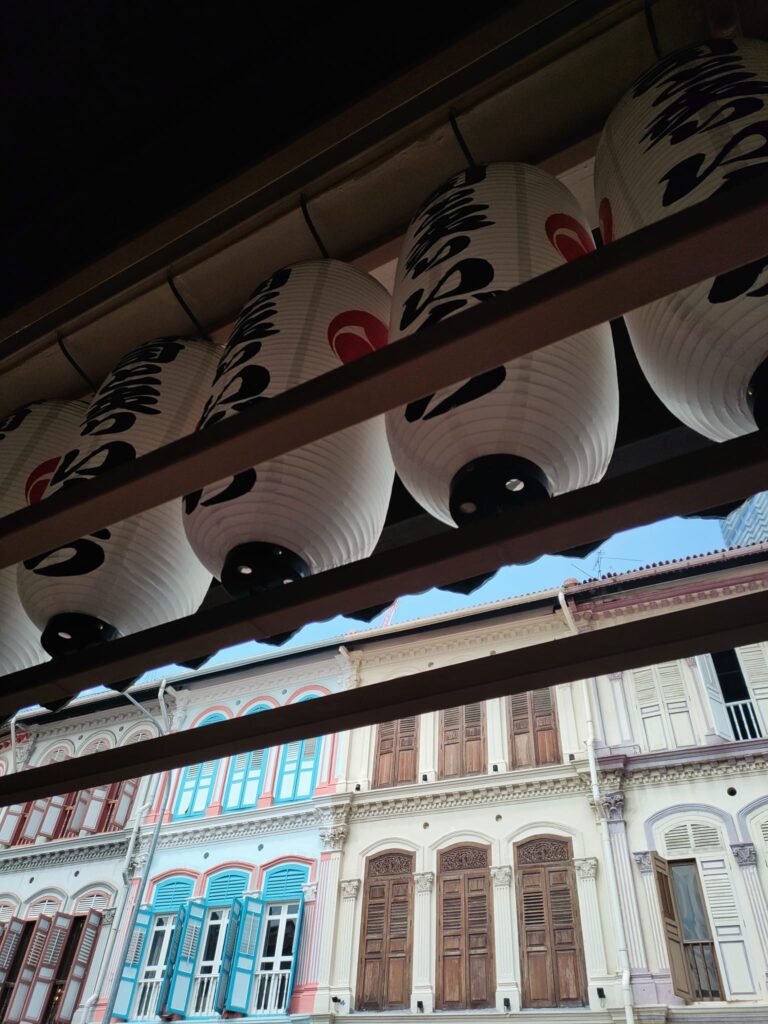
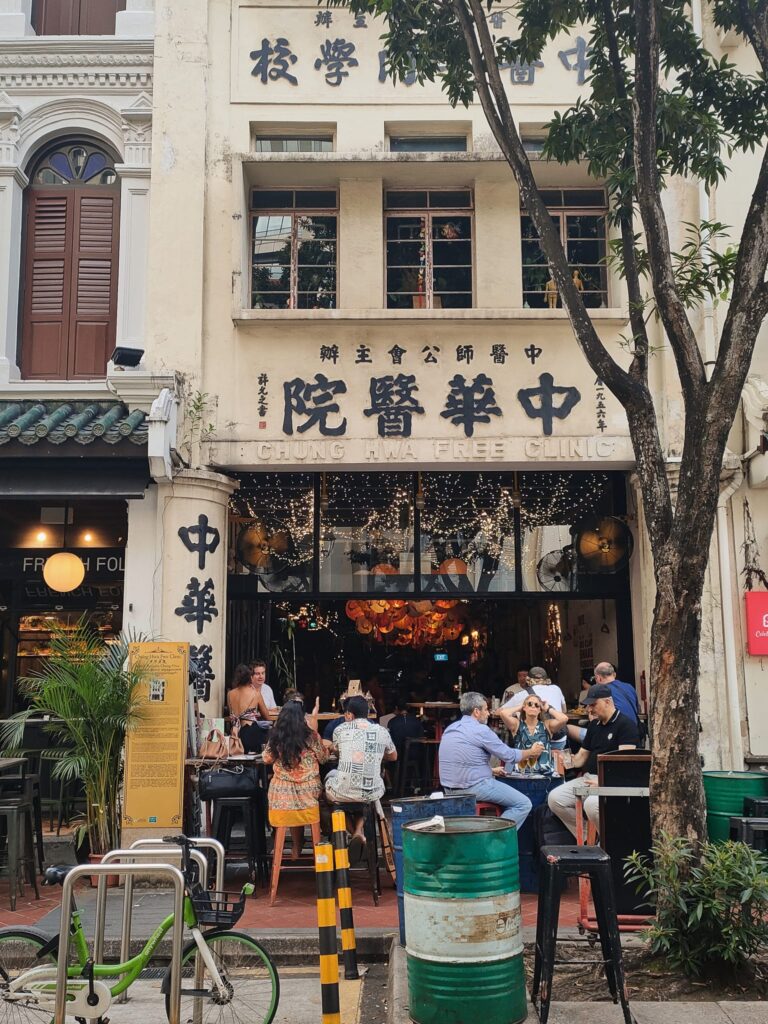
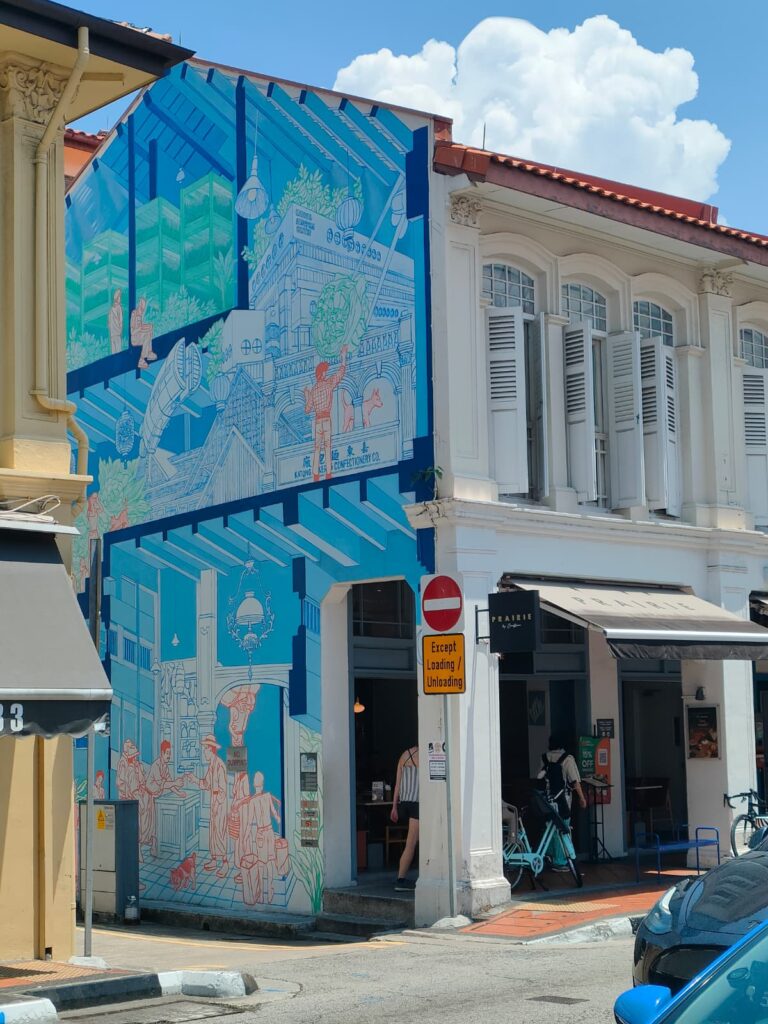
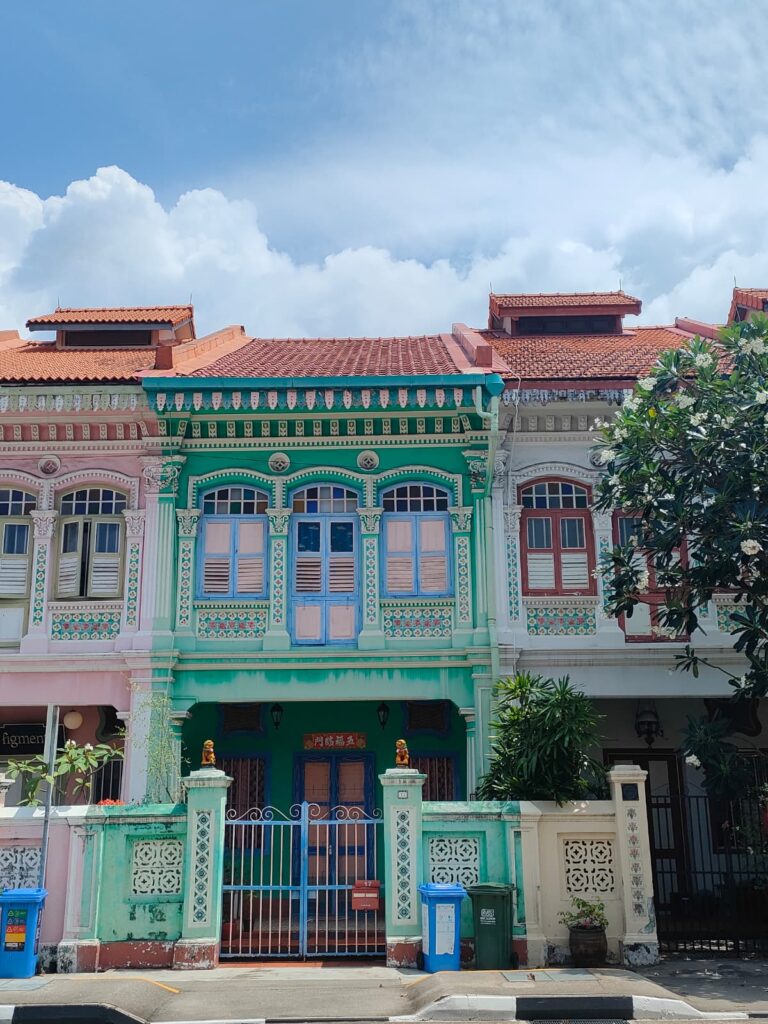
The only neighborhood in Singapore that I truly loved was perhaps also the most chaotic and inconvenient to get to: Katong. Joo Chiat Road has been named one of the coolest streets in the world, lined with Peranakan shophouses dating back to the 1930s — historic two-story buildings with pastel façades, intricate details, and colorful ceramic tiles, once owned by Chinese merchants from Borneo.
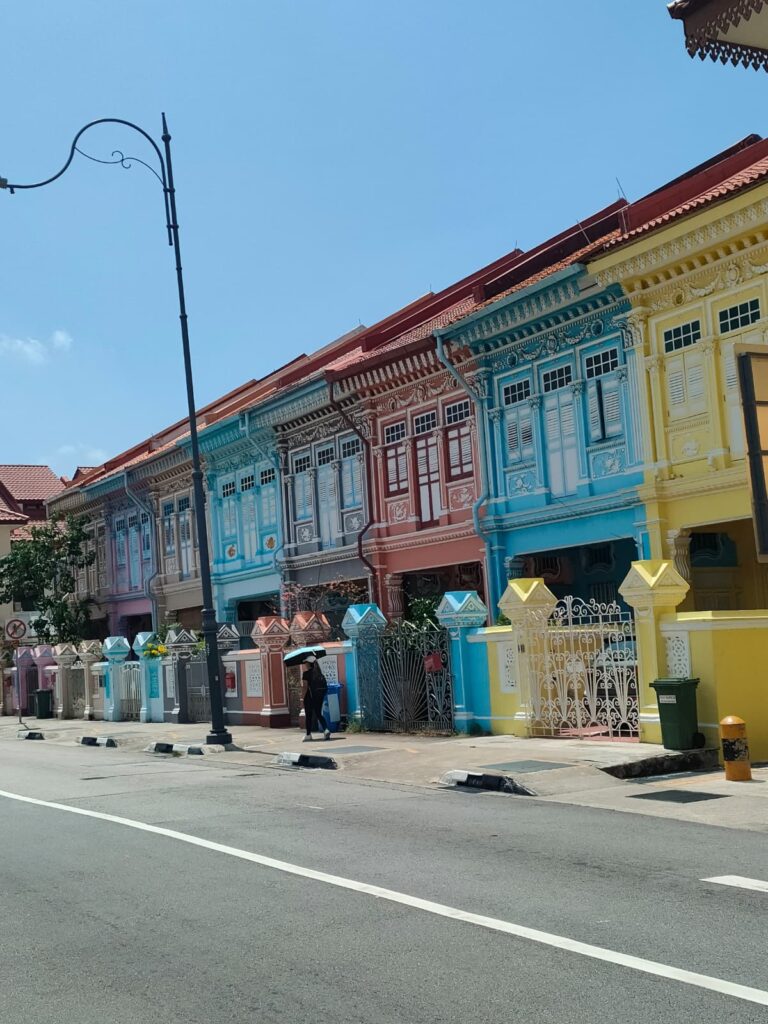
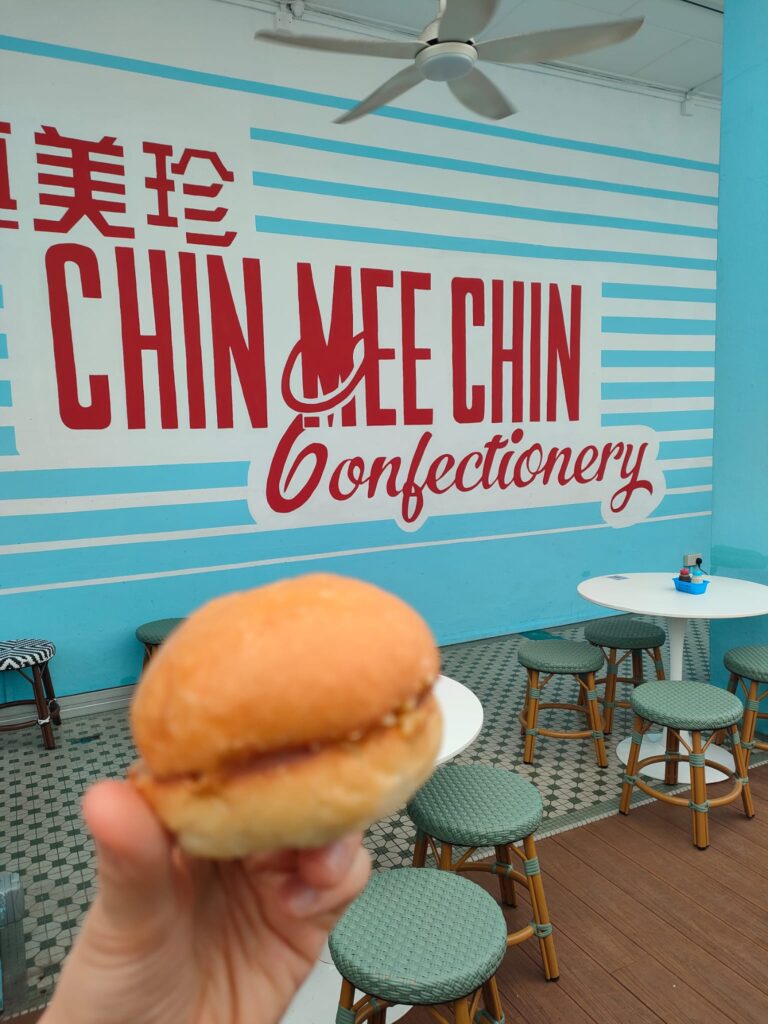
The street offers an architectural glimpse into Singapore’s upper-middle class before the “necessary” post-war cultural cleansing. Wandering these streets, I came across the historic Chin Mee Chin Confectionery, where, chatting with the owner, I finally discovered what kopi is: a type of coffee roasted with sugar, born during the colonial period of British Malaya thanks to the presence of Chinese immigrants from Hainan.
In Singapore, it is a classic to pair it with the delicious kaya toast: toasted bread spread with a rich paste made from pandan, coconut, sugar, and eggs, topped with a generous slice of butter.
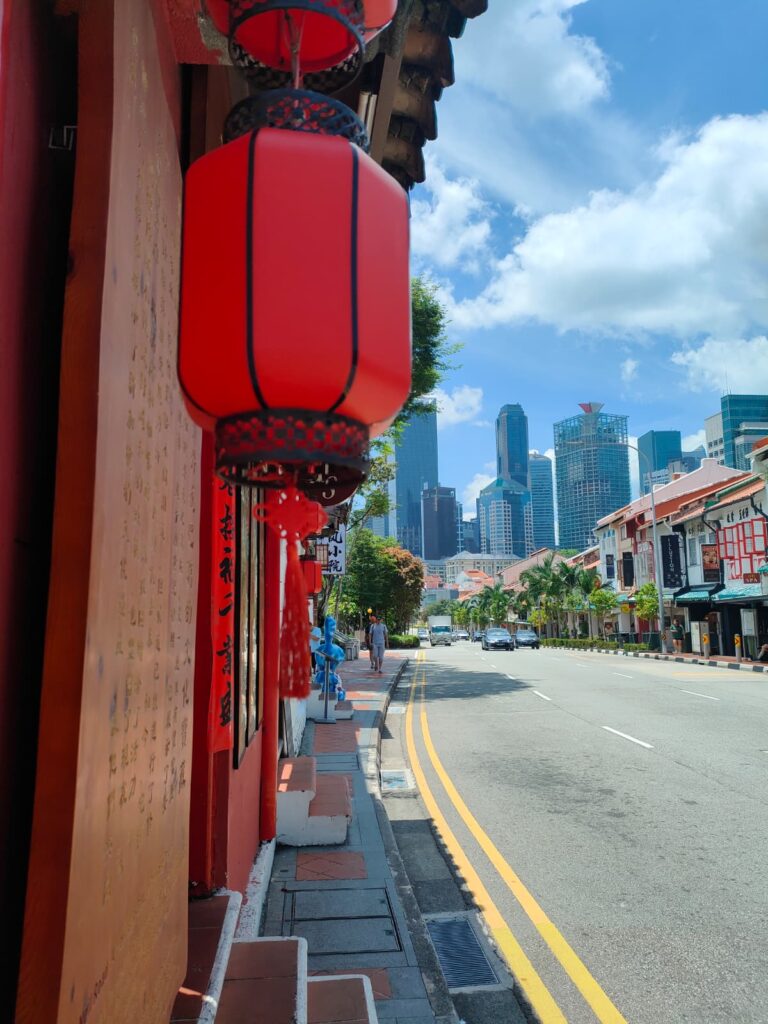
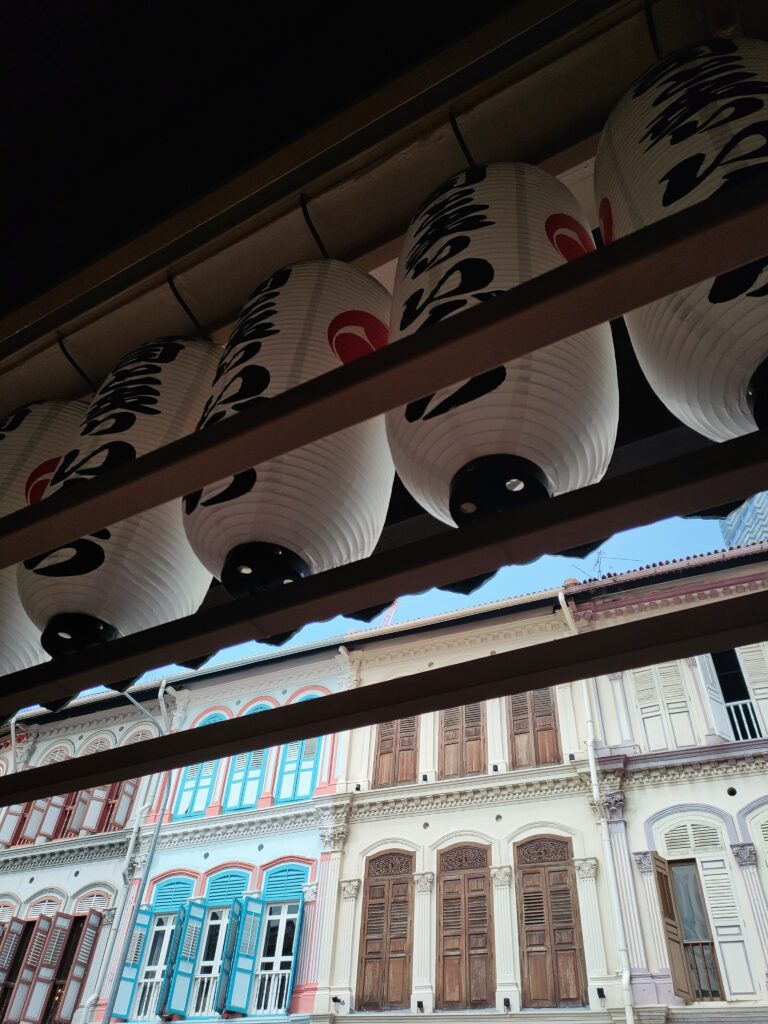
Shophouses and Singapore’s old warehouses can also be found, above all, in Chinatown, often converted into restaurants, boutique hotels or luxury hotels.
If warehouses were the beating heart of colonial trade, the symbol of the city’s initiation into cosmopolitanism, the point where flows were stocked, transferred and projected outward, shophouses were the place of retail transactions, the symbol of the commercial vocation of the local population, particularly the Chinese.
On the ground floor of these shop-houses, the Chinese worked in their businesses; upstairs, they retreated into their living quarters.
Even then, it seemed to be a quite remarkably organized routine.
Before leaving the city, exhausted by the pace of the working week, I made my way to Chinatown.
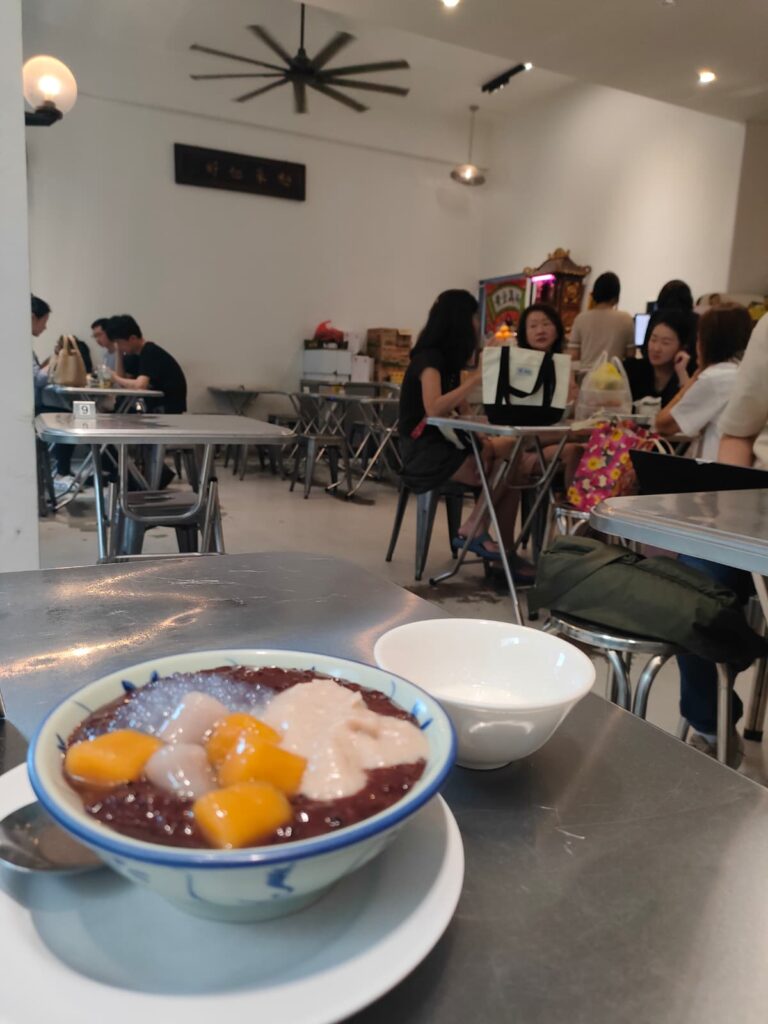
Just to have a look around with no particular destination, only to end up in Hawker Centres, Buddhist temples and red-bean desserts at Jin Yu Man Tang.
But then I wandered into a cluster of beauty centres hidden among the skyscrapers, where I finally found a flamboyant piece of Asia, made up of beauty treatments that puritans would probably consider rather disgraceful.
I opted for one that was more or less acceptable: a hair-scalp treatment.
A sweet Burmese girl rakes my scalp with her fingers. I have no idea why I subjected myself to this treatment. Somehow, I find it liberating.
Then she gives me a pedicure and complains:
“Ma’am, you really need this.”
To Asian women, apparently, I am an ogre.
Then she gives me a cup of tea.
And finally, she asks me why I am not married.
Somehow, suddenly feeling old, badly groomed and completely wrecked, I feel relieved.

At last, I sense something visceral, local, deliberate and distant, stripped of the veil of Maya, or of the perfection that seems to hover over Singapore.
It feels as though the glossy cover of this country is finally turning to page one, revealing the intriguing and complex subtext of this place through the little eyes of this girl, who promises that next time she will give me a facial that will change everything.
So there is room for everyone in Singapore, even for this girl with her shamanic tendencies.
One just need to avoid confusing a perfect planning with perfection.
It was also the good old Lee who devised the theory of “Asian Values”, according to which Buddhism, Taoism, Hinduism, Zen and above all Confucianism helped create a core of institutions and political ideologies reflecting the culture and history of the Asian region.
A theory founded on the primacy of collectivism over Western-style individualism, in which loyalty to authority—whether democratic or otherwise- familial, political or professional, becomes primary and takes precedence over personal freedom, while fundamental rights become secondary to socio-economic wellbeing.
Leaving aside the late-century baht crisis and today’s geopolitical upheavals, the Asian giants are expected to account for 50% of global GDP in the coming years.
Singapore’s model has worked from the post-war period to the present with remarkable success, thanks to the vision and timing of a leader who disdained the cult of personality and was driven by the clarity and realism demanded by the times.
The formulation of an almost infallible system ensured collective social wellbeing, providing a plan for nearly every detail of society.
The question I cannot help asking myself is this: what will happen when the geopolitical stresses surrounding the Strait of Malacca, rising energy costs and the potential systemic choice between China and the West and its allies begin to challenge Singapore’s citizens’ prosperity?
Nothing is more true and inevitable than the impossibility of having a plan for everything, especially when that plan promises eternal happiness.
Perhaps the only truth is that when the promise of collective “happiness” fades, the individual tends to break the social contract and retreat, ready to expose both themselves and, ultimately, the country to consequences and to an unpredictable future.
And what if there were no other Lee Kuan Yew to devise a solution for everything?
I wonder, as I endure the final scratch across my scalp.