Royal Geographical Society
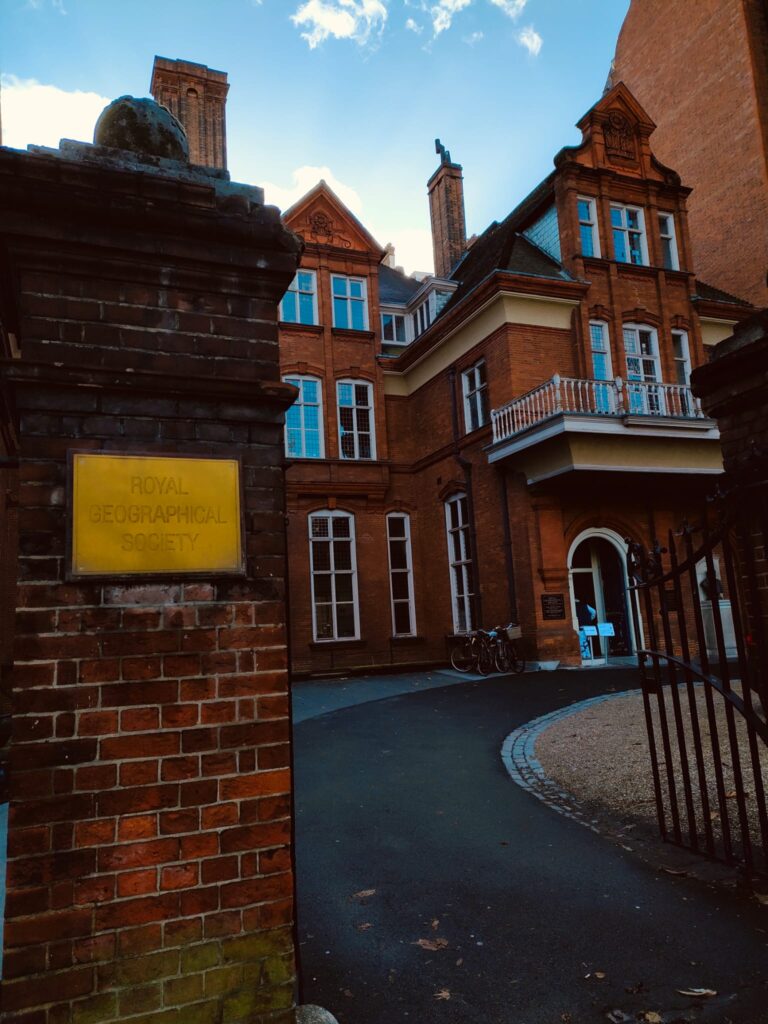
Travel, exploration, geography and cosmopolitanism have always been a founding instrument of knowledge, economic, military and political power for the British Empire. So much so that the study of geography, which inevitably also served the programmatic strategic planning of Greater Britain, led to the founding of the Royal Geographical Society in 1830, which today has some 16,000 members. It was originally founded as the Geographical Society of London to promote the advancement of geographical science, later incorporating the older African Association, the Raleigh Club and the Palestine Association, until it was granted a royal charter by Queen Victoria in 1848. Why am I talking about this? From Leighton House I am proceeding towards Knightsbridge, and I come across this building, unable to avoid being interested in it, just to learn about the cultural environment that had contributed to this artistic fertility in the Victorian age. I make friends with the librarian, all I have to do is tell him that I come from the same region as Freya Stark to see his eyes sparkle, incredibly gaining access to the archive by bypassing the strict Anglo-Saxon booking fee procedures. He explains to me that the archive contains about two million documents, maps, photos, objects, newspapers and books documenting some five hundred years of geography, travel and exploration, including the Indian subcontinent, Africa, the Arctic region, Central Asia, etc. It is a true temple for travellers, you can even access an online archive of some 10,000 trips/expeditions, categorised by type, topic, destination. If I want, I too can record my own trip, giving details of my itinerary. It would take more than my ten counted minutes, perhaps a whole day would be enough to immerse myself in the RGS archive. Instead I only have time to see the digitised documents of David Livingstone, Mr Scrambled for Africa, who went in search of the sources of the Nile, of Freya Stark at the time of her intelligence service in Beirut for the British Crown, as well as Gertrude Bell in the era of Lawrence of Arabia. Time is running out, I must leave. But my characters are ready to return..surprising me in other corners of London.
Sotheran’s Rare Books & Prints
My day’s work over, I head towards Piccadilly Circus, I know I will find my favourite boutique there to buy bitter orange marmalade. Afterwards I continue on to Mayfair, I would like to see a pub dedicated to Phileas Fogg, whose cocktail-list is inspired by each of the stages of Around the World in 80 Days. Instead, first I am intrigued by a shop window that is more retro than the others, I think it is a regular bookshop. Inside there is that ‘scent’, for lovers of the genre, of stale and dusty, that only in bookshops of yesteryear can you savour again; it immediately reminds me of the Umberto Saba bookshop in Trieste. I go downstairs, where the ‘travels, expeditions, vintage posters’ section is indicated. I approach the Middle East section, there is a trilogy of massive volumes, ‘Mesopotamia’, the author of which is Winston Churchill himself. I pick up a copy, on impulse. A distinguished gentleman with round glasses, a dishevelled moustache, and a plaid velveteen jacket approaches. ‘Good evening, yeah, you can find the price just behind the book, and you are free to take a look, if you may wish‘. I realise instantly that I grabbed that volume too lightly. I thank him, with an obvious tone of amends. He replies politely ‘this is the very authentic first edition, as almost all the books you find in this section’. I don’t believe it, I really get excited. A few months ago I was at the Old Cataract Hotel in Aswan, where Churchill had stayed in the early 1900s to monitor the construction of the dams on the Nile as part of his mission to the Middle East and Levant in the service of the British Crown. I ask him if there is anything written by or about Giovan Battista Belzoni, he apologises, there is nothing. Meanwhile, my travel characters return, and I find on the shelves, led by the bookseller, Freya Stark. He knows that Stark is buried in Asolo, he tells me that the writer was very close to the Crown, that her incessant exploration had been crucial at the turn of the two wars. Hers had been an extraordinary life, which began, instinctively, with ‘escape’, that day she embarked, leaving Italy, for the port of Beirut. He would sail through all the lands of the Levant, Israel, Syria, Constantinople, Egypt, until he reached Iraq and approached the territories of the steppes. In the bookcase there was the first edition of ‘Effendi’, published pendente bella, of ‘Letters from Syria’ and ‘The Valley of the Assassins‘. These are out-of-print pieces in Italy, which I have been trying to find for months. My new friend, in part to me, understands that I am really living on personal excitement ‘Enjoy, I’ll let you alone, I’ll go outside for a short break. Just give a look to our website list if you are looking for any further”. Sotheran’s website writes: Welcome to Sotheran’s, one of the oldest bookshops in the world, with its weird and wonderful clientele, suspicious cupboards, unlabelled keys, poisoned books and some things that aren’t even books, presided over by one deeply eccentric apprentice. Founded in York in 1761, established in London in 1815, Henry Sotheran Limited has a long and distinguished history. For over 250 years we have been offering unsurpassed opportunities to collectors and enthusiasts, from the purchase of the libraries of Laurence Sterne in 1768, and Charles Dickens in 1870; […]. Throughout our history, we have prided ourselves on the quality and condition of our books, and our friendly service. Our premises just off Piccadilly in the heart of London’s West End are spacious and elegantly appointed, and we welcome regular clients and passers-by alike to wander in and browse our stock in a relaxing and convivial atmosphere.
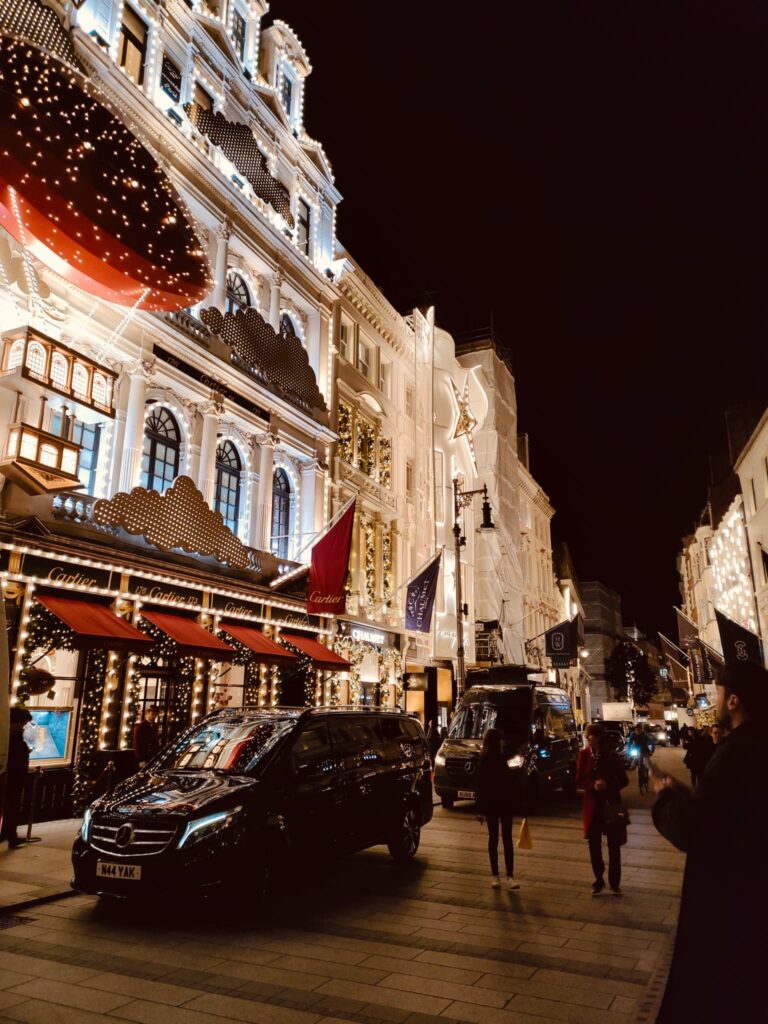
I am one of the enthralled ‘passers-by’ who fell into the trap of this corner of London, poetically by chance, greeted once again by the timeless British past, still stored in some of the grey City’s caverns, dreaming of scenarios, adventurers and faraway lands that can still help us read and adore the present. A stopover, whether intended or not, that allows adventurers/travellers to reconnect with deep-rooted intimacy, appropriating new places, debunking the search for the chimera of novelty as the only key to the journey, yet rather going for a cyclical proceeding, made of crossroads, interruptions, waiting, staying. In London, which aims to ‘streamline’ work, transactions, and cash flows, limiting the flawed and clumsy inefficiency of human labour, especially in the post-Brexit era, you can get into an uber without speaking to the driver, as booking and payment is automatic; you can order, pick up and pay in fast-service restaurants without interacting with any waiter; you can do your shopping and leave at automatic checkouts, you can access apartments via self-checkin, the super-automatic coffee machines are incenstivised because baristas do damage equipment or it costs money to train them. But in London, more than ever, it seems that the aim is to plug the messes caused by human contact, incentivising and relegating wandering dead souls to the company of themselves. Instead, today at Sotheran’s my meeting took place, perhaps inefficient, perhaps a washout compared to the rest of my productive day, but I think I felt trivially happy because an elderly gentleman took the time to see my eyes filled with happiness and enthusiasm, and so together we travelled to the Nubian sands on a mournful November afternoon.
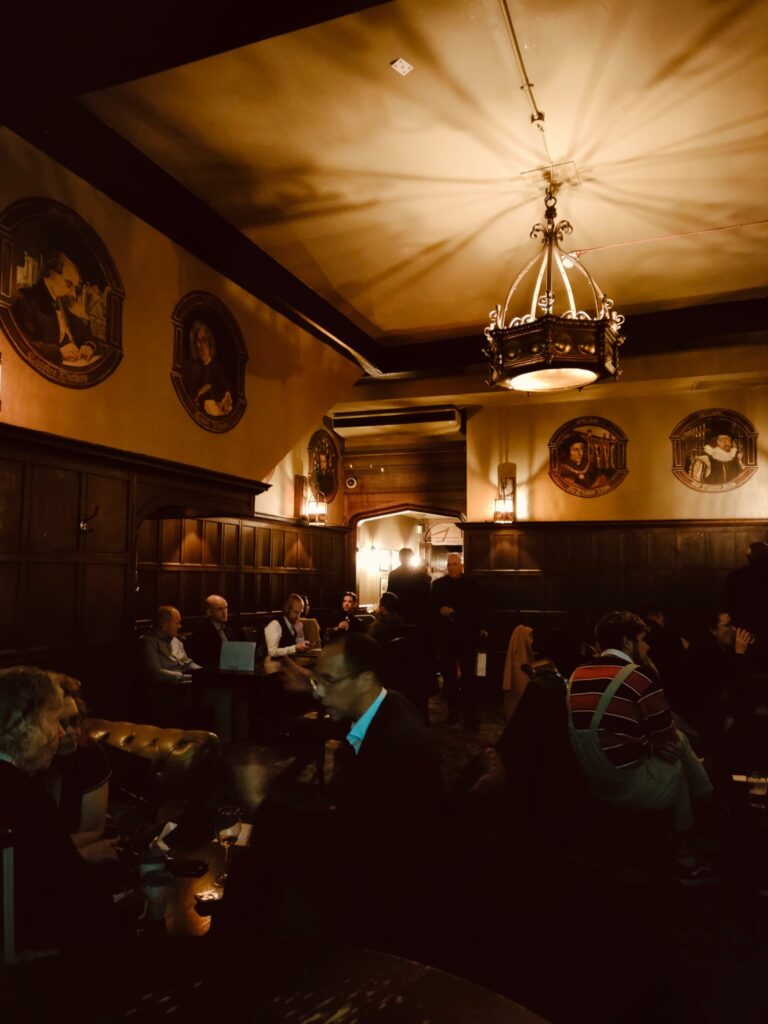
Cittie of York
Chancery Lane. 7.30pm. During the day this area is a crossroads of runners, it is easy to crash around lunchtime. In the evenings, when the day’s hangover ferments along with the spicy stench soaked into your clothes by the humidity and the stench of London’s restaurant industry, you go to the Cittie of York after work. The sign of the pub in High Holbron says it all: ‘Established as the site of a public house in 1430′. It is probably the longest, as well as the highest, pub in London, a true cathedral of taverns, a romantic evocation of Old England. It is beloved by lawyers in the Inns of Court who can choose to raise their elbows at the bar, or seclude themselves in a chain of cubicles or lounges for more intimate conversation after work. The current building actually dates back to 1923, although the cellar dates back to the 17th century. Little matter. Charlers Dickens, who apparently lived not far from here, set a couple of his stories here, including David Copperfield. Too bad, the thorns aren’t great, I try them all, before downing a cider, which doesn’t even manage to satisfy me. However, once I perch myself in the small lounge in front of the fireplace, I admit that the ambience is very atmospheric, allowing me to collect my thoughts of the day, obscured by the dark and massive ambience of English interiors, so grim and yet elegant, welcoming. I think about how to end my evening before facing the cold and heading back to Islington…
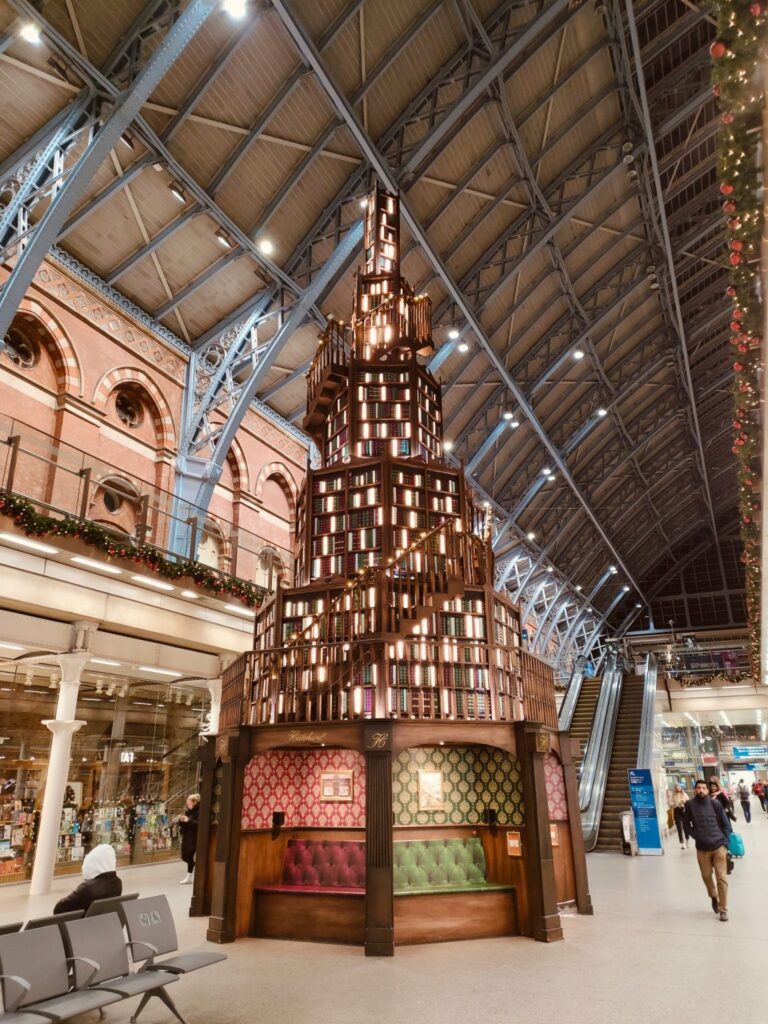
Kings Cross, St. Pancras Station
I have that strange urge to take a long walk, I choose to return to the den by tube. Thus, inadvertently, I find a worthy ending to the tale about my ideal Greater Britain, the one I believe still exists, and was born to stay. My catabasis to the underworld of the tube would have to take place at Kings Cross. And who has ever seen the station above ground? Maybe I should go and see it for five minutes. There’s always the Harry Potter platform at the bottom. Well…nice disappointment, it’s no big deal.
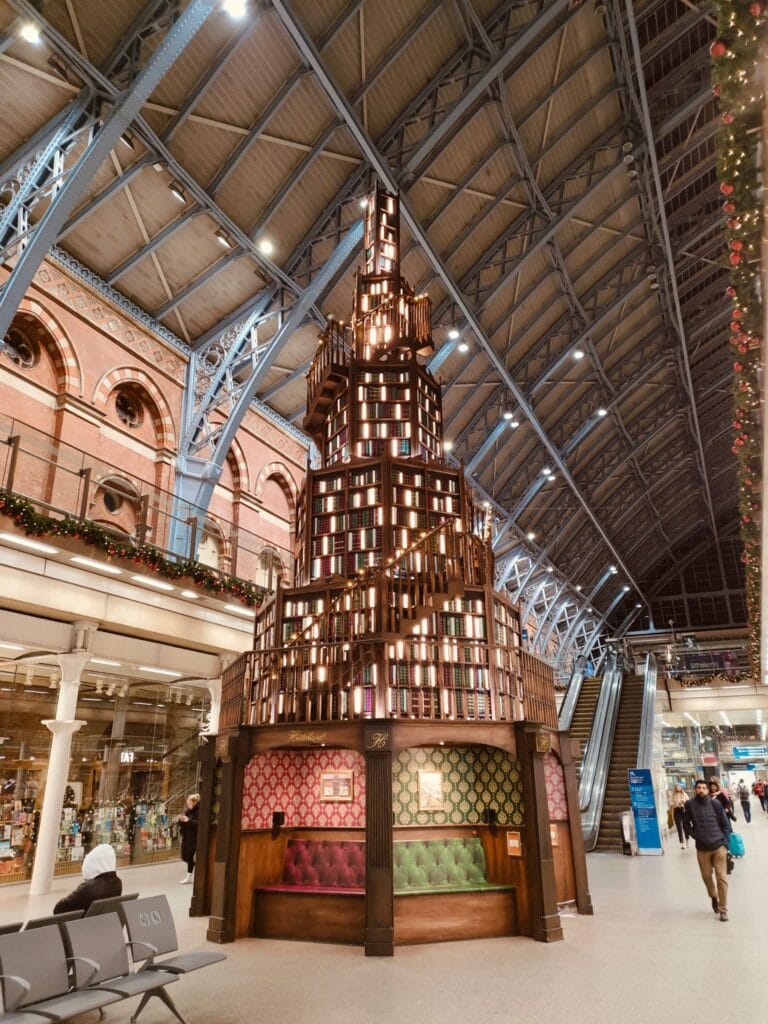
But… it’s Christmas in a month, and at St. Pancras I discovered the most original Christmas tree in London. A very tall tree of adorable books stands in the middle of the station, separating the section of the Eurostar that takes passengers across the English Channel to Europe from the tracks that head towards the British hinterland. As I get closer, I notice that there are a few bench seats where I can press a button. A narrator’s voice begins to recite Dickens’ A Christmas Carol. Mr Scrooge seems to be there, in front of me, with his gnarled claws, that aquiline nose, the top hat on his head and the slow gait, supported by the cane. He almost seems sympathetic to me, that old moneylender. He stares at me, disgusted by modernity, by the cheap happiness he sees peddled in his London, about to slink away, to go back to his dark, dusty house, where he doesn’t even turn on the heating, even he refuses to give in to the onerousness of the unacceptable overheads of 2023. But I smile at him. After all, I know how his story will end, Scrooge will turn good. Perhaps once again, another encounter, albeit an imaginary one, will have served to save me, perhaps even him, by curbing the ordinary motion of time, by reminding me that his 19th-century London was perhaps too much like mine, and that always, just by wishing, from the nocturnal souls of Kings Cross, Britain can become Greater again, and signs can always become meanings.
We are the ghosts of Christmas present
Goodnight.