3:30 a.m. The alarm goes off in Aswan. We’re all curled up, silent, puffy-eyed, biting croissants in the riverboat lobby. The Greeks are, as always, chatting away on the deck—their meeting point even in the dead of night. Maybe they didn’t sleep at all. At 4:00, just before we slip away, I strike up a friendship with a few of them. Mrs. Lucia, a Greek woman born in Trieste, piercing blue eyes and blonde hair, speaks to me in Italian. She invites me to her hair salon in Thessaloniki and then exclaims, raising a finger as my mother shows up: “Claudia, your mamà is gorgeous!”
A decibel worthy of Maria Callas, jolting me awake in the heart of the Nile night.
We board the bus with our boxed breakfasts. We sink into the oblivion of Aswan’s night—three hours of driving through the southern desert, toward the Sudanese border.
“…the government’s idea is to bring these lands around Abu Simbel under cultivation, so Egypt can once again become the extraordinary breadbasket it once was and finally meet its domestic food needs. Some historians say that without Egyptian grain, Rome would never have existed…”
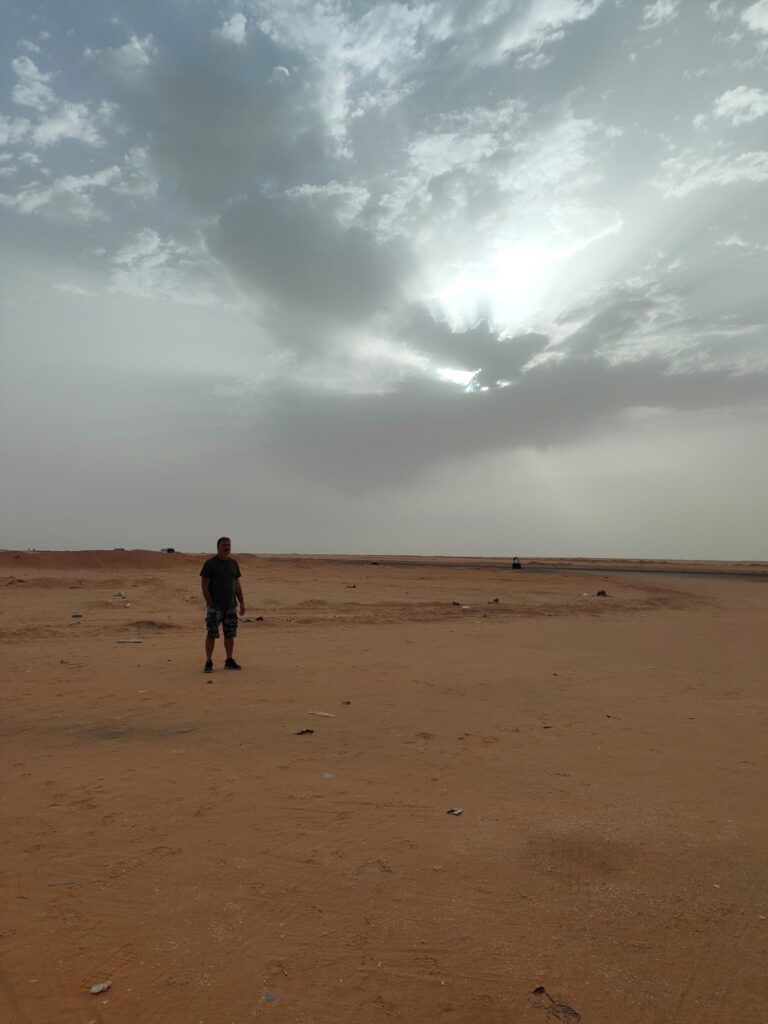
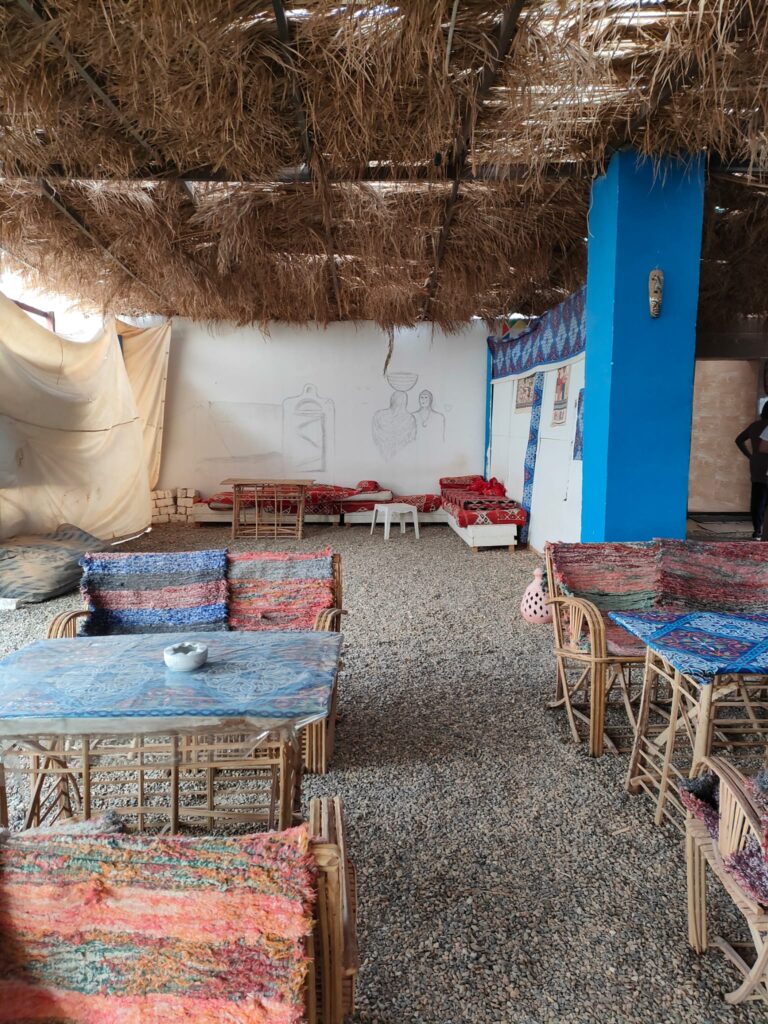
This is how Ahmed greets us when, a couple of hours later, we wake up in a camp at the extreme south of the country. I believe he’s referring to the New Valley Toshka Project, conceived and launched by Hosni Mubarak and now revitalized by Abdel Fattah al-Sisi to build a system of canals that would double the arable land of Egypt’s Western Desert, part of the Sahara. I try to listen as I struggle to pry open my eyes, dazzled by the contrast between the yellow sand and the dark, cloudy dawn sky. The desert camp is actually a highway rest stop. Its style echoes traditional Nubian architecture, where the populations displaced by the Aswan Dam were resettled. We pass near these villages just as, beyond the border, Sudan’s civil war rages on: Western embassies are evacuated from Khartoum, the first Sudanese refugees flee into Egypt, near Abu Simbel—our destination.
A few evenings ago, Ahmed told us about the importance of Sudan: a Nile-washed country, a buffer state between Egypt and Ethiopia, where construction of the Grand Ethiopian Renaissance Dam (GERD) on the Blue Nile began in 2011, in collaboration with the Italian company Salini.
“Yes, but it’s not the Italians’ fault. If it hadn’t been you, someone else would have built the dam,” Ahmed mutters. “The point is that in 2019 we were ready to bomb the dam area and Addis Ababa. If the project had become fully operational, it would have taken away about 70% of the hydroelectric power we get from the Nile.
This means a real energetic, infrastructural and food disaster for a constantly growing country like Egypt. Trump was ready to intervene on our side. President al-Sisi stated a few years ago to the Financial Times that the Nile is a matter of life or death for Egypt, while his predecessor Mohamed Morsi was even harsher, with a famous phrase: if the Nile is reduced by a single drop, our blood is the alternative. Today us Egyptians are more than 100 million.
In Egypt, families look like football teams, even though lately urbanization has brought unbearable living costs, job demand doesn’t meet supply, and this war in Ukraine has sent food prices skyrocketing—as well as real estate prices. As a consequence, even we Egyptians are starting to have fewer children. Now that there’s war in Sudan too, our water supply is once again at risk. We’ll see what to do. For now, at least, tourism is doing well…”
The United Nations predicted that Egypt could run out of water resources by 2025, together with Sudan —a country in the midst of civil war and already emerging from the Darfur conflict, which was also largely driven by access to water (a flawed prediction so far, as I recomment the article as of February 2026). The dam, the symbolic infrastructure of transboundary water disputes, once again poses serious threats to peace in local international relations. In the Arab world, Saudi Arabia, Oman, and Bahrain have supported Egypt’s position on the GERD, while in 2022 the United Arab Emirates mediated secret talks between Egypt, Sudan, and Ethiopia. Conversely, Ethiopia has signed agreements to sell electricity generated by the GERD to Kenya, Tanzania, and South Sudan, while planning energy supplies to Rwanda, Somalia, and Burundi.
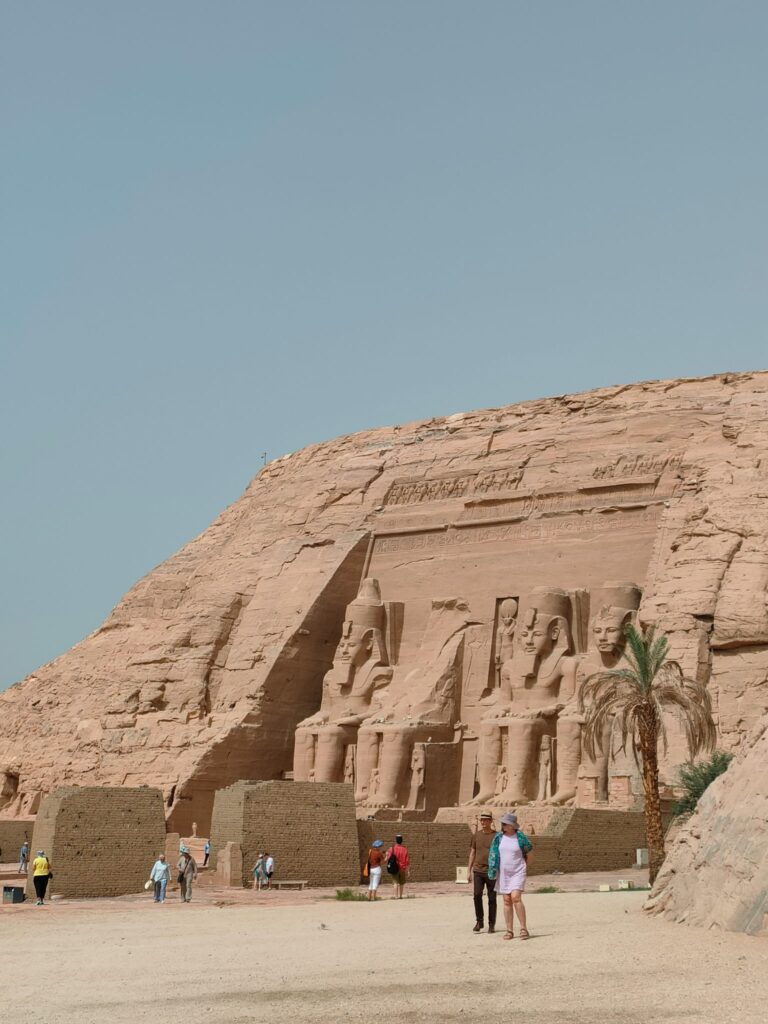
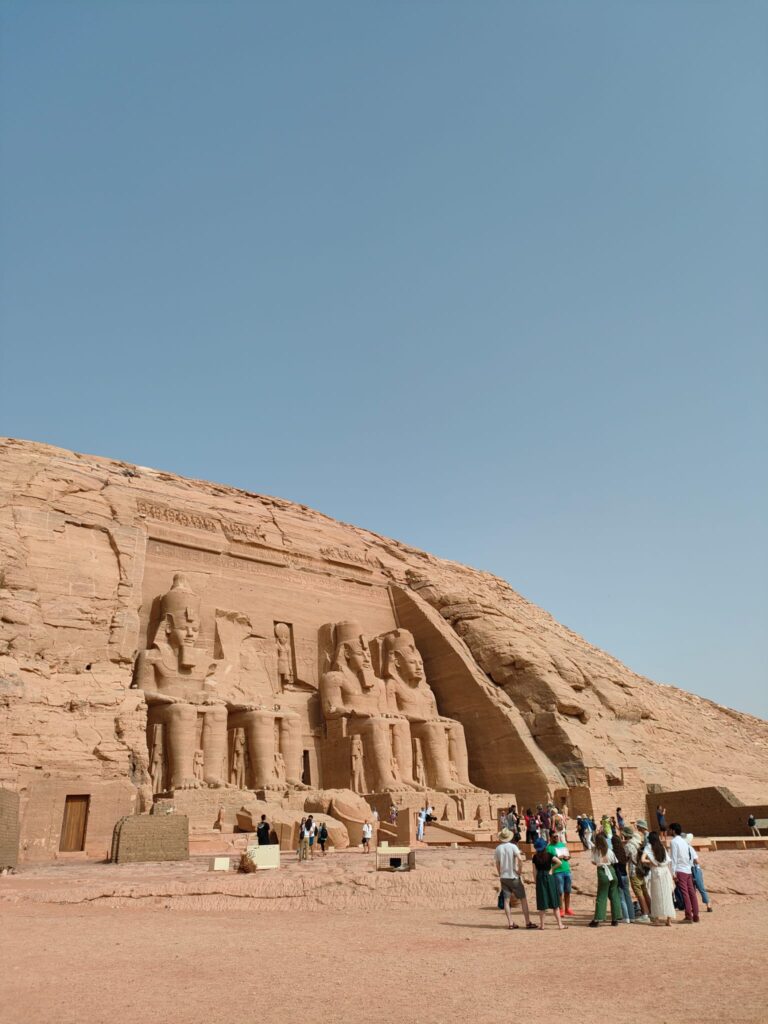
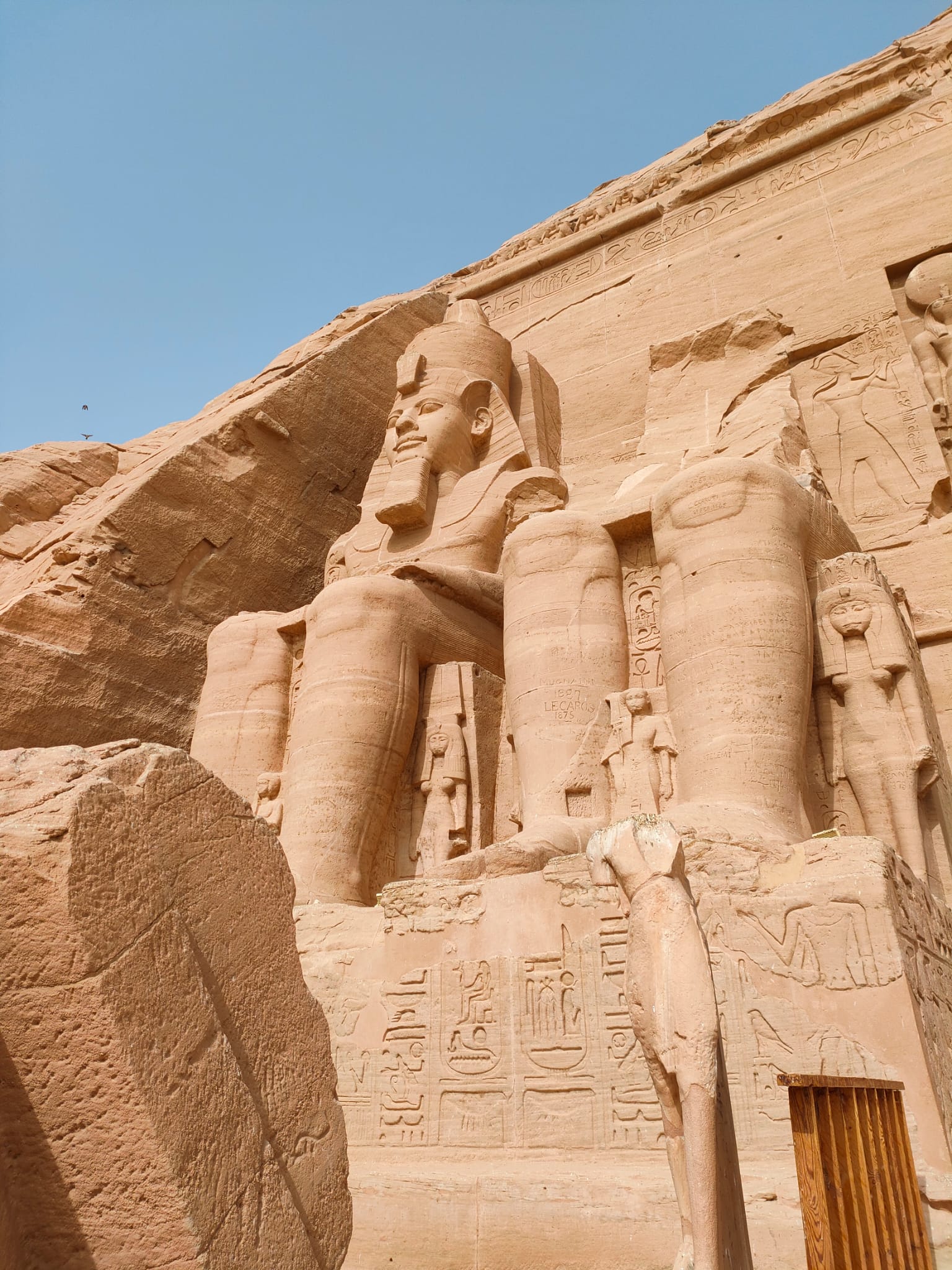
In any case, we arrive at Abu Simbel. It’s 35°C at 7 in the morning; we are dehydrated sleepwalkers moving toward the temples. Then—the vision. Immense.
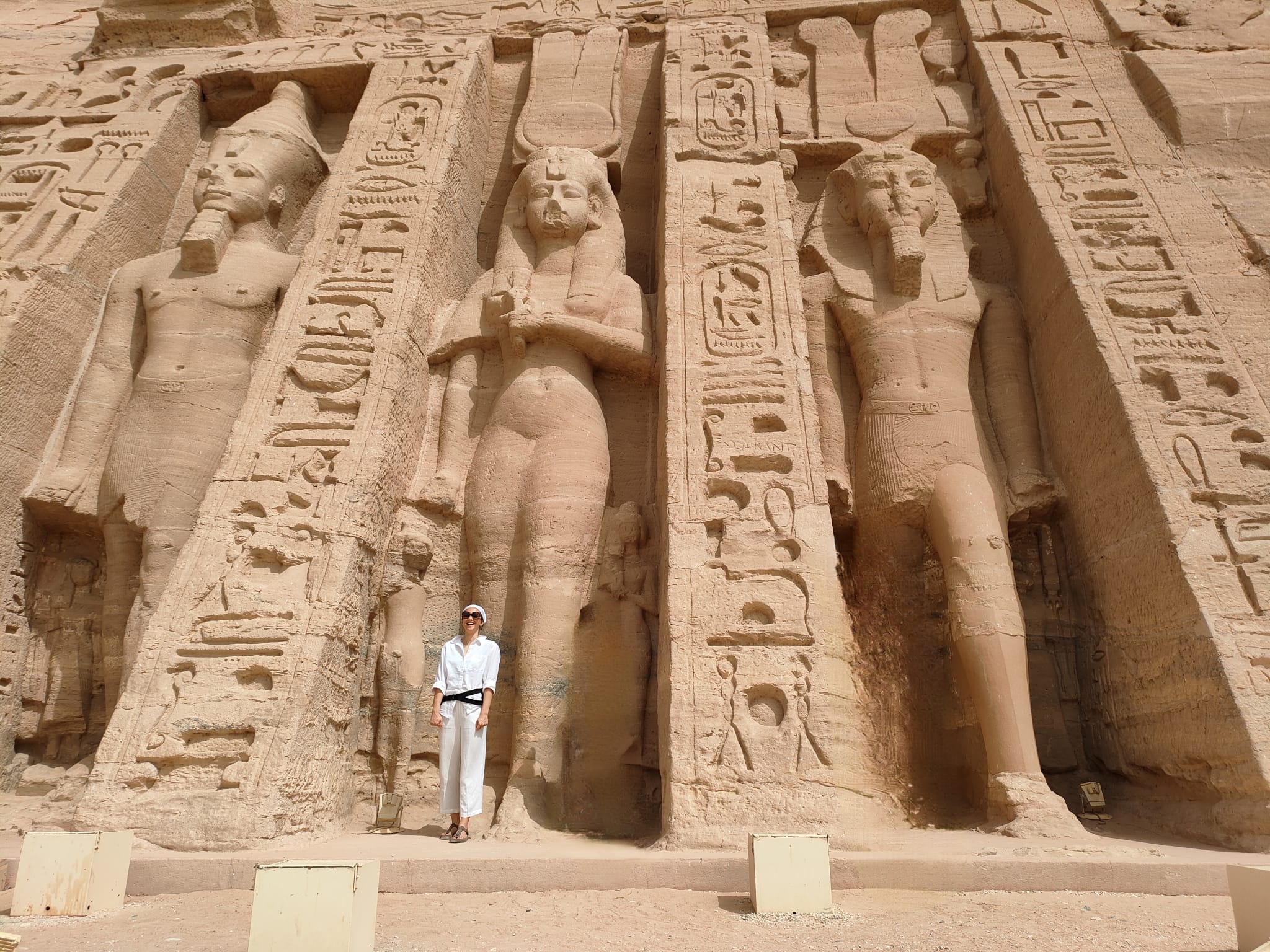
The first to ascertain its existence was Jacob Burckhardt in 1813, when it was still buried in sand. According to legend, a local boy named Abu Simbel guided the explorer to the site, thereby lending his name to the location. However, the true bold explorer to access it was Giovanni Battista Belzoni, who would consecrate his fame thanks to this discovery. More than a century later, the Aswan Dam threatened to drown the majestic temples forever. As many as 113 countries mobilized, sending people, money, and technology to save the monument. It was dismantled block by block and reconstructed on another hill, 65 meters higher and 210 meters farther back from the newly formed reservoir. Forty million dollars were invested in two thousand workers, led by the Italian company Impregilo, to carry out one of the most extraordinary archaeological efforts of all time. On September 22, 1968, with a grand ceremony, Egypt announced to the world the rebirth of the magnificent monumental complexes of Ramses II and his wife Nefertari.
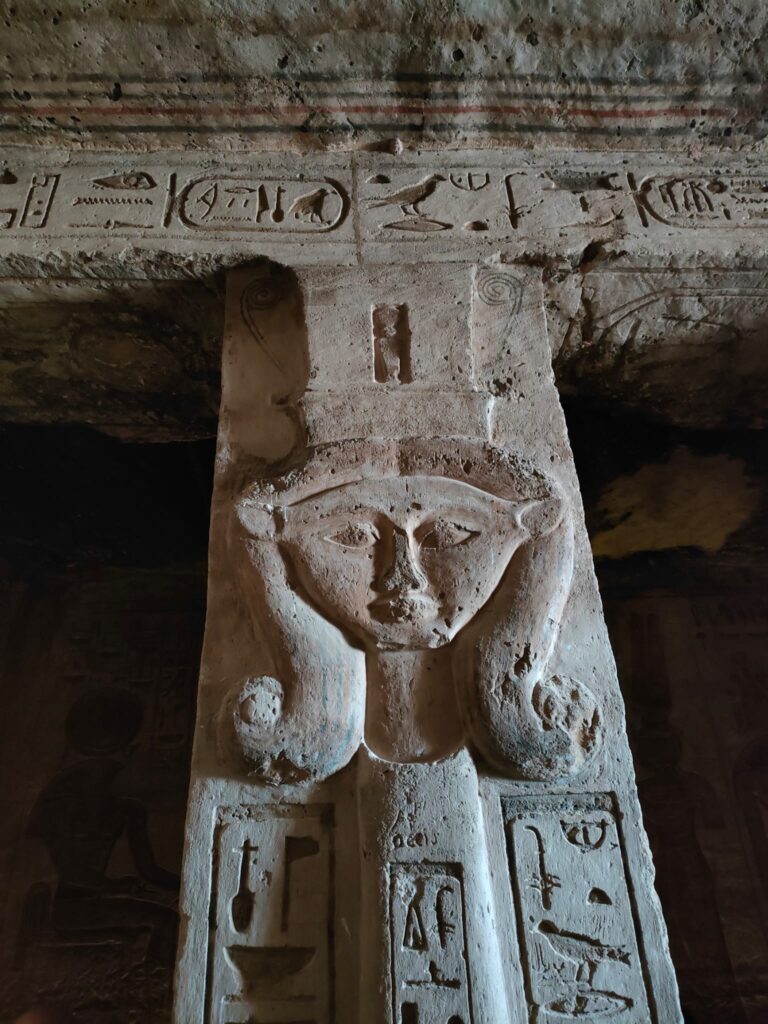
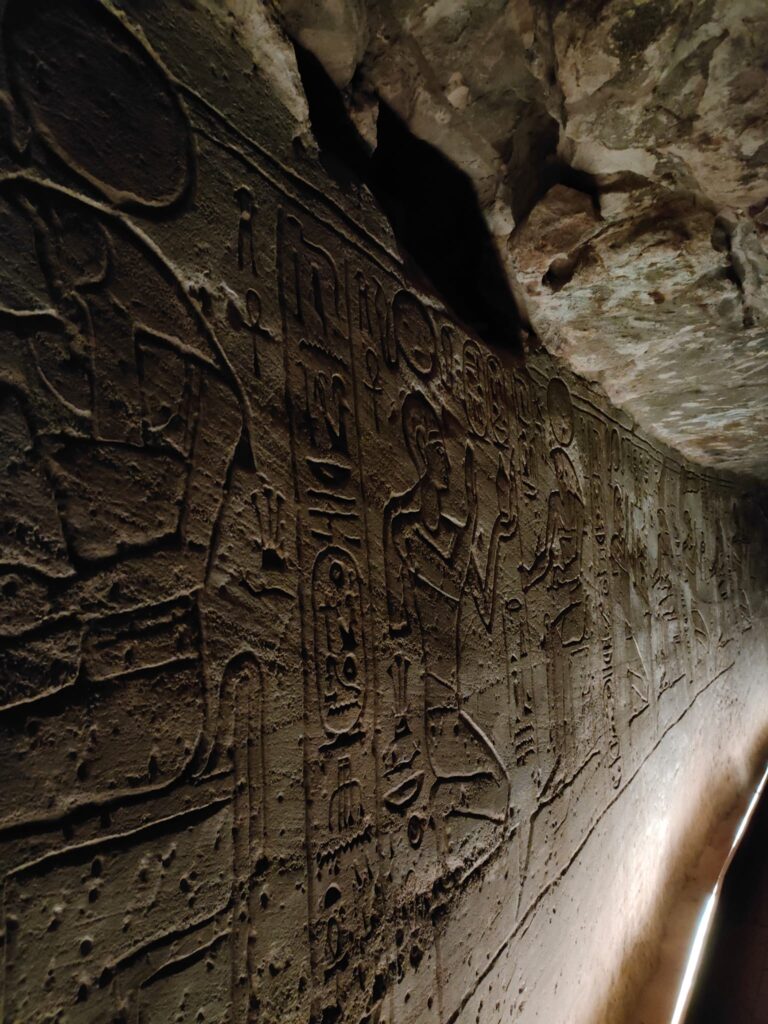
Ramses the Great had more than a hundred children in his lifetime with different women, yet he is said to have been so deeply in love with Nefertari— the most beautiful queen in all of Egyptian history— that he dedicated a temple to her. This is one of the stories told to the human procession that coils around the temples, making the visit difficult, especially inside, where pitch darkness reigns. We are wayward souls venturing into the shadowy Purgatory of Abu Simbel. Dazed by sleep, dehydration, and the crush of people, I can’t clearly remember the figures inside the temple. But the sight of the Abu Simbel esplanade is something incredibly exceptional, of such evocative vastness that one cannot even imagine the emotion Belzoni must have felt upon discovering this site. It’s said he was fainting, suffocated by the heat inside the temple, by the dust… or perhaps he was fainting from awe? I feel a strong sense of empathy with his psychophysical state.
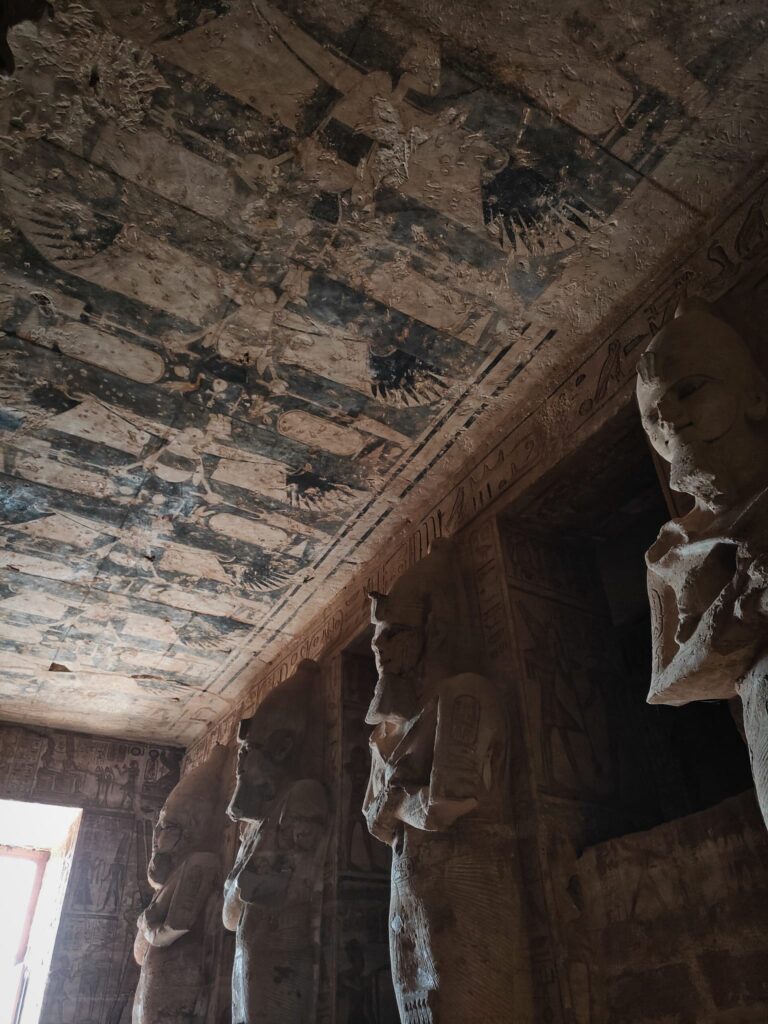
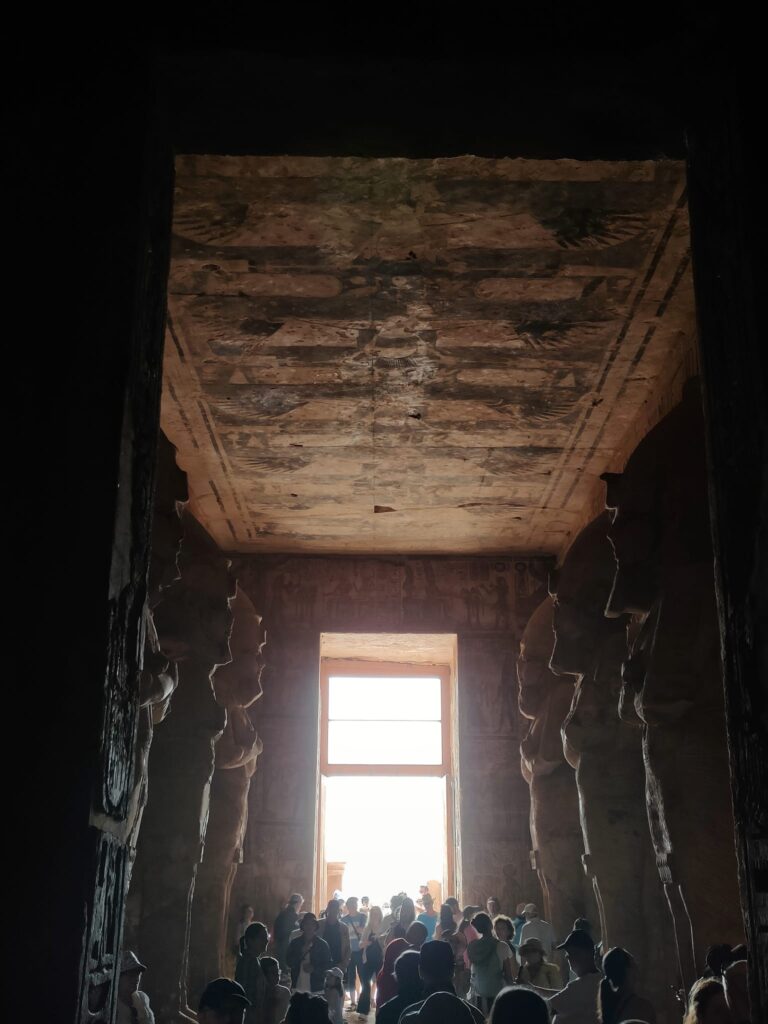
On the other hand, it’s hard to put oneself in that extraordinary archaeological moment while weakened by the scorching African heat and swarmed by tourists. We have only 45 minutes to devote to the visit, to fly over Lake Nasser with our eyes, to look toward the horizon, to the very borders of Egypt.
As soon as we return to Aswan, the people of the Nile greet us as we step off the bus. They are waiting to gather the leftovers from our boxed breakfasts. Children arrive, along with fathers —only men— asking us to take home for their families, for themselves, or for anyone at all, what we didn’t feel like eating. It’s an event that makes us feel tiny, sorry, and powerless, as we instead proceed toward the usual lunch banquet aboard the cruise ship.
In the afternoon, our domestic flight to Cairo awaits. I’m very impatient.
10:00 p.m. We’re in Cairo, waiting at the baggage belt of our EgyptAir flight for about an hour and a half. We’re about to lose hope. It seems we’ll finally make it to our hotel, the Sonesta in Heliopolis, in the newer part of Cairo. We get on the bus; everything seems ready. But Ahmed says we still have to wait as checks need to be carried out on our vehicle. By whom? Welcome to Cairo.
We’ll soon learn to submit to cursory, random checks by police officials, plainclothes agents, or who knows whom. We stew on the bus for about an hour. We’re on a stupid tourist coach, what on earth could be the problem? We’re all exhausted, worn down by the early wake-up for Abu Simbel, yearning for dinner. Then, suddenly… green light. We can leave. But what did they check? They didn’t even search a single suitcase.
We will get used to it. We’re in bed by 1:00 a.m., and tomorrow morning the alarm is scheduled to ring at 5. But it will be the day I’ve been waiting for my whole life —the Pyramids.
Good night, Cairo.

Delving to the thoughts of emotional influence in the first sight of Abu Simbel… As I close my eyes, my pupils are dancing out of the visual imagination to rescue from oblivion, almost fainting through the optical road to Zion and nearly suffocating by the dreamily fragrant of heated dust… Or perhaps I am just fainting out of reverence, feeling sensuously whole in awe!