HONG KONG
“You walk in the noonday sun and suddenly you can no longer see your shadow.”
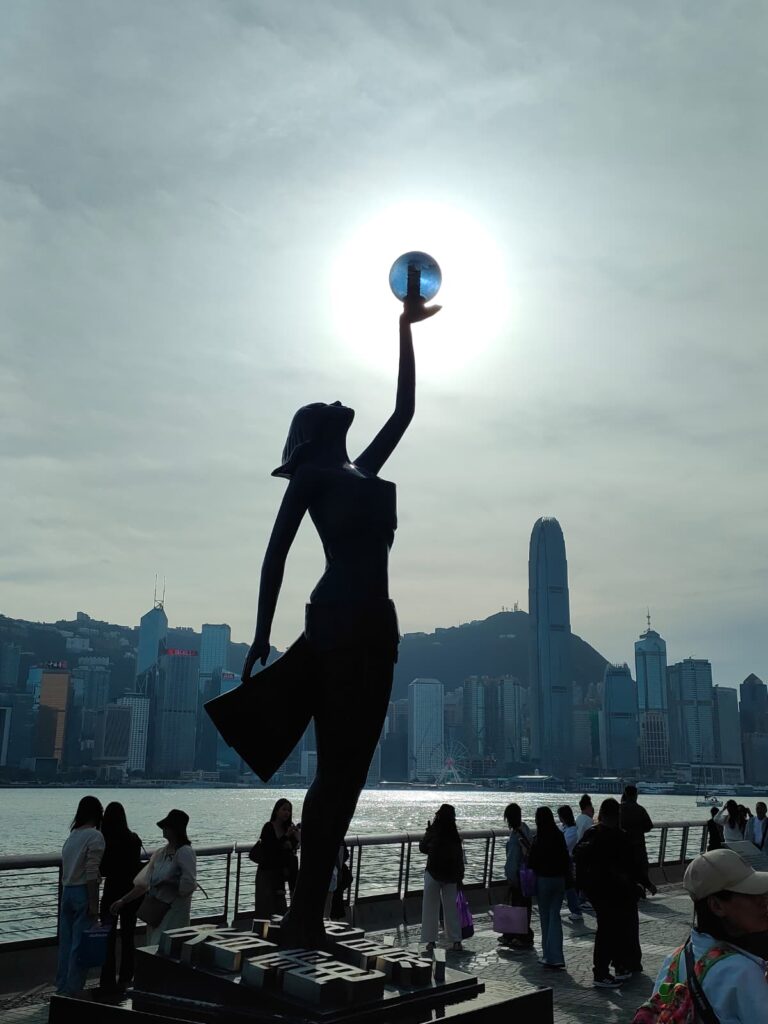
This is how Lawrence Osborne metaphorically describes the gwai lo in his novel Java Road, set in Hong Kong. Java Road is the long street running parallel to the hotel where I am staying in the “Asia’s World City” during the warm November of 2025. It is also the long avenue connecting the historic district of Wanchai to Fortress Hill, a quiet seaside residential area where offices alternate with sophisticated venues serving Peking duck, black sesame street desserts, until reaching Victoria Park, the garden of joggers. The same park where, until the beginning of COVID-19, the monument to the Goddess of Democracy stood, commemorated every June 4 in memory of Tiananmen.
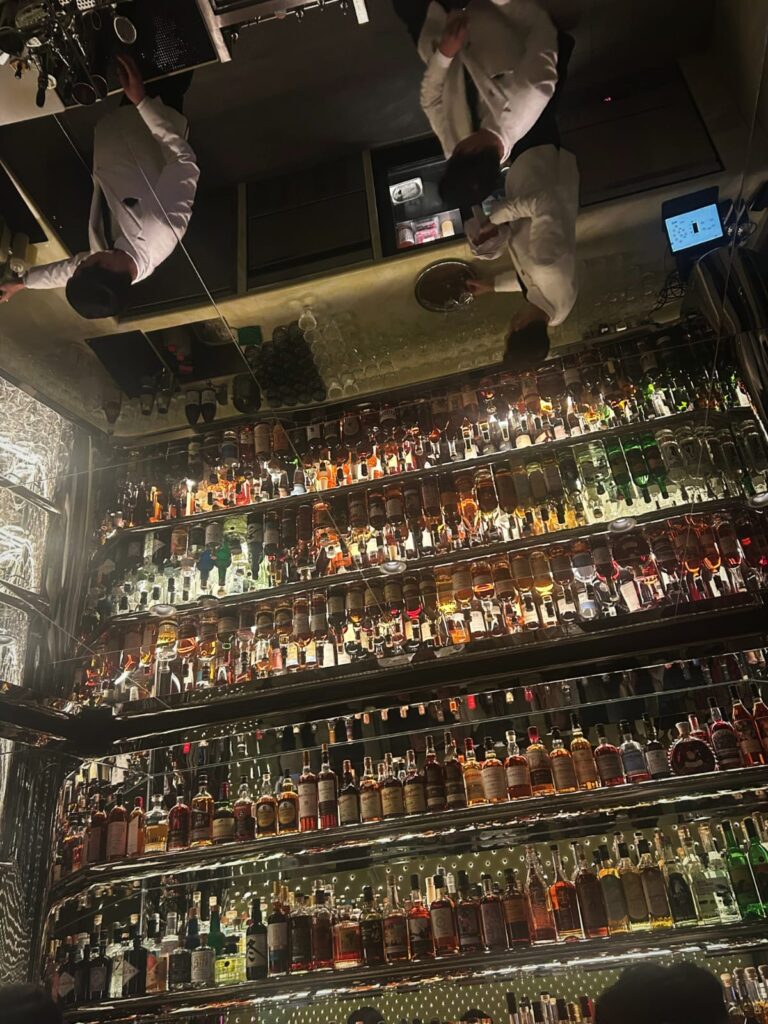
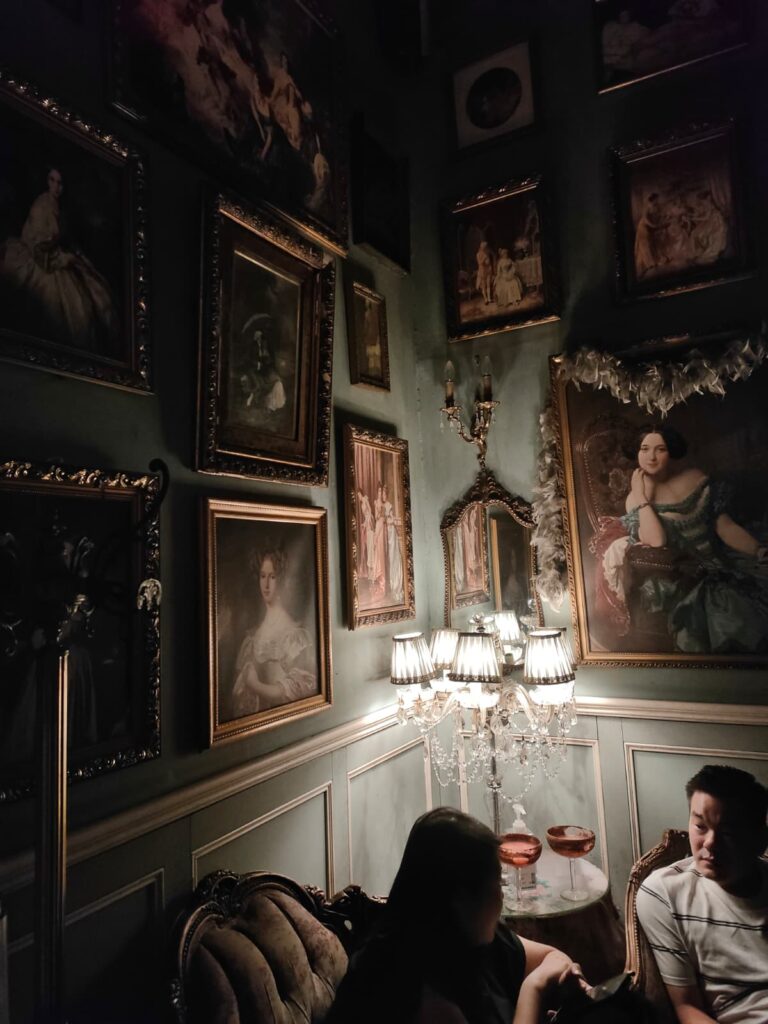
Who are the gwai lo? What remains of the expats living in Hong Kong: spirits orbiting the finance district of Central, the alcoholic Friday nights in Sheung Wan’s speakeasies, the Foxglove jazz club, the fine dining at Duddell’s, the clubs like Soho House and the Intercontinental lobby where politics can only be whispered, as well as at the horse races held every Wednesday evening at Happy Valley Racecourse since 1847. They are the ones who chose to stay after the handover from Great Britain to the People’s Republic of China, despite the violent Umbrella Revolution of 2014, the National Security Law imposed by Beijing during the pandemic (2020), and the two million foreigners who have left the country in the past five years.
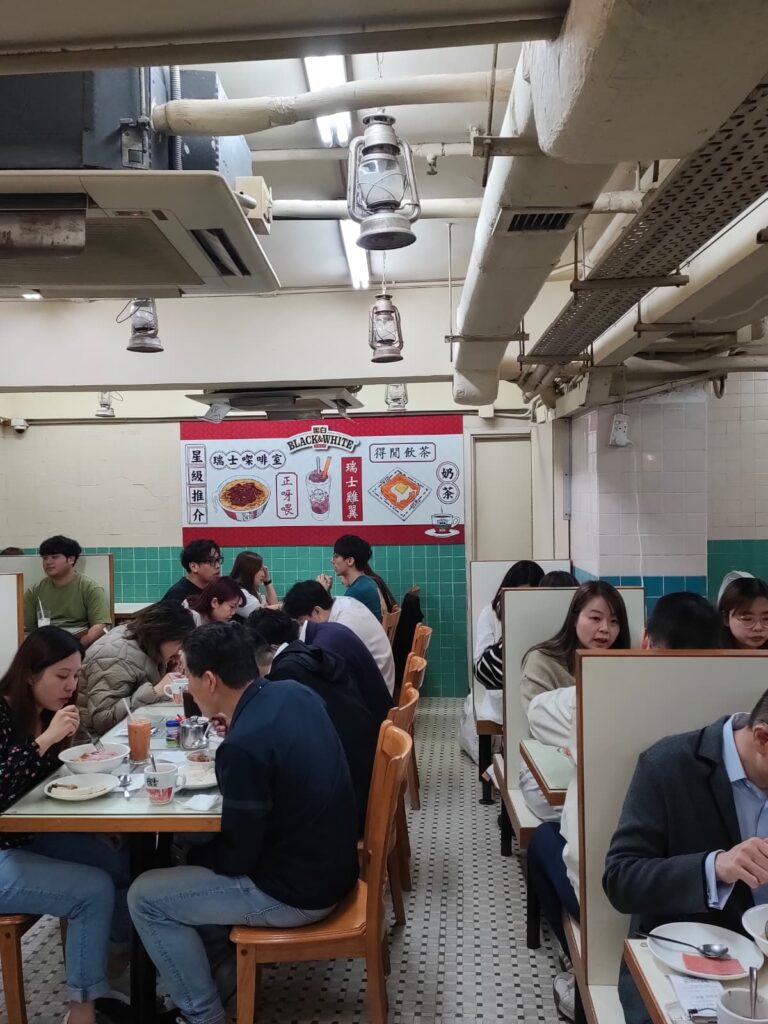
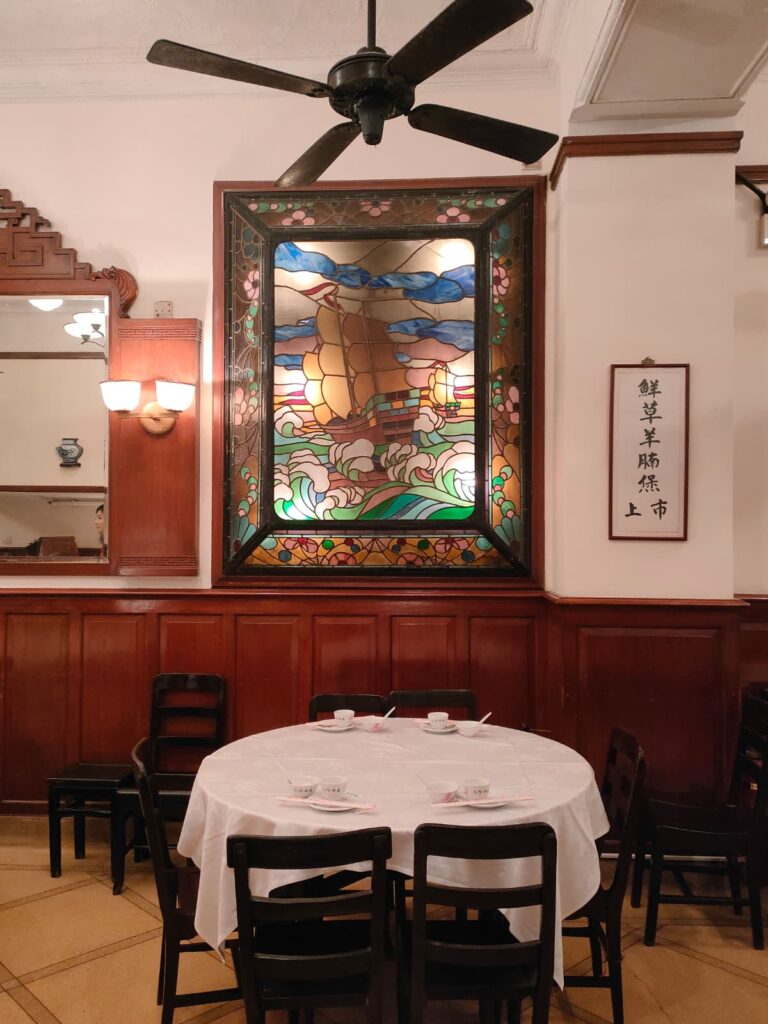
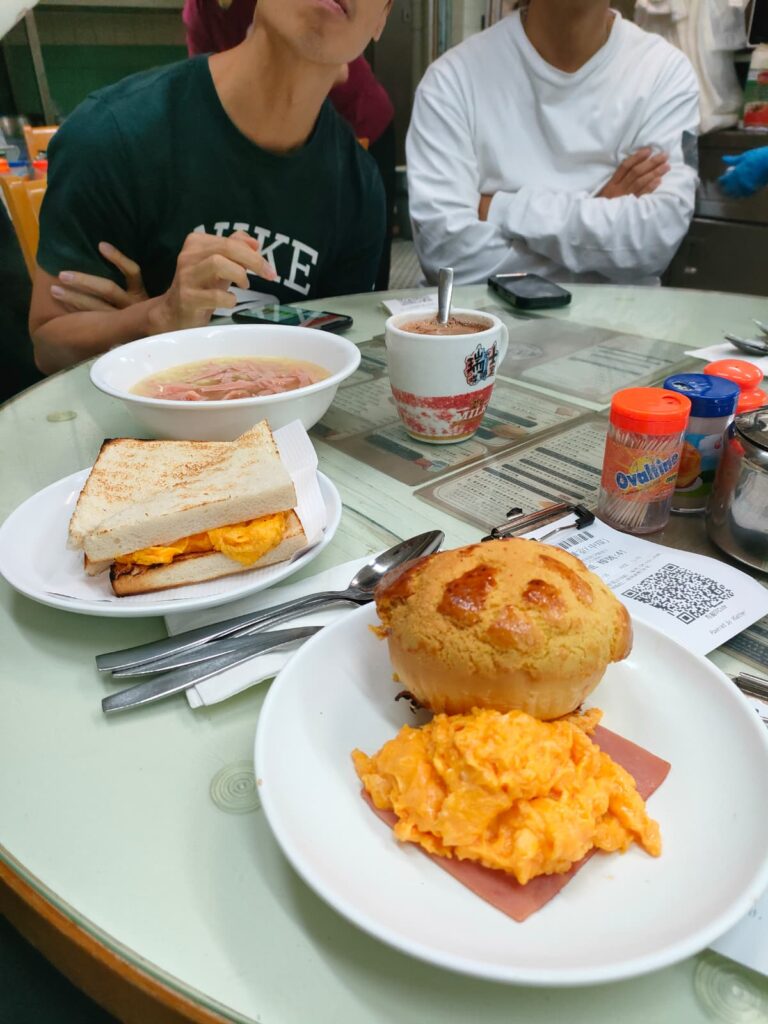
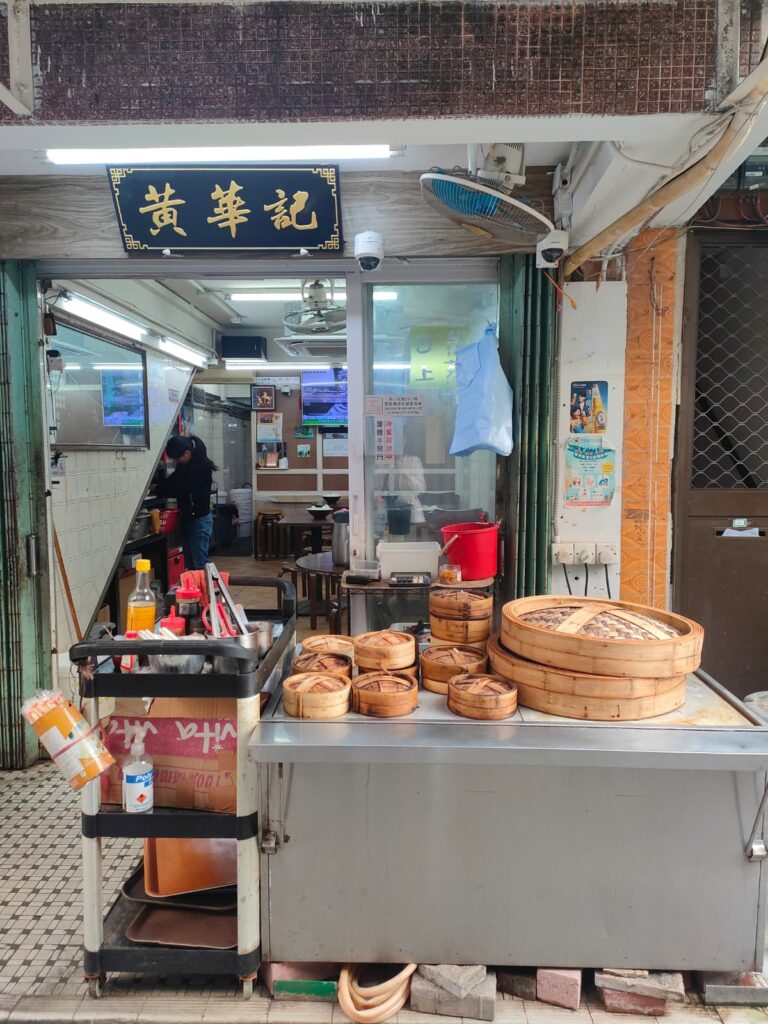
The places I prefer in Hong Kong are the chaa chaan teng. They are nothing special—just all-day diners. Some are stylish and chic, others less so, some almost shabby. The first time I sat down for dinner, they brought me a glass of hot water and cutlery. Foolishly, I drank the water, thinking it was some kind of local Ayurvedic ritual. Luckily, a patron at the Swiss Café explained that the water was meant for rinsing utensils —Hongkongers don’t trust cleanliness. I enjoy these places because they contain the unique identity of Hong Kong in every sip, every gesture. It is not customary to socialize with strangers at neighboring tables. A pity for tourists eager to interact at all costs to claim an “authentic” travel experience, whatever that means. The average Hong Kong resident is cosmopolitan, well-educated, often stakhanovite —no time to idle or chat.
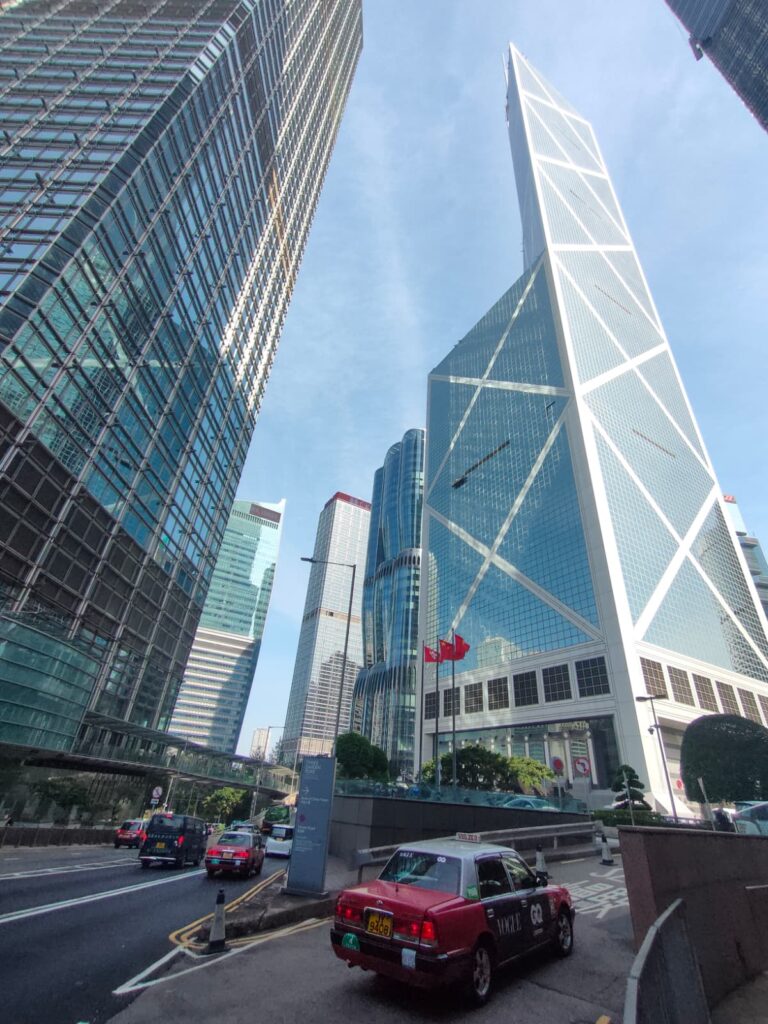
Central on weekdays captures the city’s energy: a London-style rat race infused with the frenzy of Asia’s financial capital—glamorous skyscrapers, elevated walkways connecting office buildings, red double-decker buses, and well-dressed individuals moving briskly through the tube and quick tea-house lunches. Here, white-collar workers in their tailored suites pick up chopsticks, order milk tea, then noodles, dim sum, roast duck with rice, or even a full Hong Kong breakfast: pineapple bun, scrambled eggs, noodles with ham in broth, stuffed French toast, beans. Then they rise quickly, swipe the Oyster card, or pay via WeChat Hong Kong (which works only here, not in mainland China or Macau, where a specific local division of WeChat operates), or cash.
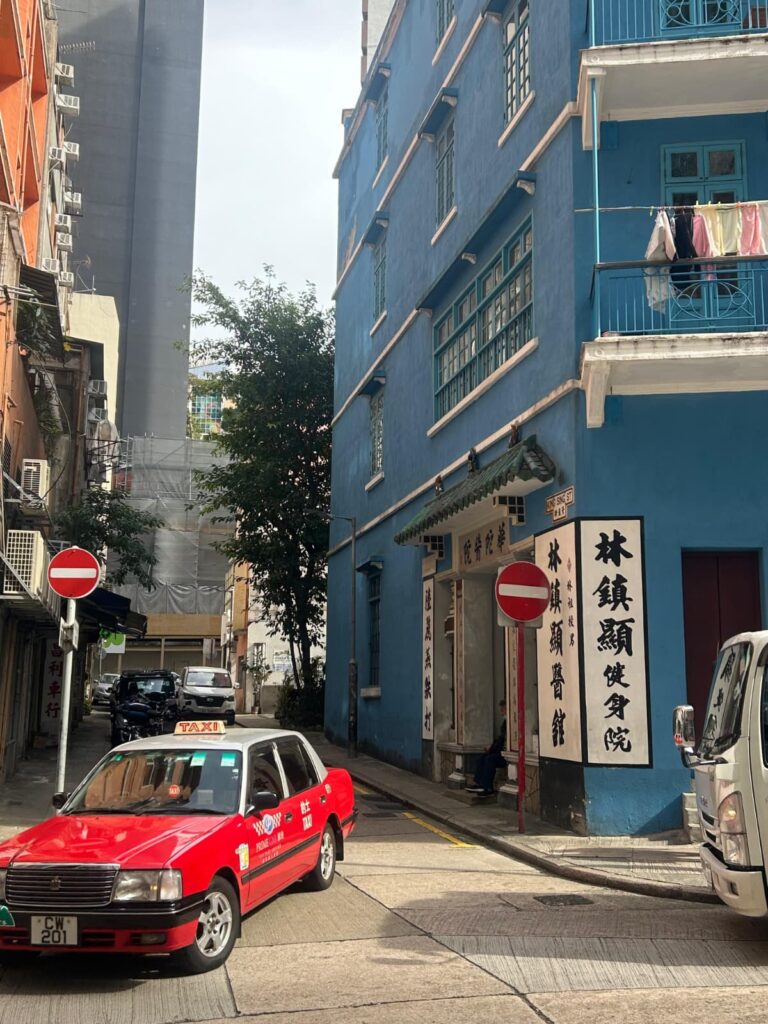
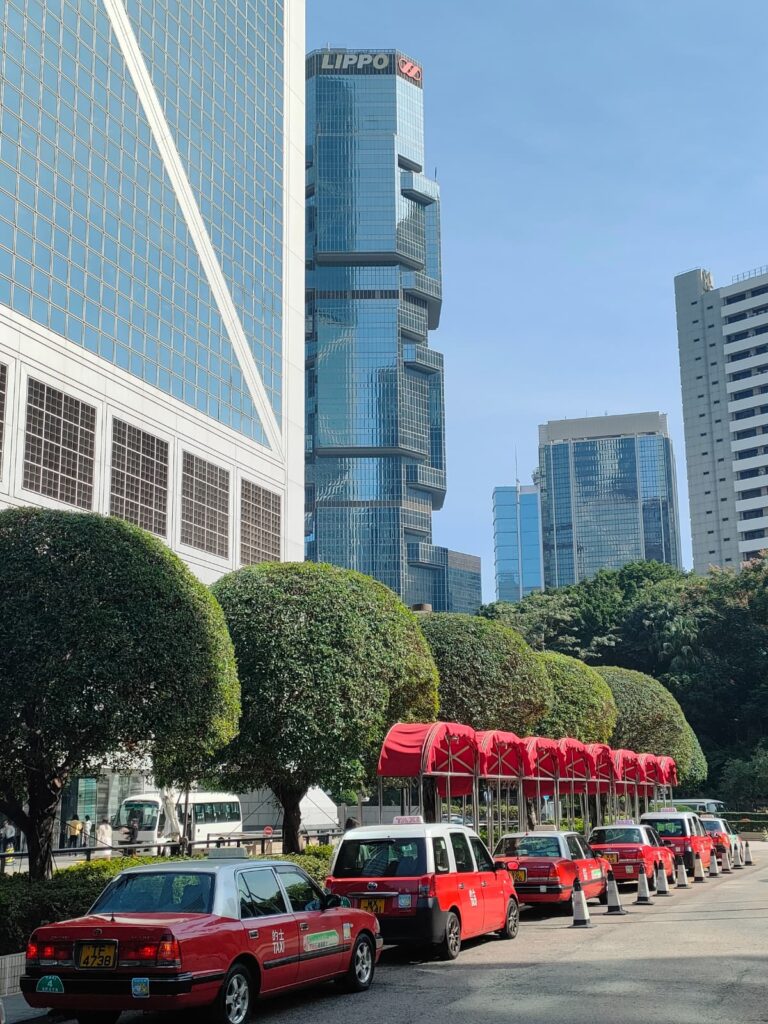
Scenes of daily life in a handed-over territory, where milk tea —clearly a British legacy— is more than a culinary symbol. Together with the iconic 70s-styled red taxi, it represents a resilient city that continues to express its unique charm and determination. The #milkteaalliance, popular across Asian social media, symbolizes democratic resistance unwilling to let its identity fade under culturally and demographically dominant neighbors. Being a “ceded” territory cannot be easy.
Hong Kong’s origins are steeped in legend. The ancient Tanka tribes, still present in stilt-house villages on Lantau Island, were said to be zoomorphic—amphibious scales and human skin. Whether myth or not, they were seafaring people, later enslaved by the Chinese Song dynasty. After the Treaty of Nanjing (1842), the British raised the Union Jack on Possession Street, located in what is now the trendy Sheung Wan, beginning what Beijing calls the “century of humiliation.”
The British built their colonial ecosystem: the Victoria Institute, the St. John’s Anglican Cathedral, the Central School (attended by Sun Yat-sen), the PMQ (where approximately 1,951 “married” police officers once lived —now turned into modernist multi-story complex), the Tai Kwun Central Police Station, the infrastructure, and the Victorian-era Star Ferry. They settled in the city, leaving neglected the areas they considered irredeemable, in pure Anglo-Saxon optimization style. One of those was the Walled City of Kowloon, where prostitution, gambling, and drug trafficking would proliferate unchecked until the 1980s, it is the emblem of the territories forgotten by the Crown. Here, the population grew even more dramatically following the Chinese Civil War (1946–1949), when the number of incoming Nationalist refugees from mainland China reached 670,000.
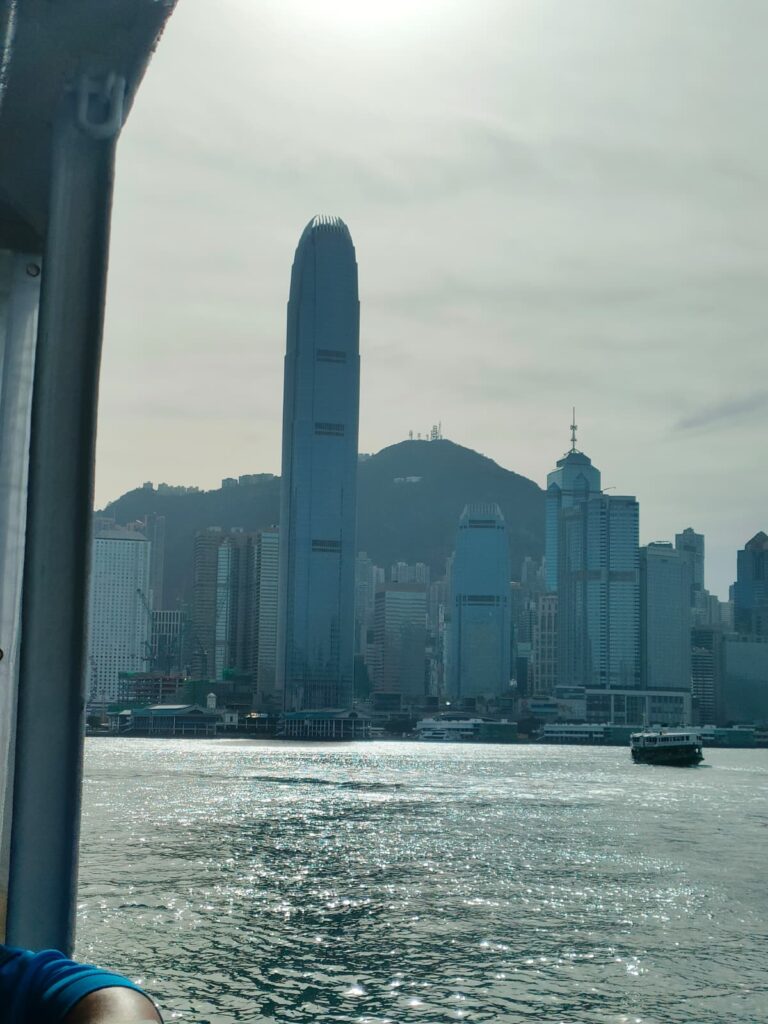
Boarding on the Star Ferry from Central and Admiralty’s decks to Tsim Sha Tsui is an act for those romantic who are available to lose time and observe the city from the water. From the ferry, Hong Kong appears both tropical and futuristic, layered with History. The Bank of China Tower rises first, then Lippo Centre, Victoria Peak, and Norman Foster’s HSBC building—the world’s most expensive ever built in the 80s, today ended up freezing the accounts of prodemocracy Hongkongers. History decided to manifest in 1984, through the leadership of Margaret Thatcher and Deng Xiaoping, and hand over the city of Hong Kong to neighboring China, on the condition that Hong Kong would not become part of China but would instead adopt the well-known “one country, two systems” framework. Hong Kong would retain its currency, pegged to the dollar, its own postage stamps, its customs service, the +852 country code, and its Legislative Council. It would be virtually autonomous in all respects, with the exception of defense and foreign affairs, which would be managed by Beijing. The official year of the handover was 1997. From the Star Ferry, one can see the Hong Kong Convention and Exhibition Centre (HKCEC), located in the Admiralty district, where King Charles, Tony Blair, and Hong Kong Governor Chris Patten attended the handover ceremony to the communist leaders. The text of the handover agreement, ratified and deposited with the United Nations, was intended to guarantee the maintenance of Hong Kong’s aforementioned status for the next fifty years.
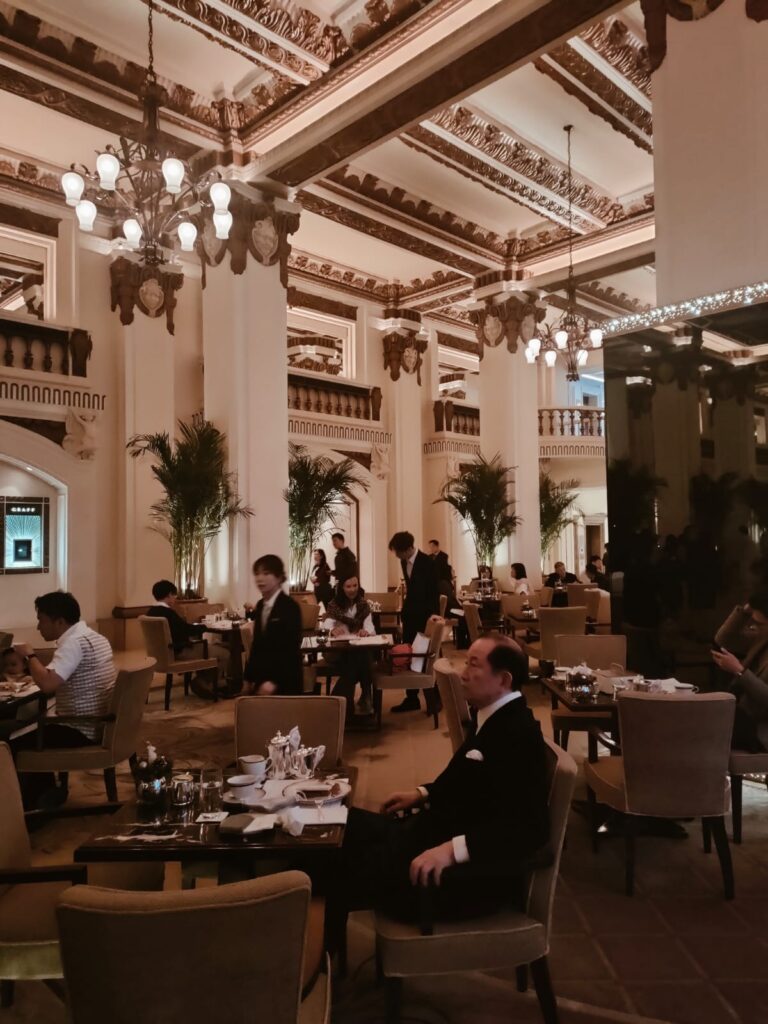
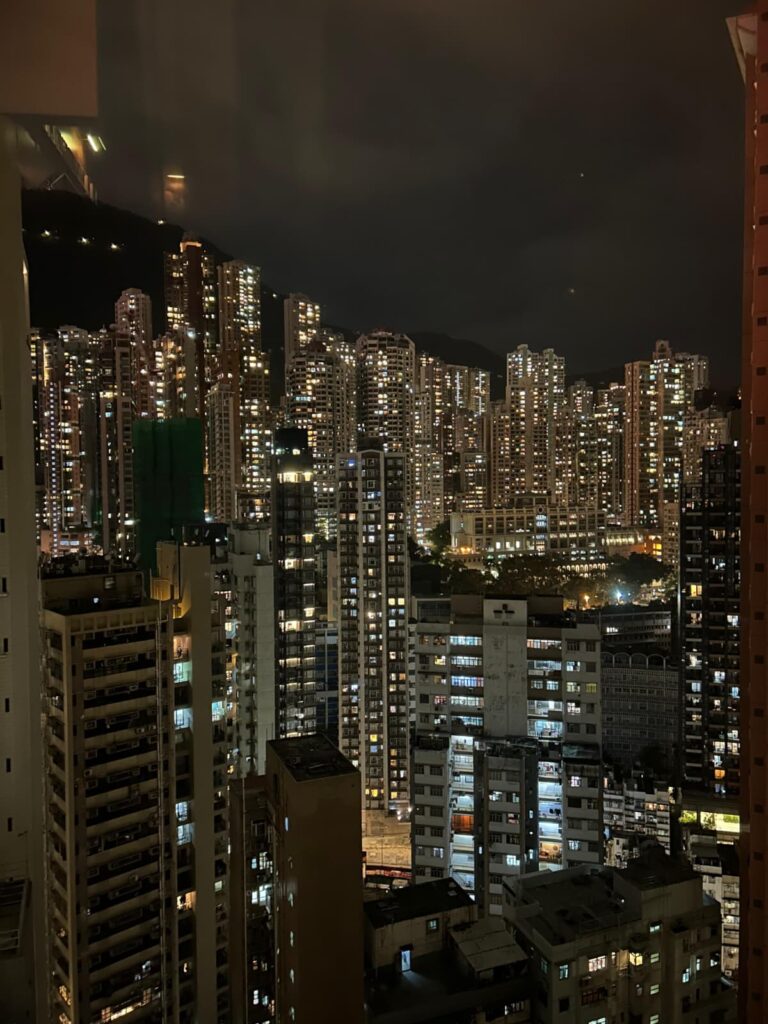
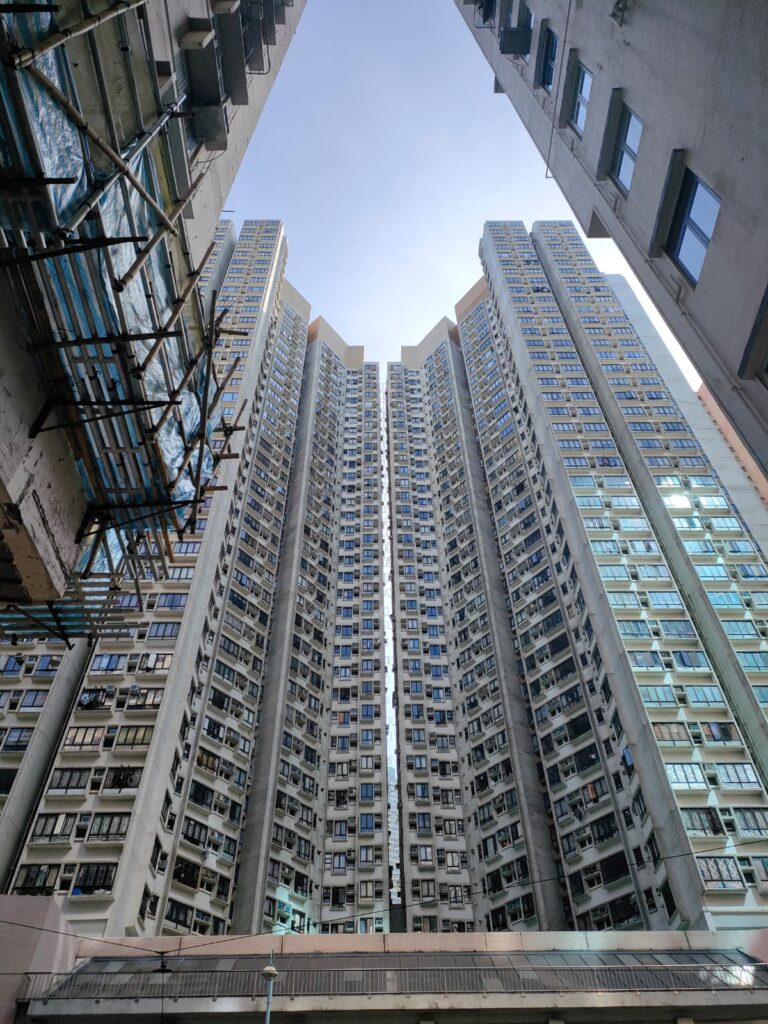
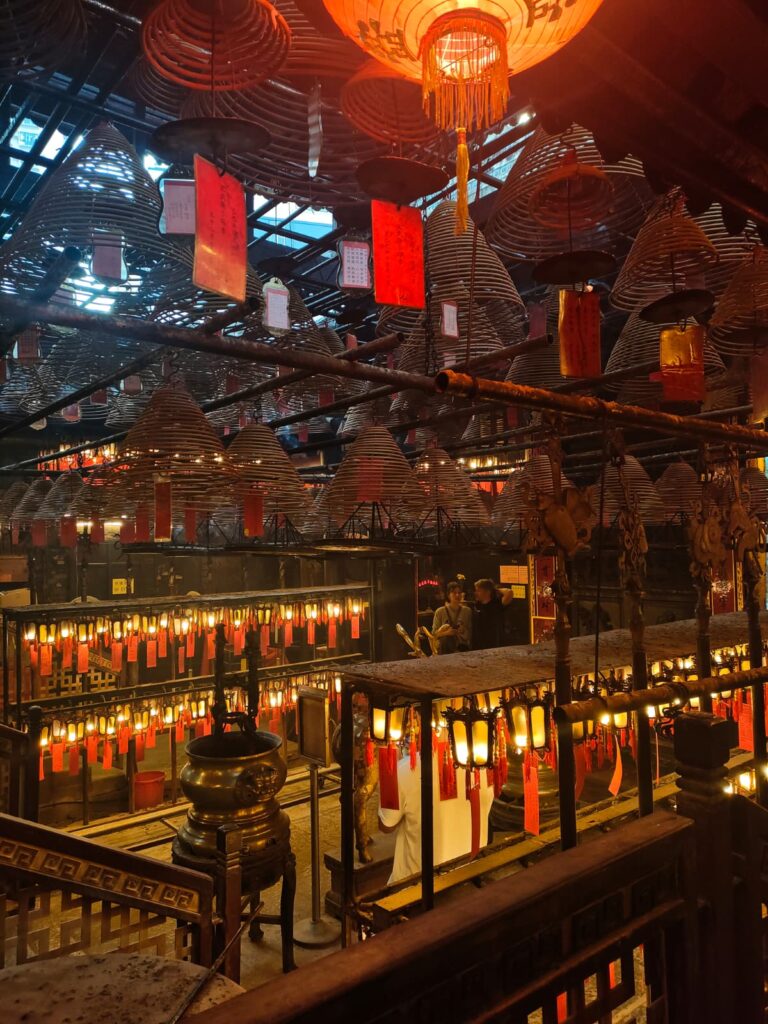
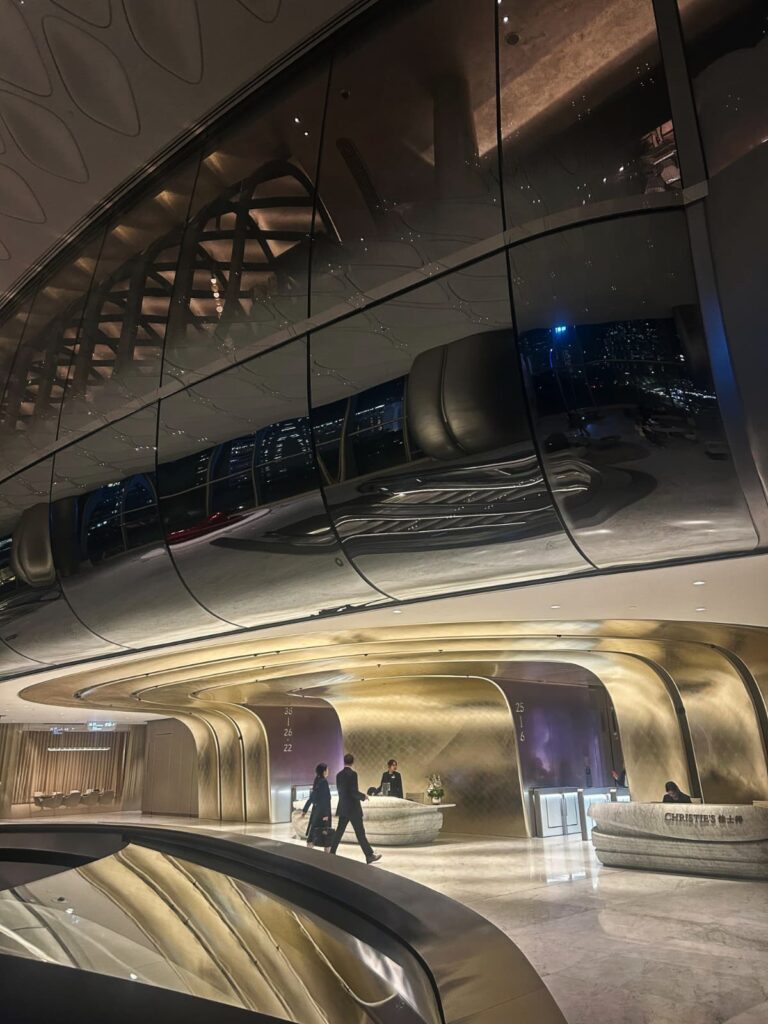
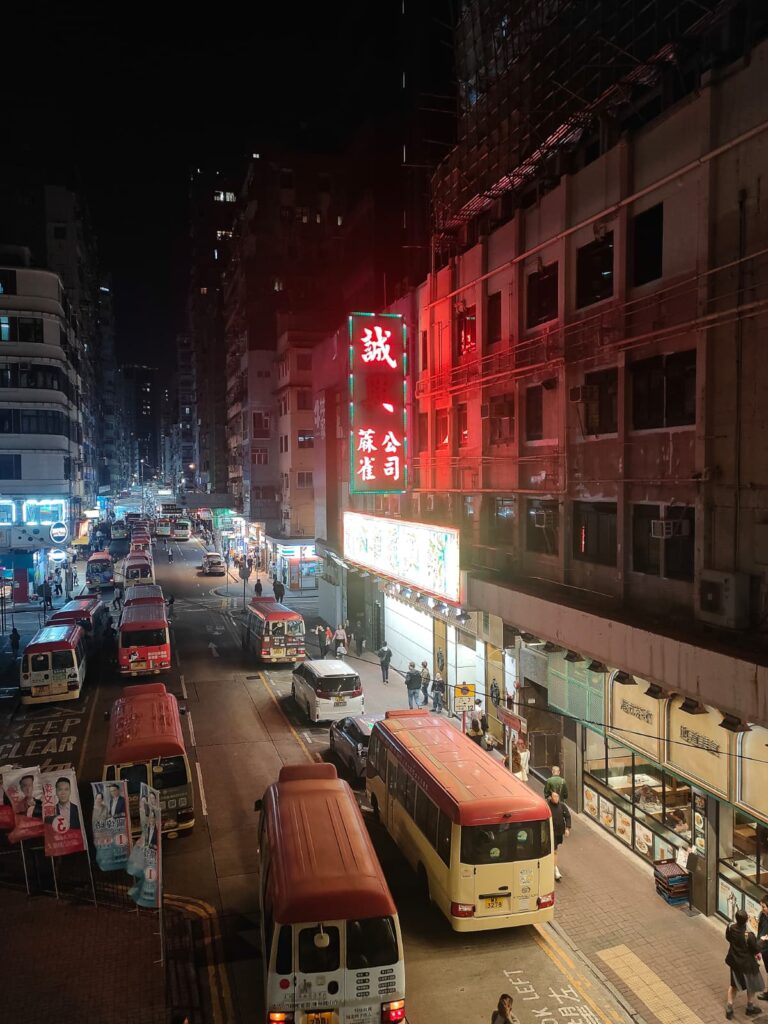
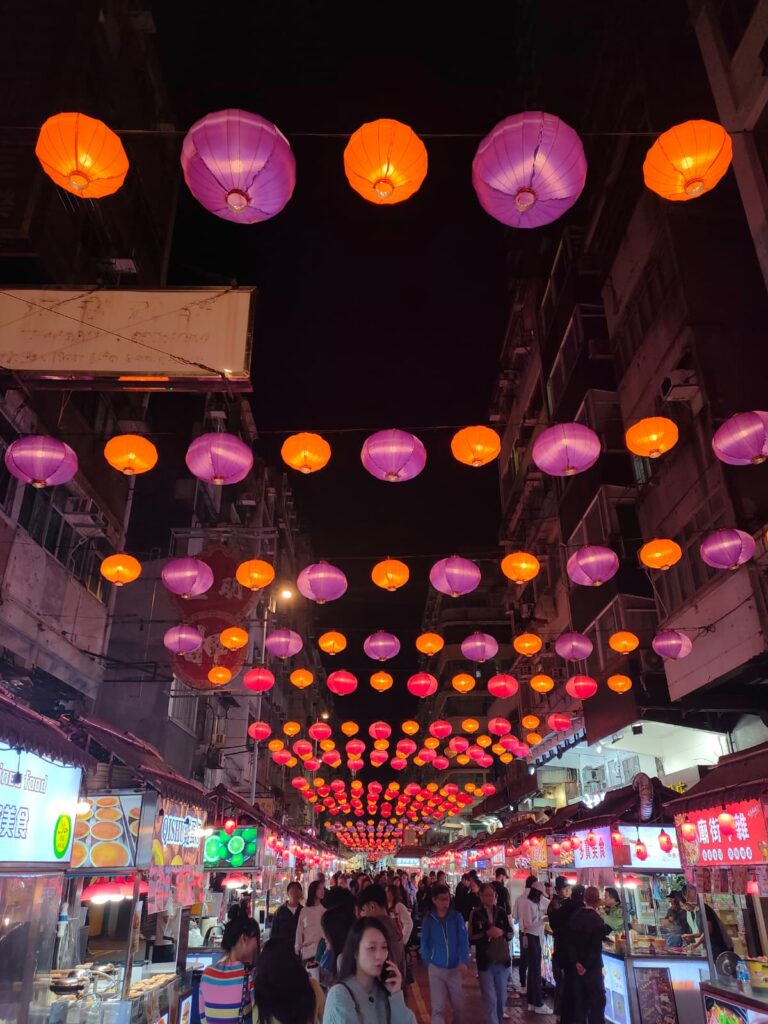
Once docked at the Kowloon side, Tsim Sha Tsui boasts rising real estate, the K11 complex, and the Rosewood Hotel (rated as the best in the world), alongside the historic Peninsula Hotel—once called “the finest hotel East of Suez.” In 1942, the Japanese demanded Hong Kong’s surrender in its legendary lobby. The Japanese occupiers, just like today’s mainland Chinese “tenants,” failed to subdue the spirit of this territory—of a city that can be opulent, trendy, unapproachable, and visionary, yet at the same time unaestethic, underground, mystical, chaotic, and shabby. Hong Kong’s indomitable energy emerges from the spiritual intensity of the Man Mo Taoist temple, nestled among the skyscrapers of the world’s most vertical city, from the cyberpunk neon lights that Beijing wants to remove. The same lights that illuminate the streets of Temple Night Street in MongKok—dark, foul-smelling alleys where a street vendor of roasted potatoes and noodles occasionally appears, transporting one back to a primordial Asia where foreign occupation and geopolitics matter to no one. As a European, I observe the survival instinct of a People who continue to exist despite having imported and incorporated our business practices, our cuisine, and Western customs —sometimes embellishing themselves, sometimes losing their way, but always remaining true to themselves in an incomparable synthesis.
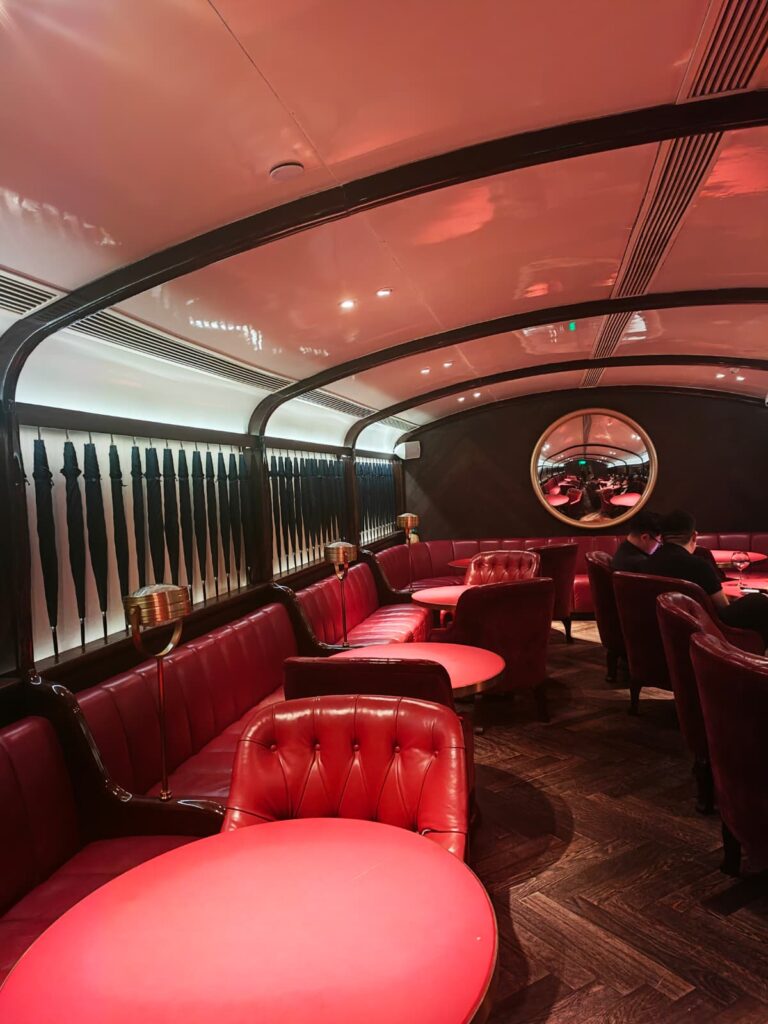
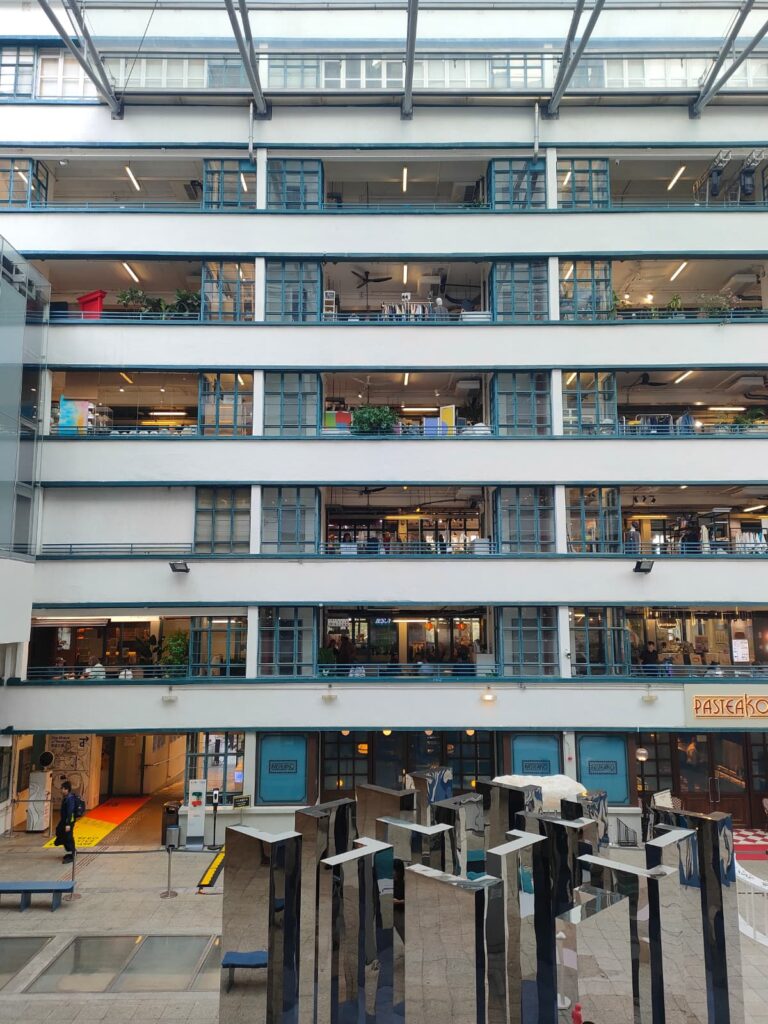
An identity density that survives also in a ubiquitous symbol of Hong Kong: bamboo scaffolding. They are everywhere in the city, and woe betide anyone who dares to call for their replacement. At the time of writing, however, the identity of bamboo is beginning to creak under the weight of the Tai O fire tragedy. Hong Kong is going up in flames, consumed by the scandal of real estate speculation. Many blame the bamboo, ignoring its fire-resistant nature. A mourning city in shock, trying to figure out who to direct its anger toward, yet still holding on —albeit with a sense of helplessness, yet with the incredible dignity of its people.
From the Sheraton’s rooftop in Tsim Sha Tsui, I wait to watch the Symphony of Lights, which illuminates Hong Kong Bay every day at 8:00 p.m. A tearful girl informs me that the show has been suspended due to the citywide mourning, launching into a long tirade against greedy real estate speculators, the media’s opacity and the pain of a city desperately crying out for respect.
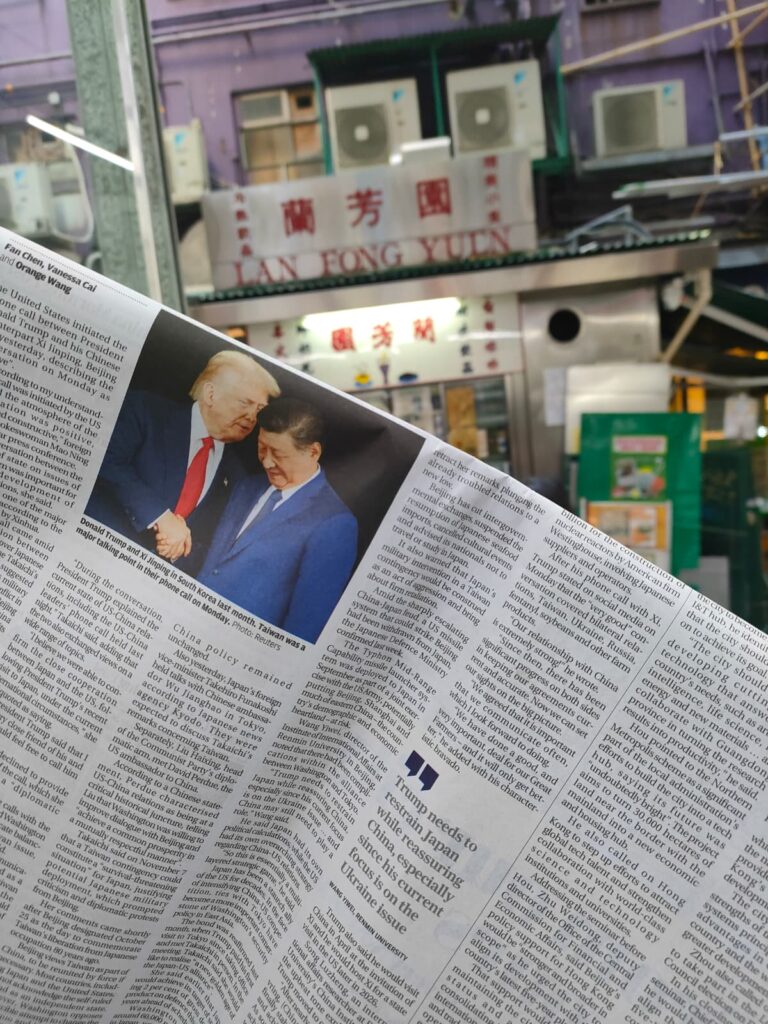
I try to read the local press to glean some details, but the only paper available in the drugstores is the South China Morning Post (now part of the Alibaba group), where I see plastered across the front page the faces of Xi Jinping and Donald Trump shaking hands. The paper is the only one still in circulation and authorized by Beijing. Jimmy Lai, the magnate and founder of the Apple Daily—a sort of pro-democracy Charlie Hebdo—has been sentenced to twenty years in prison for colluding with foreign forces and sedition, despite his health condition. Despite appeals from his family and world leaders, Lai and his newspaper will remain forgotten, shut down, and dissolved, just like the Hong Kong Democratic Party, which was dissolved in 2025.
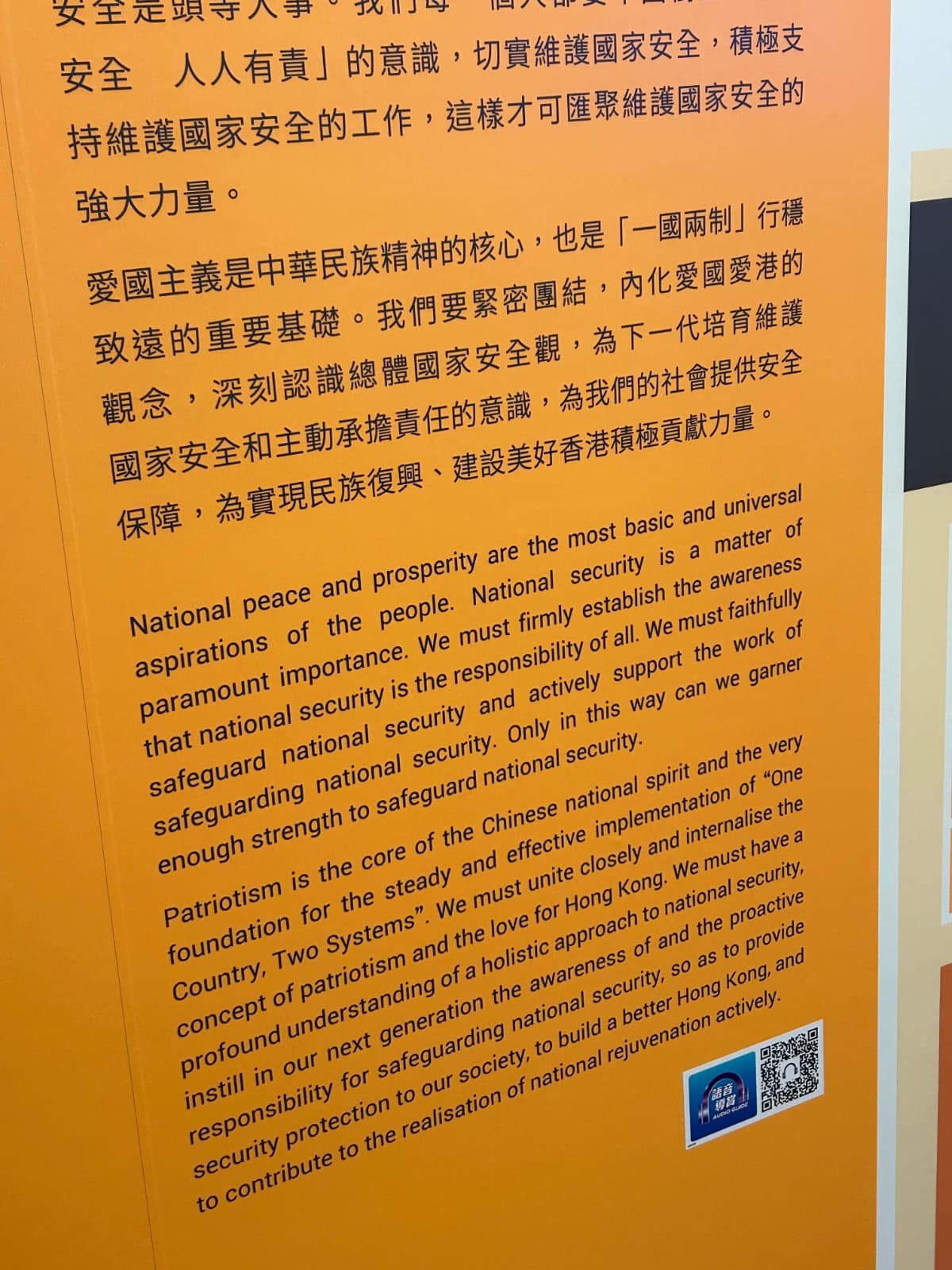
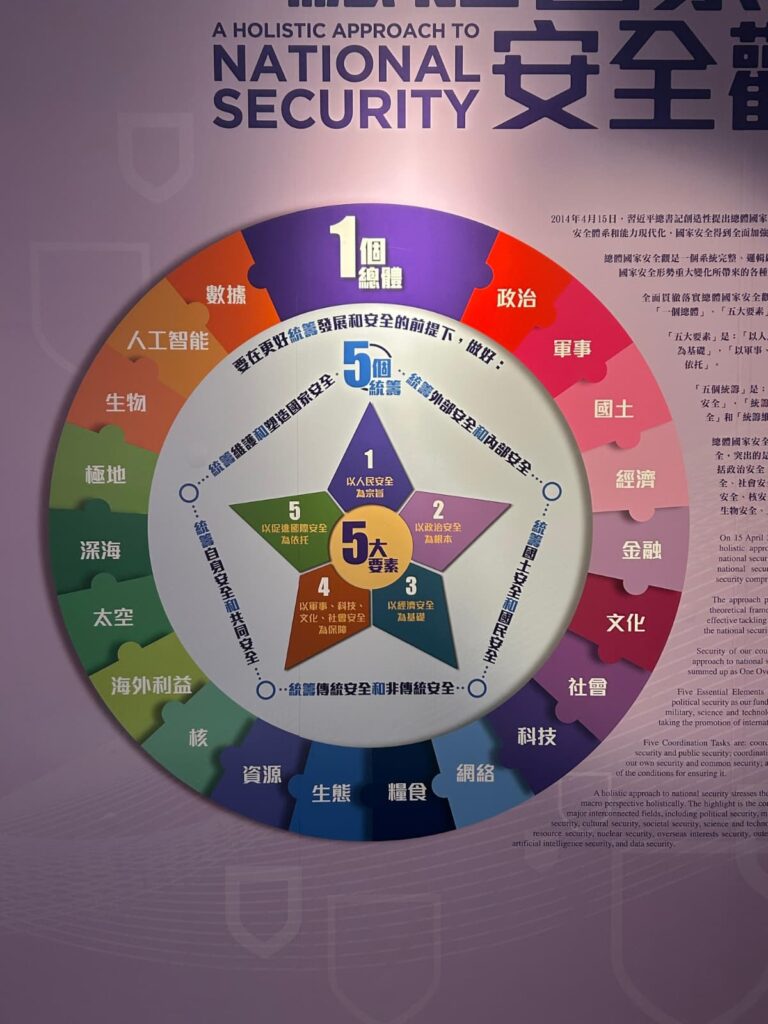
Before leaving the City, I visited the Hong Kong Museum of History in Tsim Sha Tsui. I was welcomed by an interesting temporary exhibition on the Chinese perspective regarding the 80th anniversary of the liberation from the “anti-fascist war against Japan,” which claimed some 35 million lives in the Chinese motherland. After all, the “wise” Mao Zedong once said that “without death, human life would not exist.” Keeping this enlightening maxim in mind, I then proceeded to the section titled A Holistic Approach to National Security. I tried to understand what this “holistic approach” entailed: A holistic approach to national security stresses the need to construct and put into practice a macro perspective. Mega-security currently encompasses twenty major interconnected fields: political, military, homeland, economic, financial, societal, scientific and technological, cyber, food, ecological, resource, nuclear, overseas, outer space, deep sea, polar, biological, AI, data…security.
In the adjacent room, I read: Patriotism is the core of the Chinese national spirit and the very foundation for the steady and effective implementation of ‘One Country, Two Systems’. We must internalize the concept of patriotism and the love for Hong Kong. We must instill in our next generation the awareness and the proactive responsibility for safeguarding national security, to build a better Hong Kong, and to contribute to the realisation of national rejuvenation actively.
LAWS MUST BE OBEYED. HONG KOND NATIONAL SECURITY LAW ENDS VIOLENCE AND CHAOS, AND RESTORES ORDER.
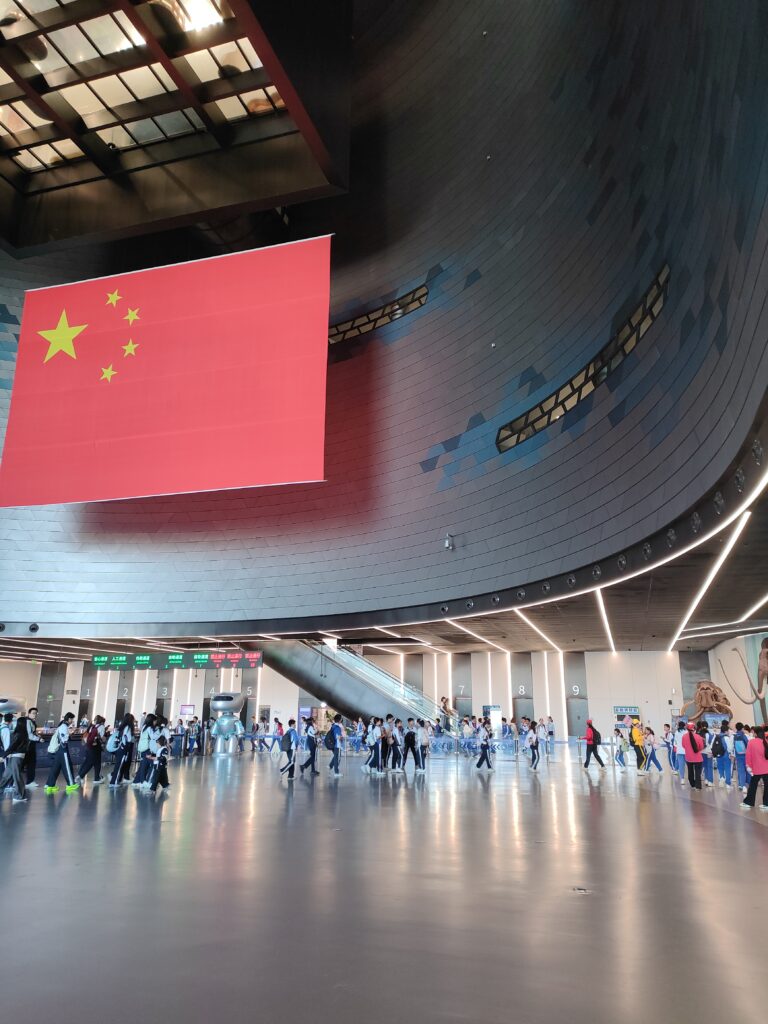
With a sense of déjà vu, I re-read what had been displayed at the Shenzhen Science and Technology Museum a few days earlier… the Party’s consistency is important.
A doubt, however, crossed my mind: From what chaos is Hong Kong to be saved?
Finally, upon reaching the ‘conclusions’ room – a feature frequently found in every Chinese exhibition, a sort of predisposition to sum things up – I grasped the essence of the Beijing perspective:
Today, five years after the promulgation and the implementation of the Hong Kong National Security Law, Hong Kong is experiencing a crucial phase of transitioning from chaos to order and advancing from stability to prosperity while the implementation of “One Country, Two Systems” has entered a new chapter. The favourable situation in Hong Kong today does not come easy and has arrived at a considerable cost. We must cherish these hard-won gains by consolidating and building upon the positive momentum. Regardless of the international dynamics, we strongly (who?) believe that Hong Kong with the strong support of the Motherland, the collective determination of all people of Hong Kong and strong security safeguard in place, will continue to strive ahead with perseverance.
Amen.
“You walk in the noonday sun and suddenly you can no longer see your shadow.”
That is who we are—the expats who come and go, sometimes loved, sometimes hated. We may disappear beneath the zenith sun. But what about you, industrious and fascinating citizens of Hong Kong? Will you disappear with us?
The Tanka of Lantau, your ancestors, still chant this poem in your veins:
SCALES
“But if you truly, truly believe
That being free makes one monstrous
What choice is left?
It’s true—some prefer silk and velvet,
Lacquer and porcelain, yellow gold and jade.
Perhaps all would, under other circumstances.
And yet, see how many here
Choose scales instead.”
(Ilaria Maria Sala, “L’eclissi di Hong Kong”)