The itinerary was supposed to start from Tbilisi, I would have rented a car, perhaps one of those rickety jeeps that the online catalogues of local rental cars proudly offered at bargain prices, and I would have headed towards Batumi, on the Black Sea, in the ancient Colchis. After a short break in the fashionable seaside destination, reputed by Georgians as the ‘Las Vegas’ of the country, I would continue on to Sarpi, on the border with Turkey. And from there the adventure into Turkish oblivion would have begun, to Trabzon (Trebizond), a legendary city, the last Byzantine bastion to have been conquered by the Ottoman Turks in 1461. I would visit the monastery of Sumela, nestled among the Turkish reliefs, and from there perhaps leave satisfied. “When are you going to be over there again?” my office manager used to tell me on weekday coffee breaks, “you should go, seize the occasion”. But I didn’t go.
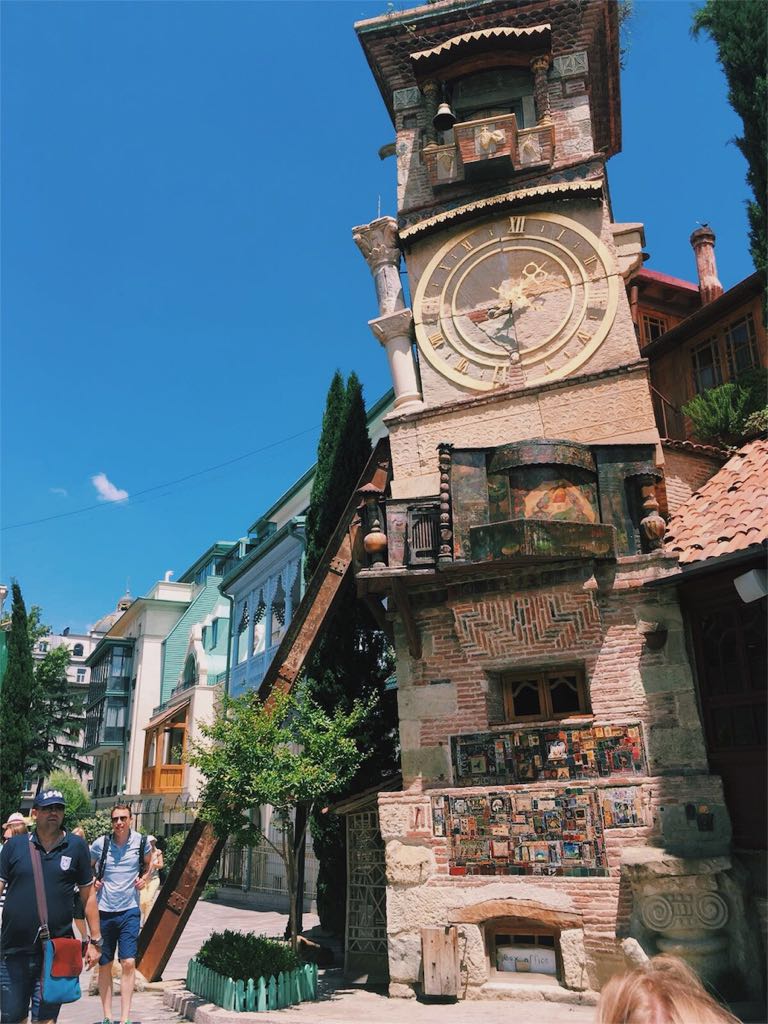
The second time the Azerbaijani government asked me to leave the country because of my expiring visa, I returned to Georgia. It was on 7 July 2018. I felt I still had something to discover there. Or I had simply had such a good time that I wanted to go back. Strange, a curious traveller never returns to beaten ground, so it was. I left with Francesco and Federica at my side, two ideal fellow travel, flying from Baku airport on a Saturday night courageously boarding on the Azeri low-cost airline ‘Buta Airways’. We landed at Tbilisi’s Shota Rustaveli airport on a rainy and humid midsummer night. I was ready to brave the greedy Georgian taxi drivers to get to our Airbnb, a half-hour drive from the airport. I had 30 lari in my pocket from the previous trip, I wasn’t going to drop an extra kopeck. And at 30 liras we took our taxi, despite a tiring negotiation. The flat was in a side street of Rustaveli, a neighbourhood of imposing and elegant buildings, some ruined, others majestic, framed by cobbled streets of Parisian memory. We were welcomed by Keti, an affectionate middle-aged blonde woman, who gifted us a bottle of Chateau Mukhrani white wine in the fridge. Then we hurried out, that night Croatia and Russia were playing in the quarter-finals of the 2018 World Cup, we couldn’t miss the penalty shoot-out. Keti’s daughter pointed out a couple of streets where we would find a big screen, and so we mingled in the square.
Needless to say, the Georgian crowd supported Croatia, and we, three rough Russophiles, were in the wrong place. The Georgian girls in front of us erupted in mad cackles when Croatia won the world semi-final, and so did the rest of the crowd. The never-started war that against the Russians had only ‘ended’ in the recent 2008, and the younger generation still felt the injury to their borders loud and acute. “When they come here, they demand to be spoken to in their own language,” lamented a girl from Tbilisi, referring to the Russians. We returned home, especially as Francesco innocently declared to support Russia, quickly becoming a persona non grata.
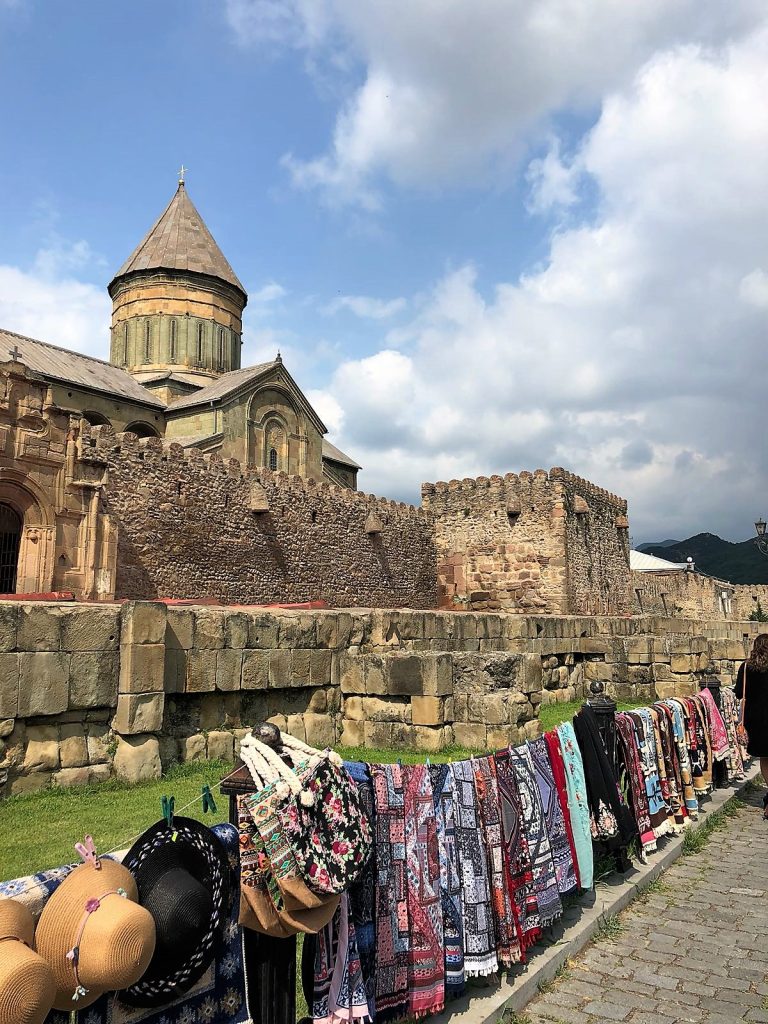
The day after we left the city, heading for the ancient capital of Georgia, the unpronounceable Mtskheta. Mtskheta was the capital of the first Georgian kingdom of Caucasian Iberia between the 3rd century B.C. and the 5th century B.C, although the ruins of the city date back to before 1000 B.C., a period to which the construction of the acropolis that still exists today is attributed. Georgians converted to Christianity here in 317 AD, where the seat of the Georgian Orthodox Autocephalous Apostolic Church still stands today. The Svetitskhoveli Cathedral (11th century) and the Jvari Monastery (6th century) are among the most significant monuments of Georgian Christian architecture, fundamental to the development of medieval art in the Caucasus. Of particular importance are the earliest wall inscriptions in the cathedral, interesting for the study of the origins of the early Georgian alphabet.
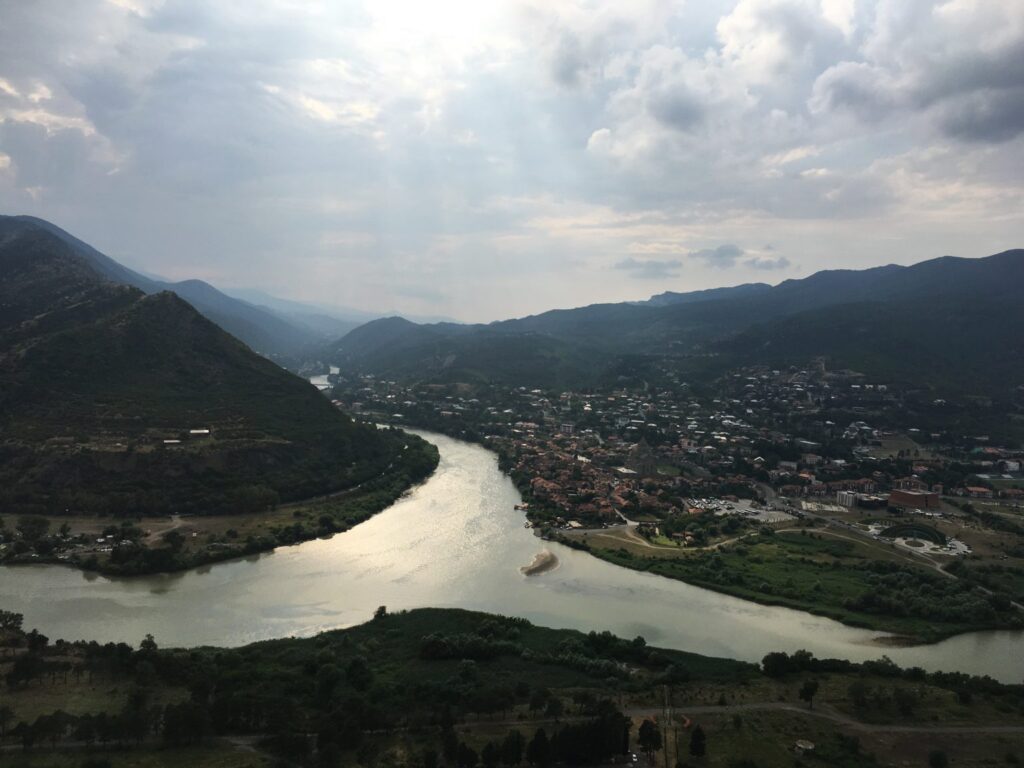
Mtskheta remained the political centre of Georgia until the 6th century A.D., when it was displaced by the more defensible Tbilisi. However, Mtskheta continued to be the coronation and burial place of Georgian kings until the end of the kingdom in the 19th century. At the first glance of a traveller, Mtskheta appears as a very cosy, human-scale town, built in its red stone, often coloured by the numerous churchkhela (typical sweets covered in grape must) raining down from the souvenir shops and fresh fruit stalls, a quiet, placid place, lying on the confluence of two rivers, the Kura and the Aragvi. The side streets of the centre are a safe haven for Georgians who ‘want to escape from the chaos of Tbilisi’, resting in their dachas, in a dormant, spiritual, idyllic place, a pilgrimage destination for tourists and believers, the majority of whom are Orthodox. The origin of the Svetitskhoveli Cathedral is shrouded in legend. It is said that the Tunic of Christ was buried here as Elias handed it over to Sidonia in the 1st century A.D., who died in the throes of religious ecstasy. Sidonia was buried with it near the confluence of the two rivers, where today’s cathedral was erected in the 11th century.
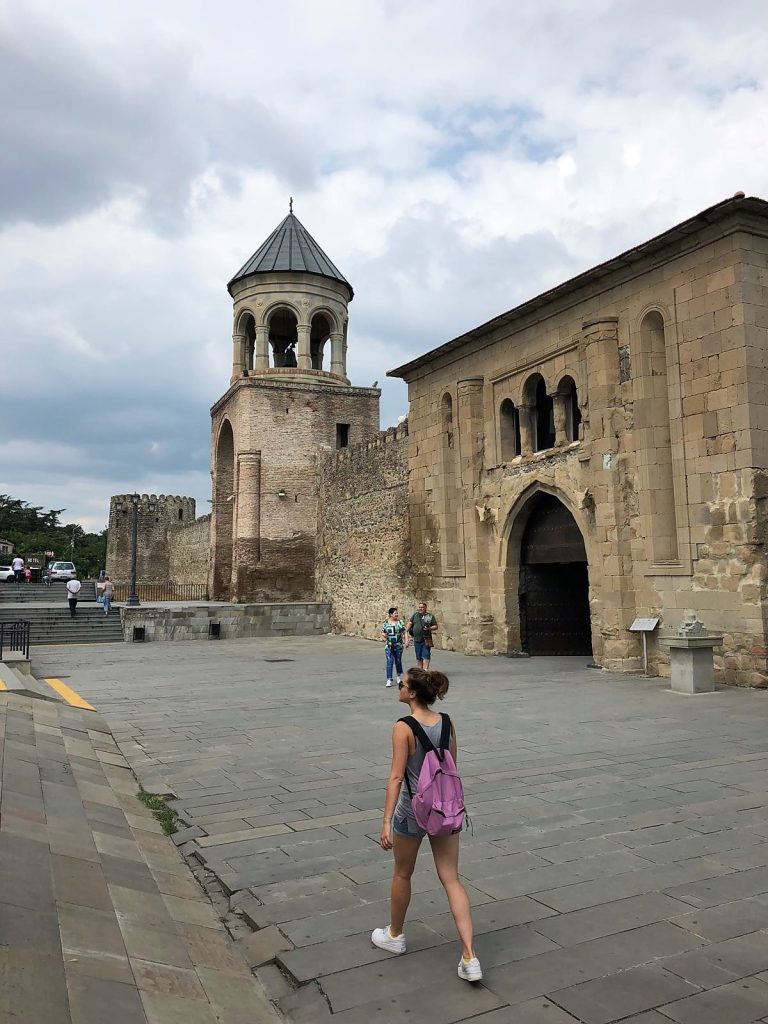
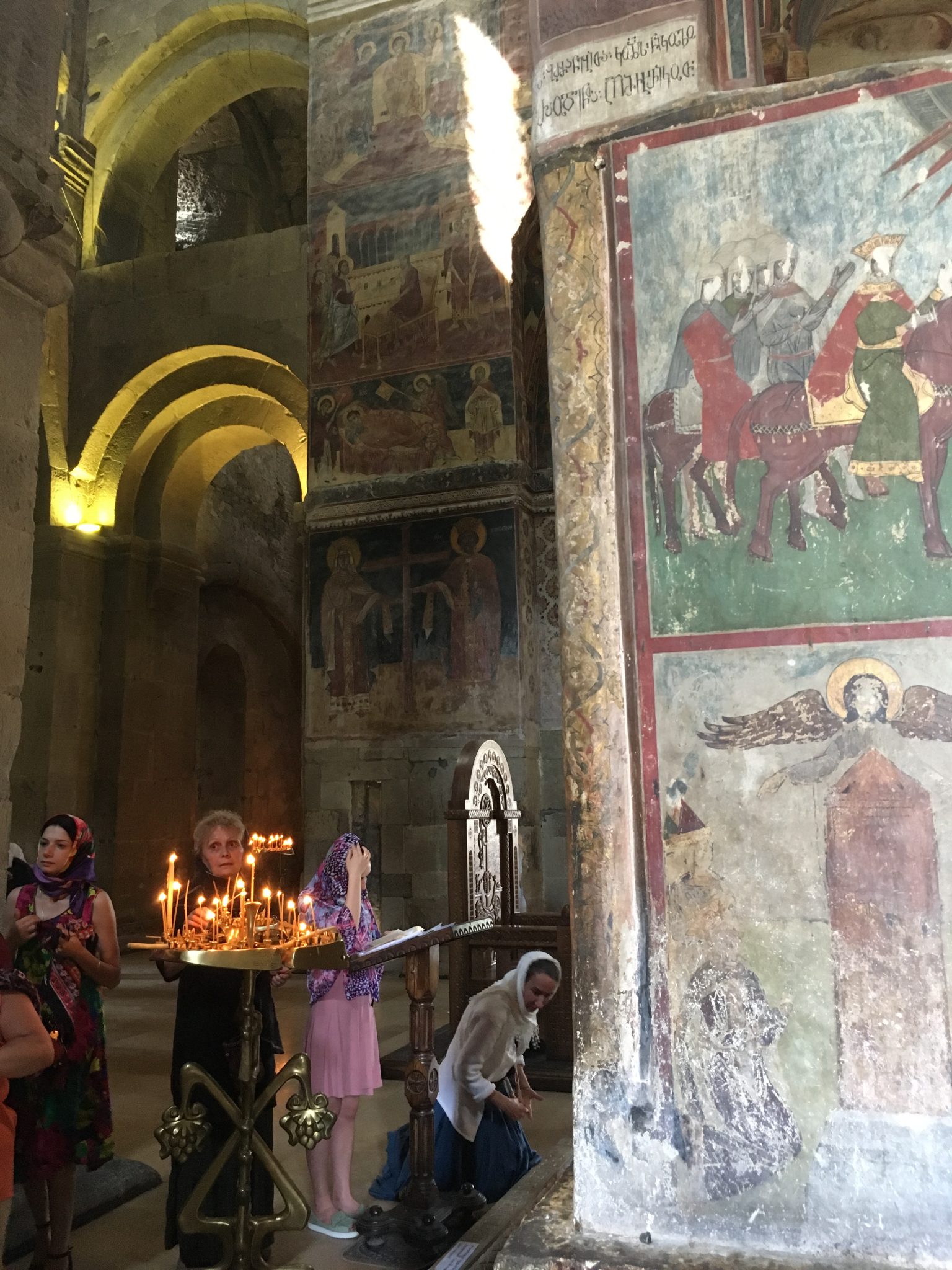
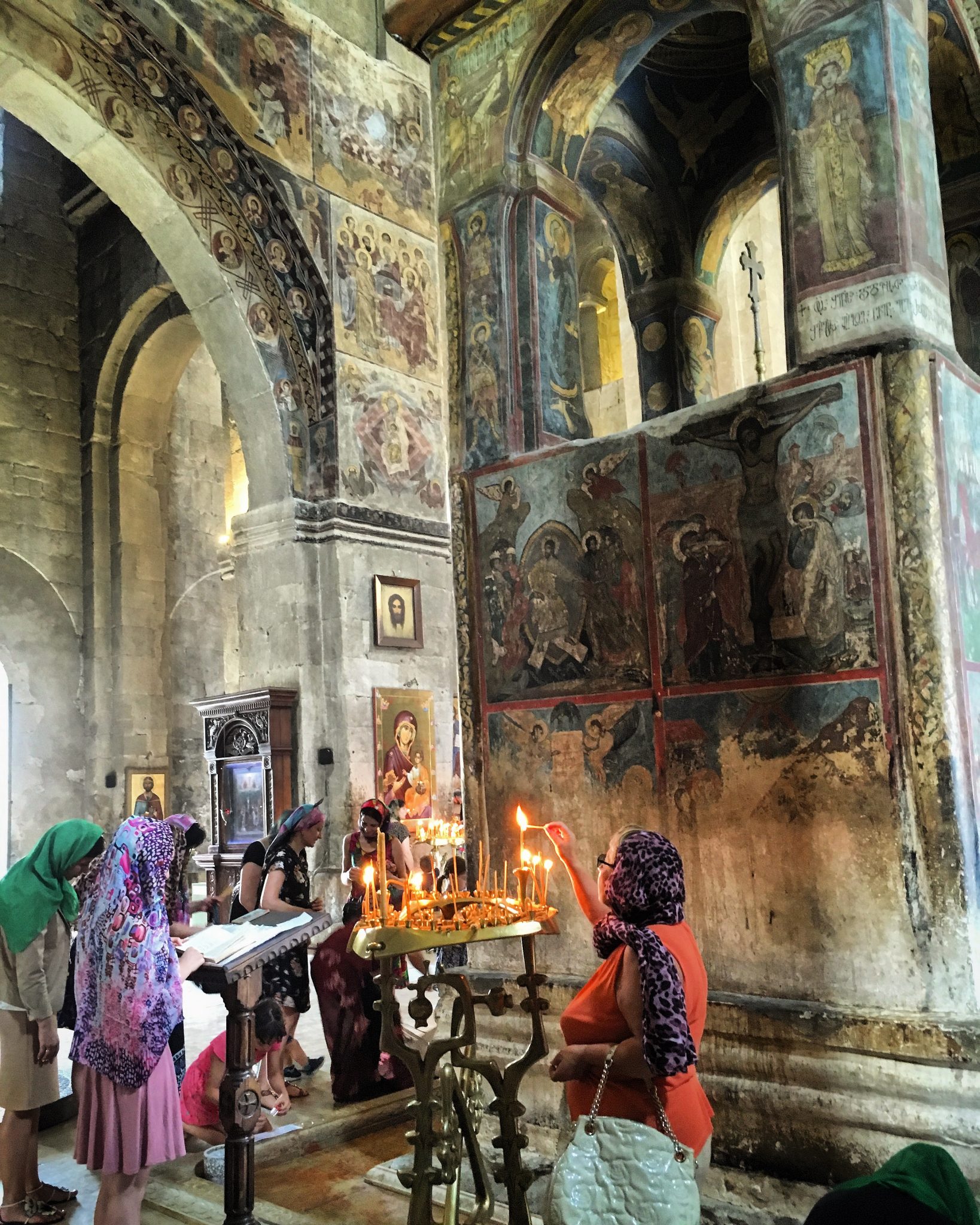
When we entered, we smelled its intense scent of incense, enjoying the pleasurable feeling of freshness conferred by its ancient stone gave. It was very hot that day. There was no light at all, except for the faint, rarefied light filtering through a few windows, just to illuminate the still marvellous wall frescoes. Only in some parts had the plaster peeled off, but for the most part the fresco cycles had been incredibly preserved. There was also an ancient reproduction of the Holy Sepulchre in Jerusalem, which I had accidentally seen a few months earlier. I thought that the building in front of me was almost more beautiful than the original, more authentic, more solitary, free from the masses of exalted visitors. I liked spying the believers in the Svetitskhoveli, from a corner of the church.
Many were the babushkas (grandmothers) who tipped their grandchildren to light the traditional, long, tapered, handmade wax candles and then plant them on the sandstone. I immediately associated this picture with a vague childhood memories of summer Sundays at the seaside, when I couldn’t wait for the celebration to end so I could light one with my grandmother and sink my little hands into the melted, still burning wax of the unlit candles. I only felt happy to see that the childhoods of other children in the world could hold the same memories that I so jealously carried in my heart. Even a doubting agnostic can appreciate the unique moments of togetherness and peace that can come from a place like this. So I continued to observe everyone. It was so far the most mystical place of worship I had seen between Georgia and Azerbaijan.
We then visited the Samtravo Monastery, where the site on which Saint Nino, a 4th century missionary from Kapadokya, had prayed and lived, next to the close by and more impressive building (11th century) where the first converted kings of Georgia, King Mirian and Queen Nana, were buried. On the way out, we met an Egyptian from Cairo and a Frenchwoman from Lille, with whom we shared the ride Mtskheta-Jvari by cramming ourselves into a broken-down taxi.
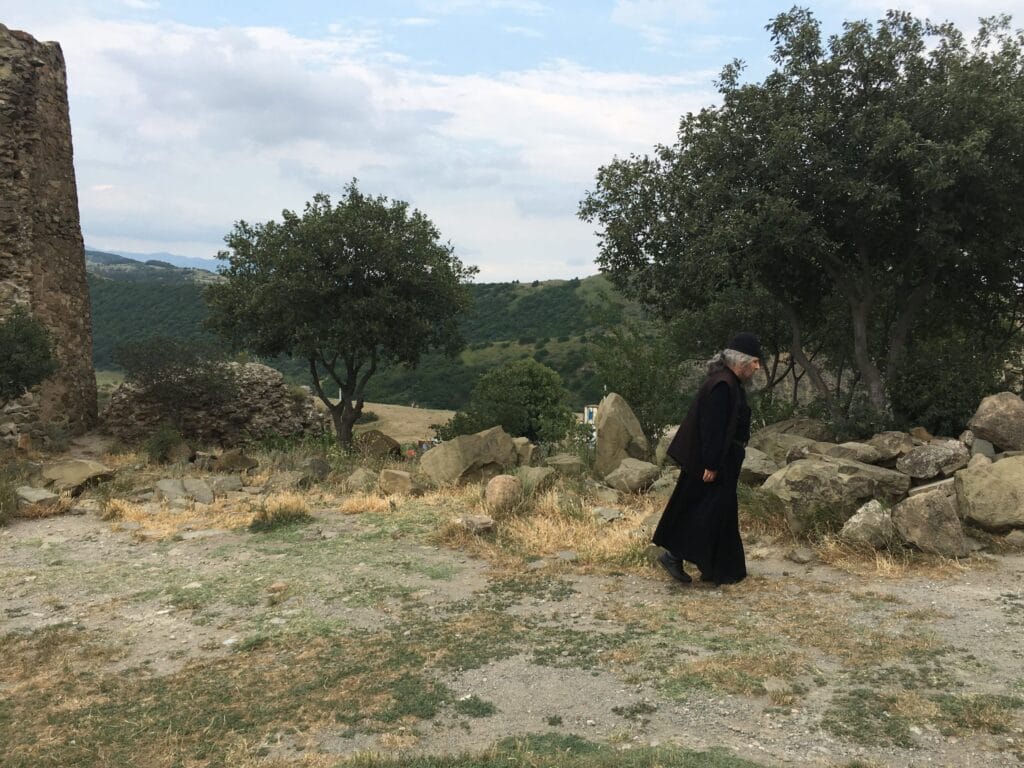
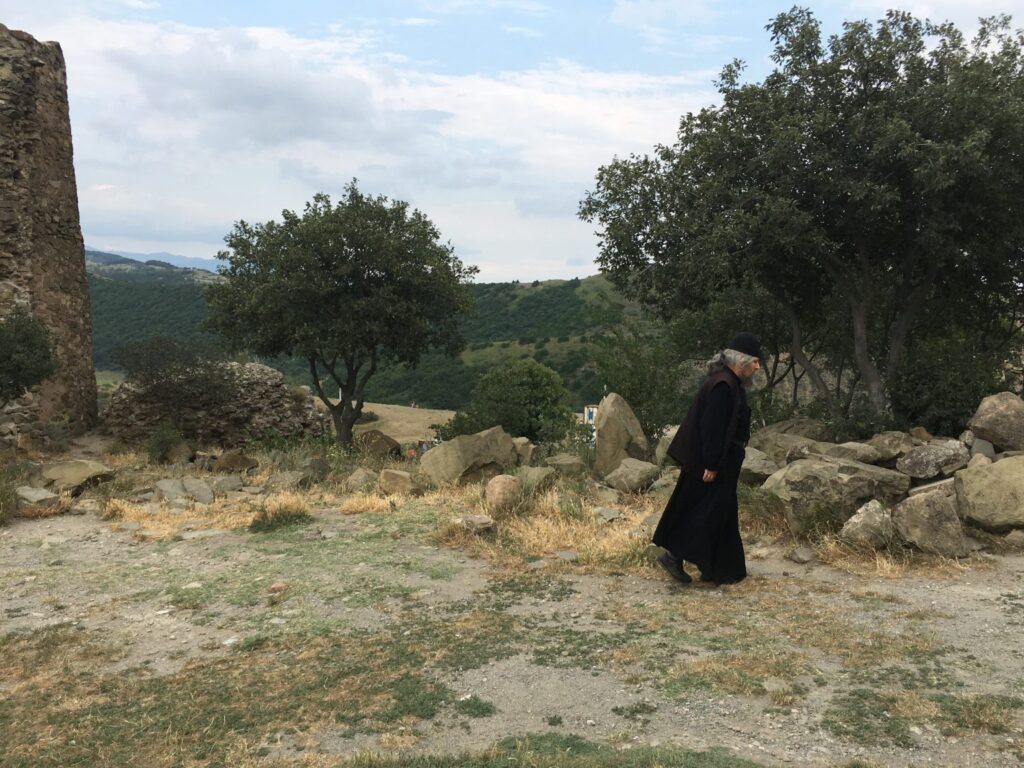
The Jvari Monastery is 11 km from the lower town, perched on a mountain overlooking the confluence of Kura and Aragvi and the town of Mtskheta. It was here that Saint Nino erected the first cross as a symbol of Georgia’s conversion to Christianity, and two centuries later Prince Stepanov built today’s cross-shaped monastery (‘Jvari’ = cross), isolated from everything and everyone, but visible from every point in the valley below. We had reached the site via a path full of olive trees, many of which were sheltering a few weary monks sitting next to the sanctuary, up there on the roof of Georgia. In the meantime, a few clouds had appeared, it seemed as if it would rain at any moment. There was a light mist. The black clouds opposed the sun’s rays, which continued to reflect on the two rivers below. I wished it would rain. There was so much oxygen, I could breathe hard. It felt as if one could embrace the entire valley, along with the wind, from the solemnity of Jvari. Federica, enchanted, told me “It seems to me the light of God”.
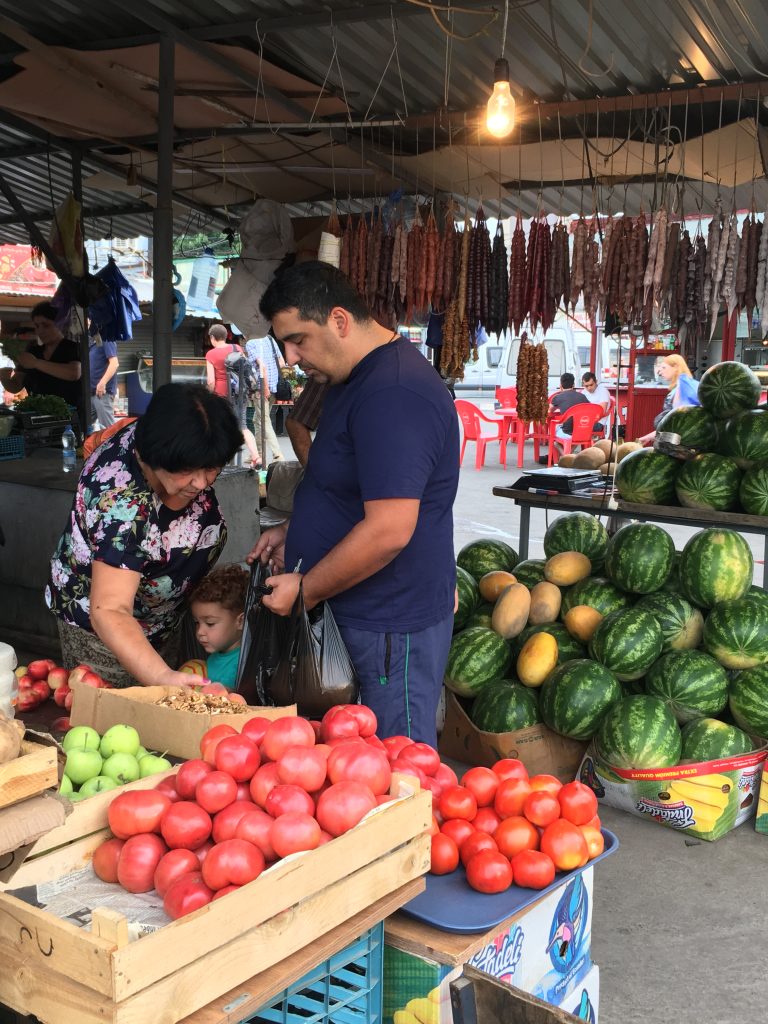
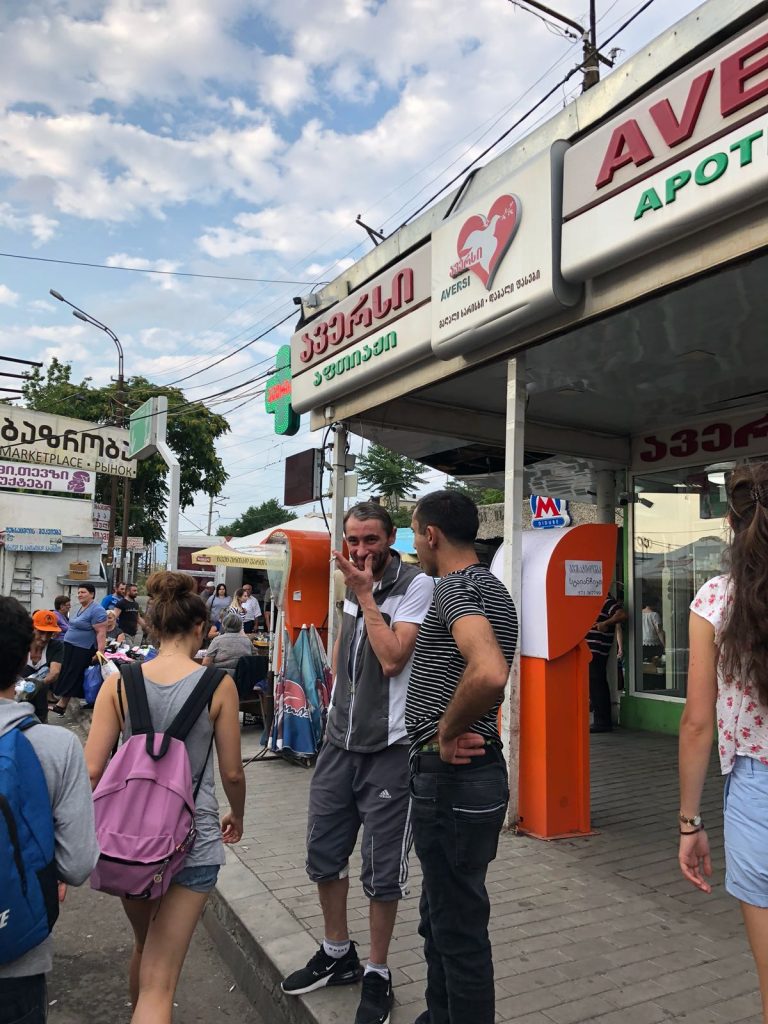
We returned to Tbilisi standing in a shared marshrutka (small bus) at one lari each (30 cents), till the ‘Didube’ market stop, a shapeless heap of fruit and vegetables, shoes and household items right in the middle of the shuttle and suburban bus station (Tbilisi-Batumi, Tbilisi-Kutaisi etc.). A glimpse of the ‘real Tbilisi’, or maybe of the intact Soviet past. From there we would take the metro to the city centre. We would return home early that evening, just in time to meet Keti, who had greeted us with slices of watermelon, go out for dinner, and slip into bed.
In Russia, there is a certain cliché saying about the first day of the week: ‘понедельник – тяжёлый день’, meaning ‘Monday is a heavy day, a burden’. 9 July 2018 was instead a quite singular Monday. So many people had told me not to go to David Gareja, because the road was so impassable and bumpy that public transport couldn’t get there, because it was far away, on the border with Azerbaijan, because even once I got there, I would have to climb barefoot a mountain for an hour and a half in the sun to be able to see its beauty, through a steep and inaccessible path, in the company of snakes and grass snakes. It sounded like a fairy tale, I didn’t believe it. Yet a fellow university mate of mine who had spent six months in Georgia two years earlier, recommended me going to David Gareja. She had been the only one, but I trusted her, as she knew me very well. So we decided to set off..
[continues..]