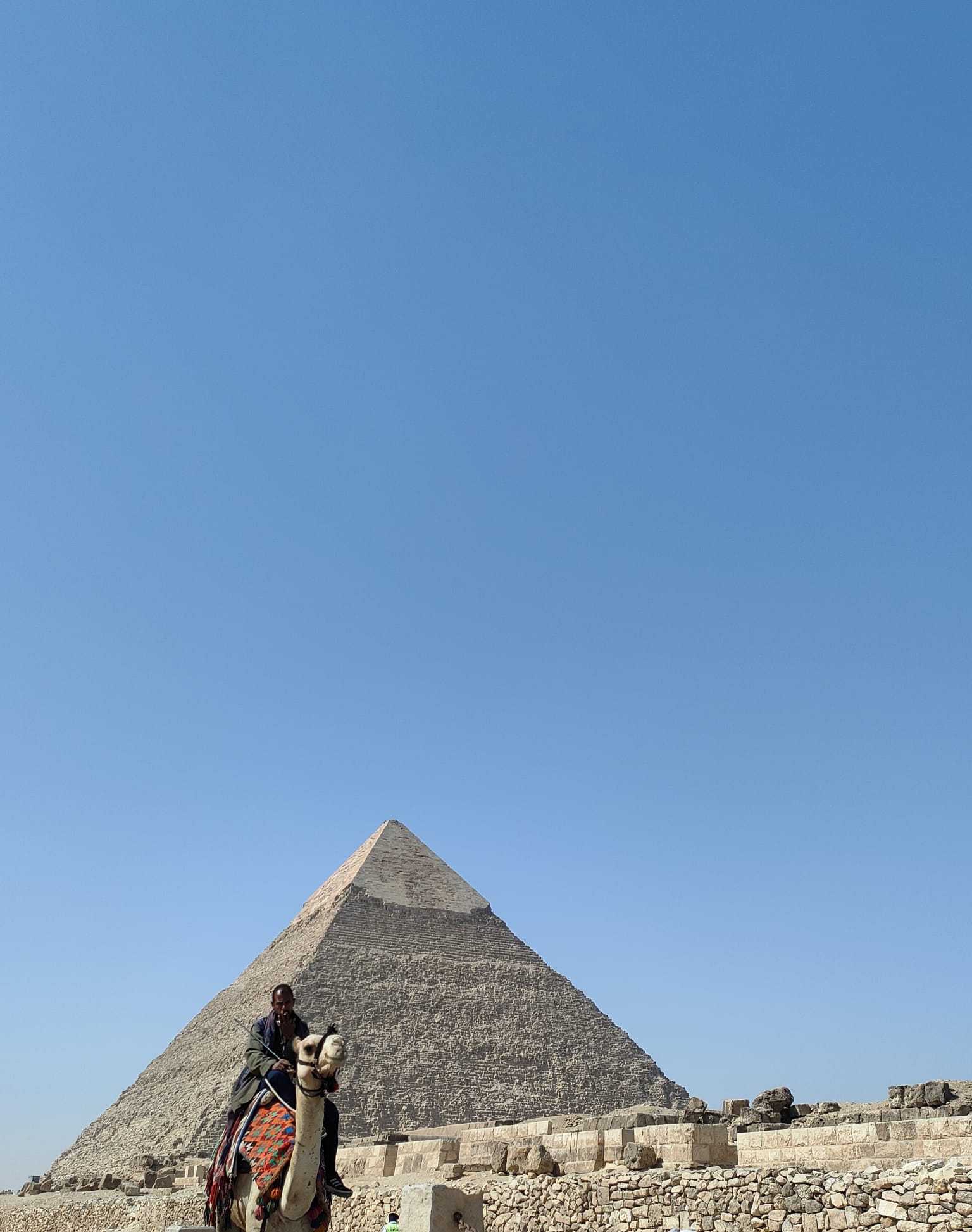
One of the Seven Wonders of the World… someone wrote that, on some forgotten day in the Ancient world. Now, before me, Cheops, Khafre, and Menkaure have risen again after millennia of slumber beneath the Egyptian sands, overwhelming me — overwhelming all of us — with the irresistible grandeur towering above.
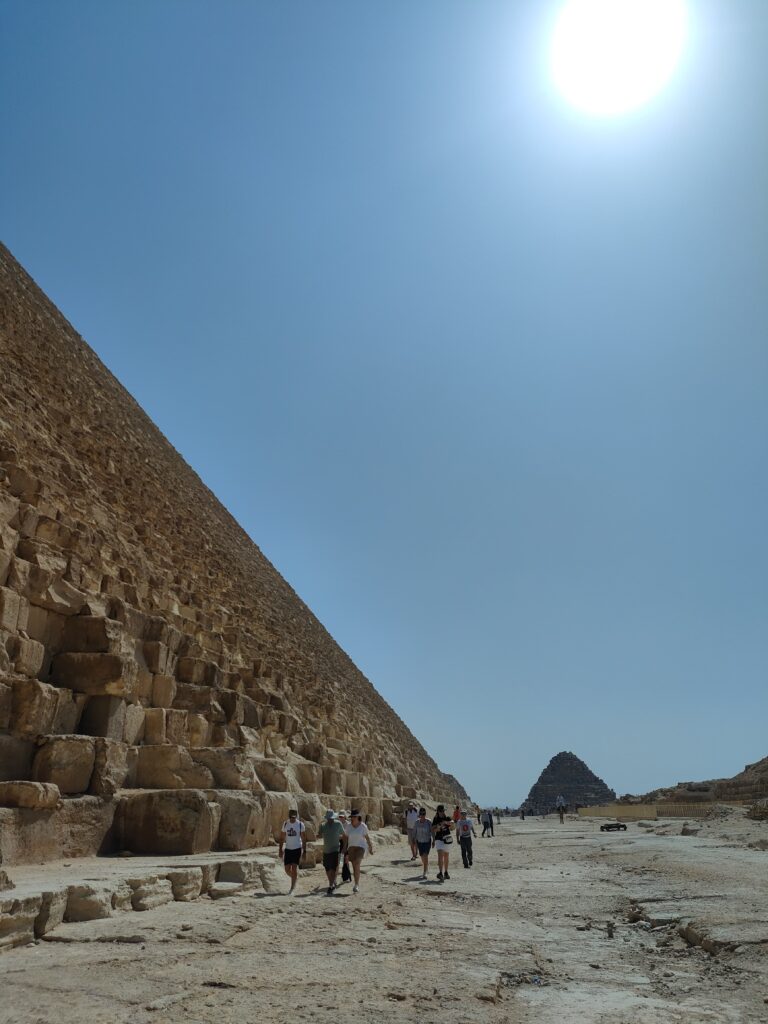
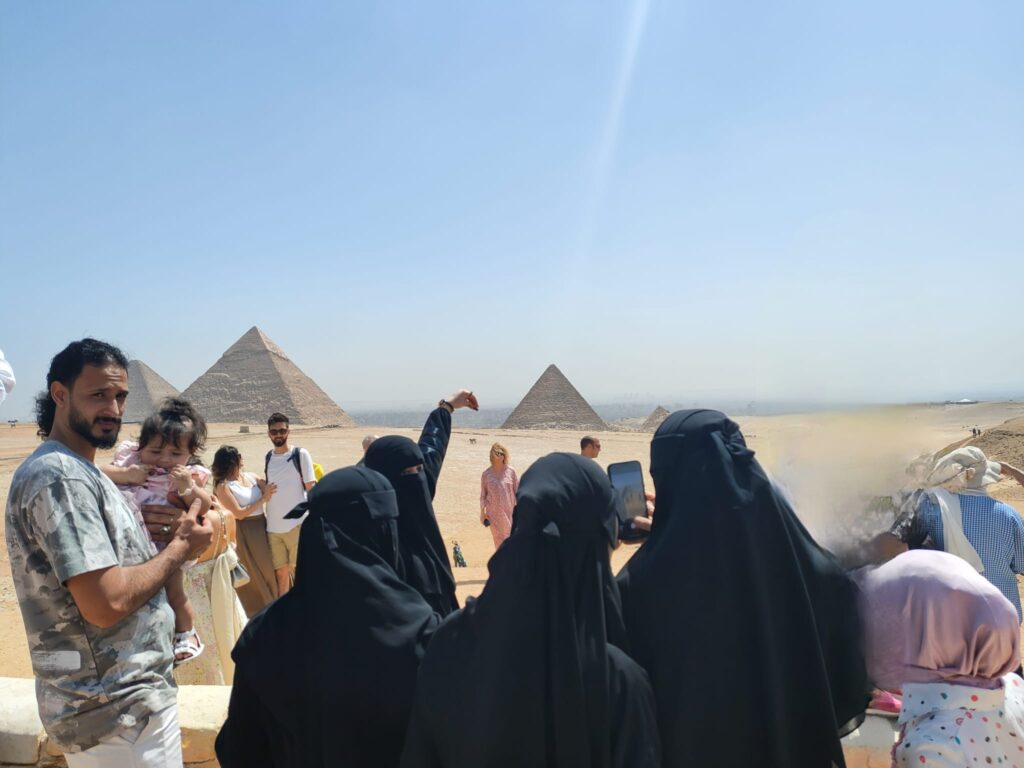
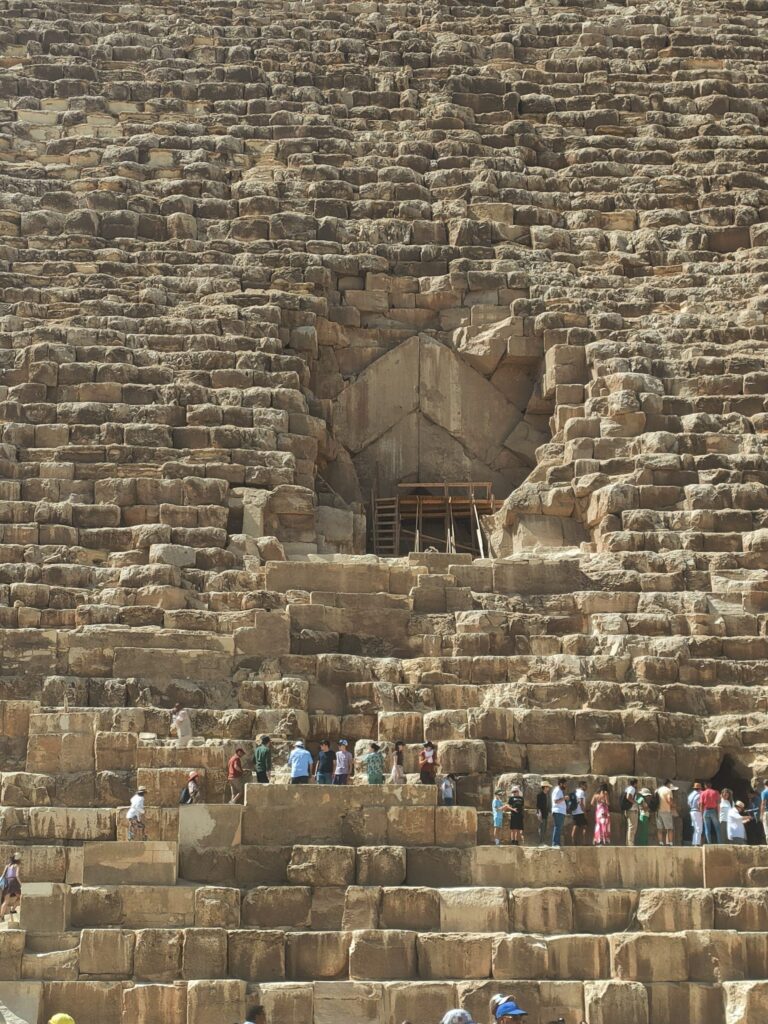
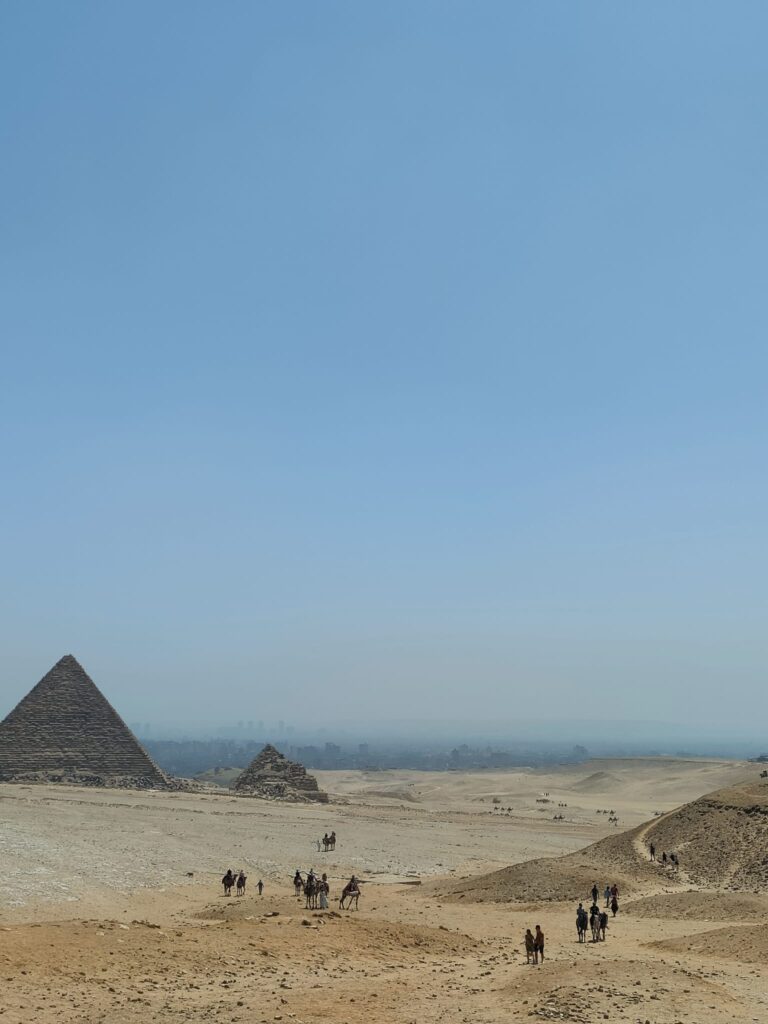
At 8 in the morning we reach the plain of Giza. We walk up a short incline, ascending… the fire of the sun sets ablaze the colossal stones of the Pyramid of Cheops, blinding us tiny wanderers who finally embraced by Ancient Egypt (2550 BC), among the tombs of the demigods of the past. There are around a hundred pyramids scattered throughout the valley of Giza — who knows how many more still buried; for some, only the pyramidion emerges, while the rest lies submerged beneath the Sahara. Each pyramid was once clad in white limestone to reflect the sunlight as brilliantly as possible. Now there are “only” enormous stone blocks left, said to weigh four tons each — at least those of the Great Pyramid. Local sources claim they were transported here by bulls…
Ahmad explains the Egyptian version: “The story of Jewish slavery in Ancient Egypt is an invention of the Zionists.” A few nights earlier, aboard the Nile cruise ship, he had remarked with a sly smile that Israel was practically a neighborhood of Egypt. Though Ahmad was discreet and measured, I thought he must always feel this issue viscerally. Standing before the pyramids, he insisted that Ancient Egypt functioned like a communist cooperative system, where subjects were paid according to the services they performed for the sovereign — an apparently well-oiled mechanism. There had been no slavery, no mistreatment… this, he claimed, was a story invented by Westerners and Zionists. Yes, there had been the Exodus of the Jews from Egypt, but it supposedly occurred during the Middle Kingdom, in an era later than the construction of the pyramids. Slavery, in short, according to contemporary Egyptian historiography, was a purely media-driven, cinematic invention.
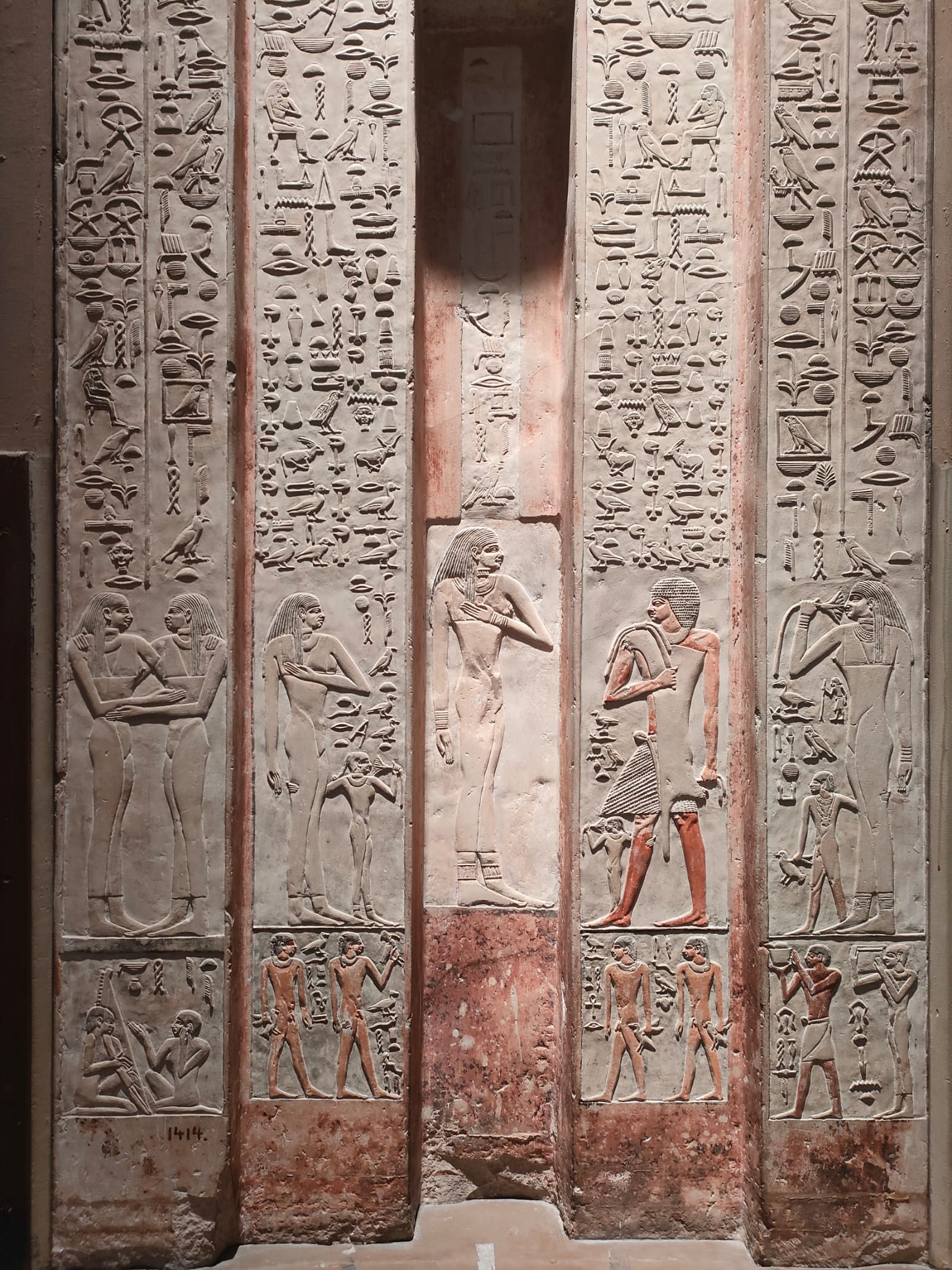
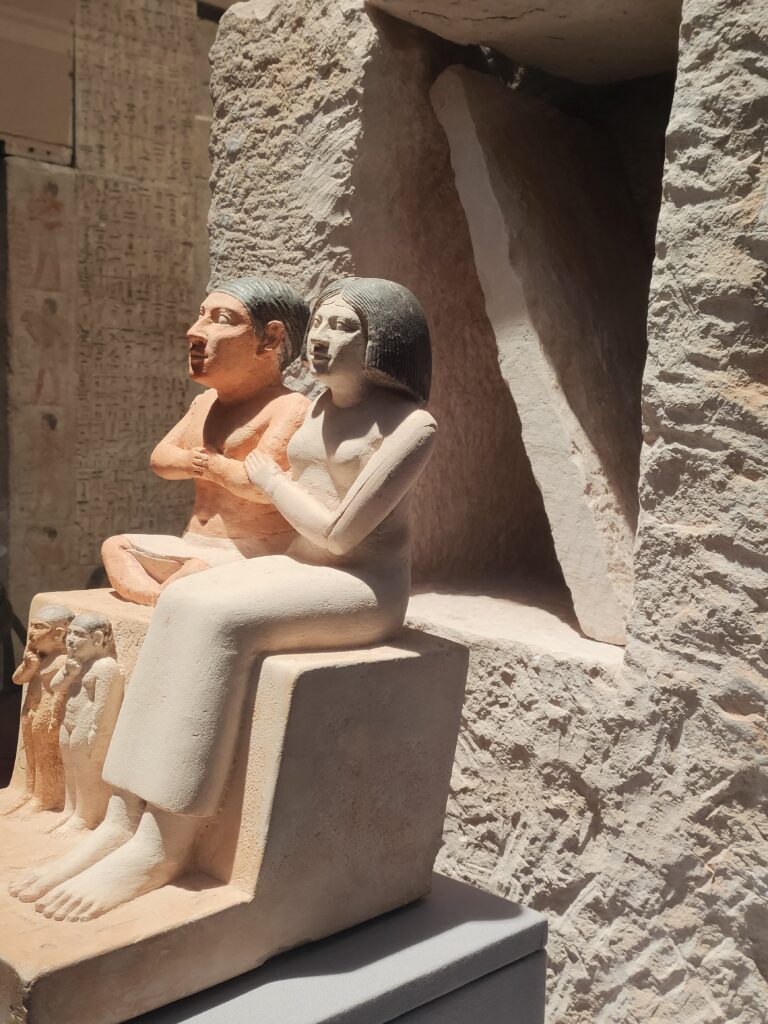
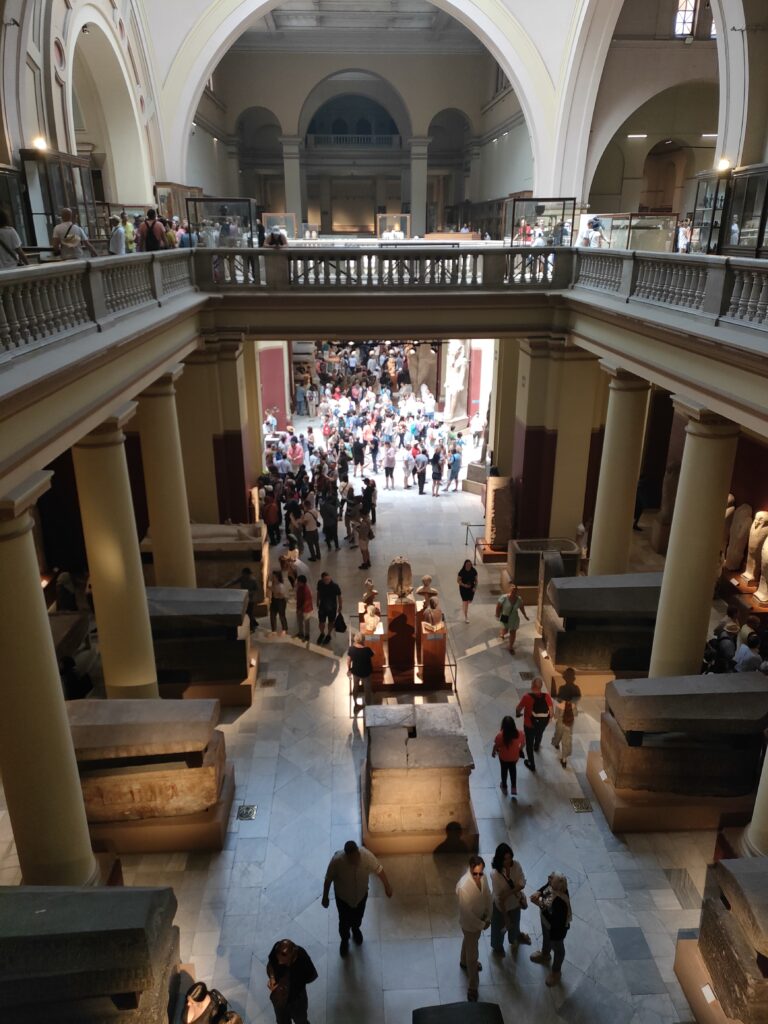
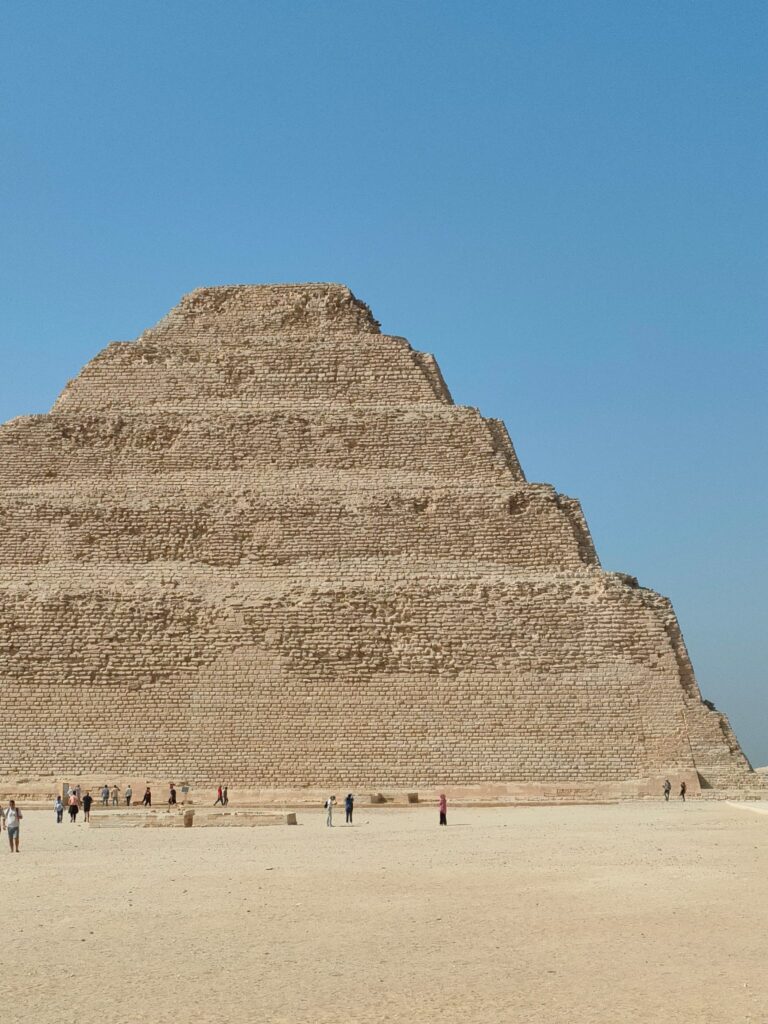
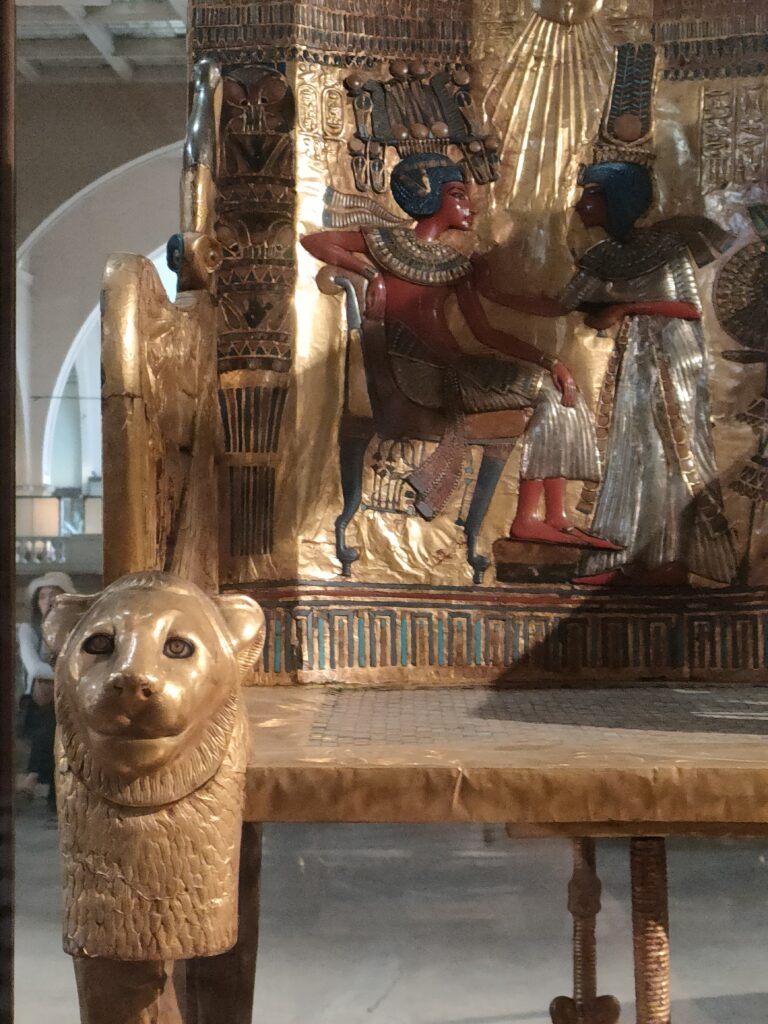
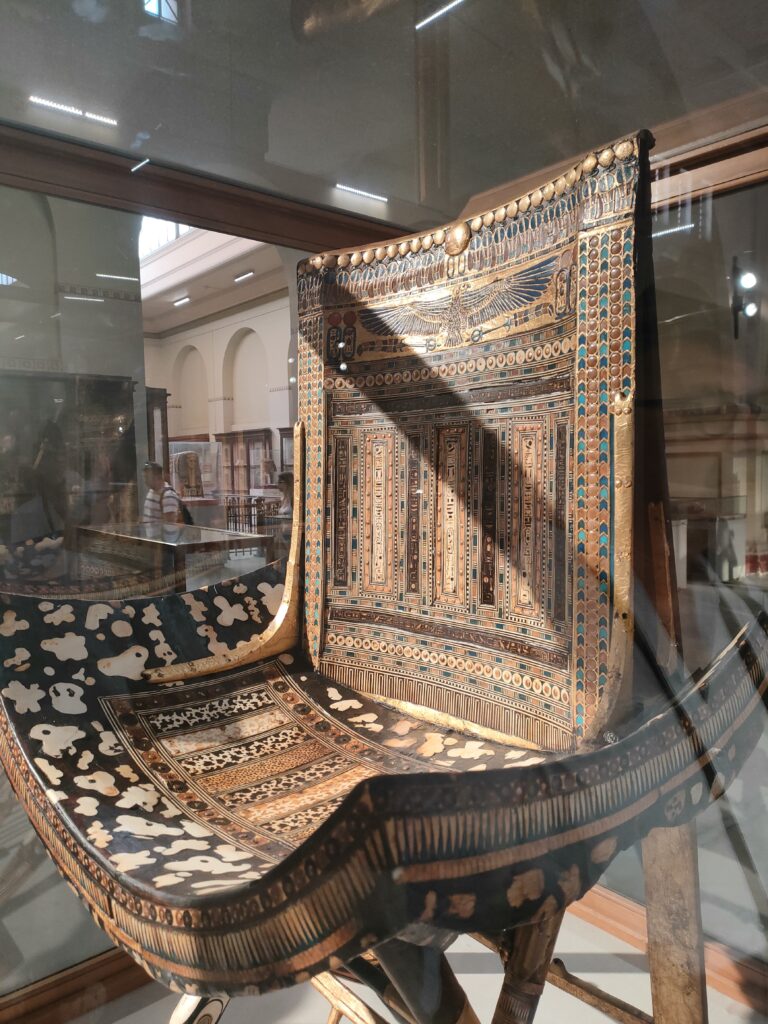
Ahmad would repeat this speech even more passionately at Saqqara, where the legendary architect Imhotep built — according to most historians — the oldest step pyramid and mastaba complex dedicated to Pharaoh Djoser, during the era of archaic Egypt. During the pandemic, excavations began here that promise to uncover one of the most densely populated settlements of Ancient Egypt. More relics to pile into the Cairo Museum — that splendid yet dusty treasury of masterpieces besieged by endless crowds of visitors who strain to catch a fleeting glimpse of Tutankhamun’s throne or statues, sometimes the Fayoum mummies, along with pottery and objects of unimaginable refinement. A collection of irreplaceable masterpieces that I try to imprint upon my mind, isolating myself from the procession of visitors, who often risk carelessly damaging some of the unprotected works.
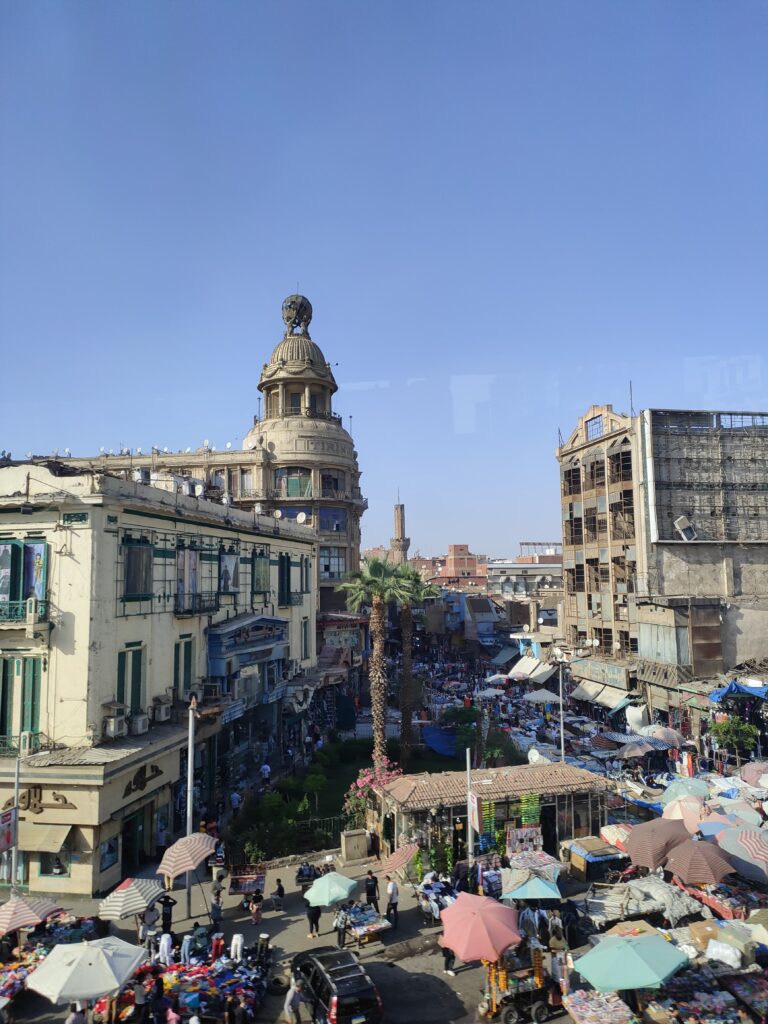
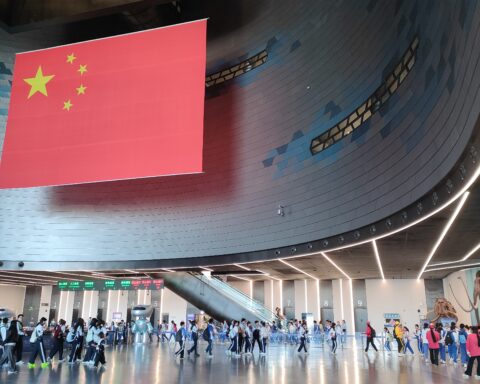
Soon everything will be transferred to the new Grand Egyptian Museum, a pharaonic undertaking that, after twenty years of construction, will attempt to contain all that has been discovered since 1904 — the year the current Egyptian Museum was founded — and all that still remains to be found. It will stand in Giza, aligned with the pyramids of Cheops and Menkaure. And so, what will become of the beautiful Belle Époque old Cairo Museum building in Tahrir Square? The square of shame, of revolution, of bloodshed, of the armed forces using civilians for target practice during the nearby year of 2011. The Arab Spring already feels like an old, dormant story, so much so that some scholars now speak of an “Arab Winter,” of a failed revolution that gave way to restoration. Tahrir remains the heart of old Cairo, housing the headquarters of the brutal internal security services in the obsolete gray building at the center of the square, alongside the headquarters of the Arab League. It is a brutalist, monolithic square.
These headquarters, along with other institutions and embassies, will soon be moved from Tahrir and the banks of the Nile to New Cairo. The old European clubs — the Automobile Club, Groppi Café, Café Riche, the Trieste insurance companies from the era before Nasser’s revolution, Mubarak, and the Arab Spring — will be left to their fate.
But can the turbulent, at times ferocious and disgraceful past of Old Cairo truly be erased? What will happen to the abandoned buildings, to the people living in these streets, to the tree-lined avenues along the Nile where, once upon a time, on the road to the aristocratic island of Zamalek, the beating heart of the capital thrived?
Building and demolishing… in one of the largest metropolises in the world, always beneath the gaze of Giza, which even on the hottest and haziest days reminds Cairenes of a radiant past that has always shone — and will always shine — in the firmament, as if its pyramids were saying: “Remember, Egyptians, how great we once were.” And Egyptians, fed by propaganda and fiercely nationalist, boast of being the children of the pharaohs, as though they fail to notice how the grandeur of that idea clashes with an urban landscape that is delirious and at times sinister. Sometimes desperate?…
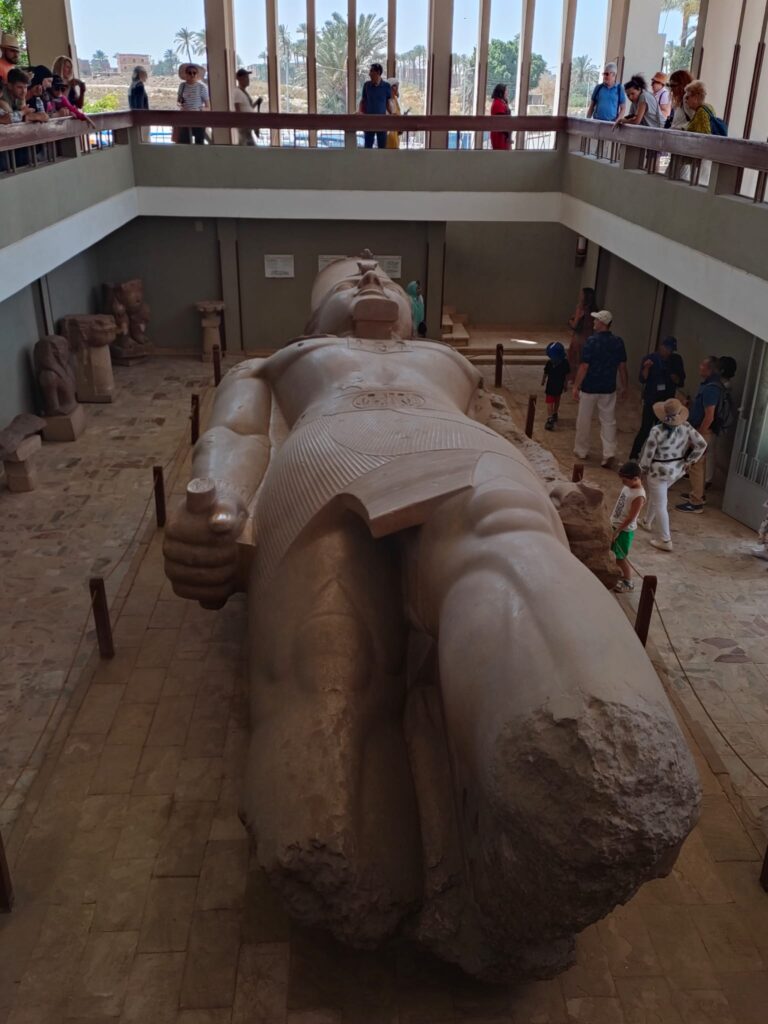
“100 dollars! 100 dollars!” My reflections are interrupted by a carpet seller in Memphis, the ancient capital, where we have come to see the famous colossus discovered in 1820 by the explorer Caviglia. He found it lying in a riverbed here, in what is now the center of Mit Rahina, south of Cairo. Egypt’s pasha, Mehmet Ali, indifferent to its value, offered to sell it to the British Museum, but just as happened with Leopold II of Tuscany, the offer was declined because of the enormous transportation costs and the need to saw the statue into pieces. An irreparable loss for such a gigantic and exquisitely crafted work, especially one created in the principal cult center of Ptah, Fod of creation and protector of the arts. Therefore, the colossus remained here, housed inside a small museum.
“100 dollars! 100 dollars!” Passing by the market stalls again, I am assaulted once more by the same frantic vendor. From fifty meters away, I had merely glanced at a series of camel wool carpets depicting the plain of Giza in shades of ochre, sand, and brown — a beautiful harmony of earthy tones. One of those objects I would love to see hanging on the wall of my cabinet of curiosities during some winter evening, when one needs to travel very far with the mind, wrapped in melancholy.
“I don’t have that kind of money,” I reply.
Amid curses and bargaining, we drop to seventy, but it is still too much, and I walk away. He follows me, insisting: “But it’s completely handmade in my village! Fine, okay, sixty!” The young man speaks excellent Italian. I rejoin my group beneath a tree and, imploringly, he lowers the price to fifty dollars. Now I begin doubting the quality of the piece — we are already at half price. Until finally, as I disappear toward the bus and place one foot inside, he follows and almost grabs me: “Please, how much can you give me? Fine, thirty!”
At that point I hand him some cash.
Ahmad approaches. “So, you managed it in the end?”
“Yes! We started at one hundred and ended at thirty,” I say triumphantly.
Then he replies, disappointed: “They’re handmade, you know… it’s painstaking work… well. Good for you that you succeeded…”
I think I offended him.
Being a young Egyptian tour guide in Cairo cannot be easy. Of us Italian tourists, Ahmad knows only the language, but he has never been able to visit our country because obtaining a visa is extremely hard for him. He appreciates our smiles and our sense of humor, though he avoids answering certain questions regarding culture and domestic politics. He loves speaking about the greatness of Egypt’s past and tries to soften the reality of the present, even while sensing our doubts. Sometimes I think he feels ashamed of certain situations we come across, while at the same time believing he must protect his people from those like us, who cannot understand the power of a certain kind of desperation — from those like me, who managed to quickly diminish the value of the effort behind an artifact made by a humble local community.
Sonesta Hotel, Cairo, Heliopolis, 10 PM
It is the first evening in which we can finally relax. We decide to sit by the swimming pool of our Sonesta hotel, a classic five-star Arab hotel complete with gym, pool, ATM, currency exchange, multiple restaurants — the usual mega-structures found throughout the Middle East, standing beside vast non-pedestrian roads accessible only by car, true hyper-equipped islands.
After an excellent glass of Omar Khayyam red wine, we smoke shisha and wait for the night while reminiscing about the dinners aboard the cruise. It was beautiful drifting along the Nile, fending off intrusive waiters, crossing paths with our fellow passengers, imagining each of their stories… all our lives were suspended during those three days of coexistence aboard the Jaz motor vessel — truly a Poirot-like setting.
Yet tonight I pause for a moment to think.
The sight of the pyramids and the plain of Giza is one of the most extraordinary images my mind has ever captured and clicked. I wish I could wake up one day in the nineteenth century and watch the great explorers of the past negotiating with whichever Ottoman pasha happened to rule at the time, during some lavish banquet, gaining access to the Plateau of the Pyramids and becoming among the first to uncover something so sensational.
Giza is certainly, even today, one of the wonders of the world — not merely of the Ancient world.
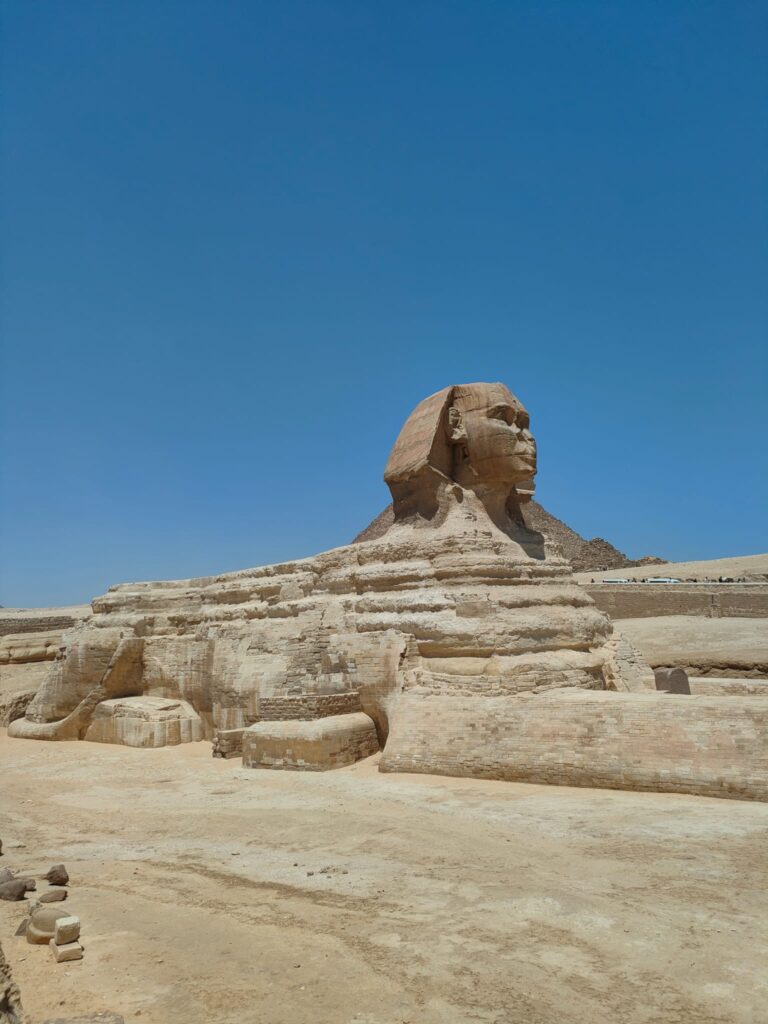
At Giza one dominates the Sahara plateau, glimpsing in the distance the gray city of Cairo beneath the vigilant and unshakable gaze of the Sphinx, overwhelmed by these architectural miracles built to connect the world of the living with that of the dead… I do not believe there are many places capable of amplifying the greatness of humanity to such an extent, reminding us that human beings are capable of challenging eternity itself, establishing profound contact and continuity with one another through art and beauty.
I believe myself profoundly fortunate to have witnessed, at least once in my life, this blessing granted by the gods of Egypt. An injection of vitality and astonishment for which I will always be grateful.
Sweet dreams.